A Kingdom in the Balance: Lord Fakafānua’s High-Stakes Premiership in Tonga
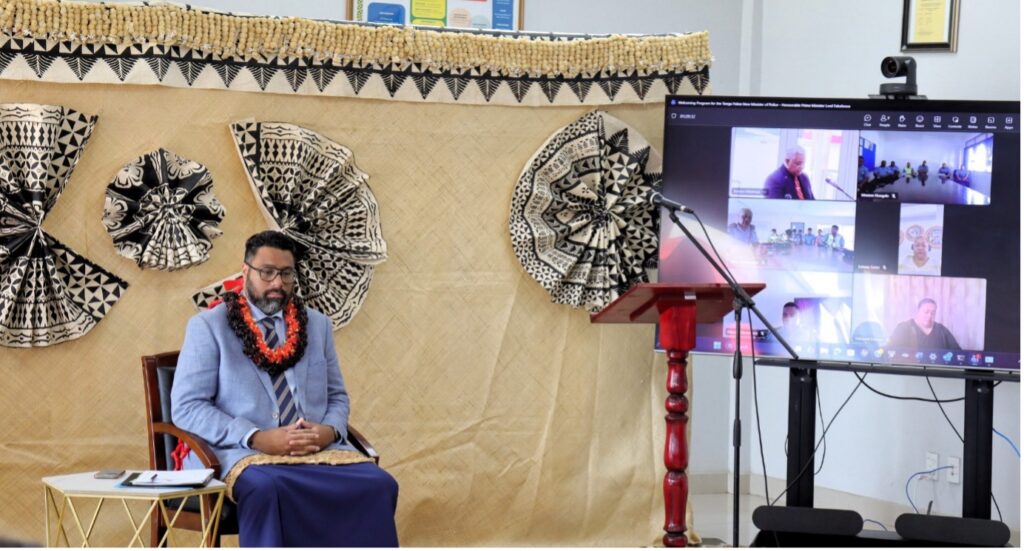
The tranquil waters of the Pacific that embrace the Kingdom of Tonga belie a tempest brewing in its political heart. In December 2025, Lord Fatafehi Fakafānua—a hereditary noble, former Speaker of Parliament, and extended member of the royal family—was elected Prime Minister by a secret parliamentary ballot. His ascension was not a triumph of populist momentum but a compromise forged in a fractured house. Today, he presides over a nation confronting a perfect storm: an empty treasury, a cabinet under legal siege, a controversial plan to sell citizenship, and the shadow of a devastating historical scandal. His premiership is more than a political test; it is a referendum on whether Tonga’s ancient system of noble privilege can govern a modern nation in crisis.
The Noble’s Advantage and the Accountability Gap
Lord Fakafānua’s path to power is a masterclass in the unique mechanics of Tongan politics. The kingdom’s constitution, crafted in 1875, reserves nine of parliament’s 26 seats for the hereditary nobility. This class operates with a flexibility unknown to commoner politicians. Nobles can strategically shift between electoral constituencies tied to their landed estates, effectively “constituency shopping” for the easiest path to power. Lord Fotofili, for instance, was returned unopposed from the remote Niuas islands while holding a major title elsewhere.
This system creates a political class with guaranteed tenure but often ambiguous accountability. A noble can occupy a seat for decades, accruing seniority and network influence, before being elevated to high office based on lineage and familiarity rather than a proven executive record. Fakafānua’s career—from noble representative to eight-year Speaker to Prime Minister, without ever holding a ministerial portfolio—epitomizes this “title premium.” As Dr ‘Ana Koloto, a Tongan political analyst, notes, “The system is designed for continuity of a certain kind of authority, not necessarily for producing transformative or technocratic leaders. The question is whether that authority is sufficient for the challenges we now face.”
The Inherited Quagmire: Financial Ruin and a House on Shaky Ground
The new Prime Minister’s in-tray is a catalogue of emergencies. The most pressing is fiscal. Tonga’s treasury is so depleted that the 2026–2027 budget relies on anticipated, yet unsecured, donor contributions just to maintain basic operations. The model of donor dependency is breaking under the weight of post-pandemic recovery, the aftermath of the catastrophic 2022 volcanic eruption, and global inflation. The International Monetary Fund has repeatedly urged painful reforms: broadening the tax base, reducing a bloated public wage bill, and managing soaring debt.
Simultaneously, Fakafānua’s very government rests on legally precarious ground. Several of his newly appointed cabinet ministers are defendants in court cases stemming from electoral petitions following the November 2025 poll. These petitions, alleging bribery and campaign violations, are a serious feature of Tongan politics. At the time of writing, these matters remain before the courts, and no findings of wrongdoing have been made. If even one minister is disqualified, it would trigger a by-election that could collapse Fakafānua’s thin majority in the 26-seat house. This paralyzing uncertainty makes the bold economic decisions he needs to take even riskier and may cause donor partners to hesitate, exacerbating the cash-flow crisis.
Governing from the Shadows: The Opaque Restructuring of Power
Adding to the governance maze is an opaque administrative change Fakafānua oversaw as Speaker. In 2024, parliament passed legislation—with remarkably little debate—to remove the Ministries of Foreign Affairs and Immigration from direct cabinet control, placing them to operate “from outside government” while still using public funds.
This move has raised profound concerns. “No politician stood to ask the fundamental question: Why?” observed a civil society monitor. Proponents argue it insulates critical functions from political interference. Critics see it as creating a “shadow government,” distancing sensitive operations—like the potential administration of a controversial citizenship-sale scheme—from direct parliamentary scrutiny and ministerial accountability. For a Prime Minister now championing a high-value, high-risk Citizenship-by-Investment program, this structure looks less like reform and more like an obfuscation of responsibility.
Selling Sovereignty: The Ghost of Passports Past
Confronted with financial ruin, Lord Fakafānua has championed a solution that sends a chill through many Tongans: reviving a Citizenship-by-Investment scheme, where passports could be sold for upwards of US$190,000 each. He frames it as a necessary proposal to raise hundreds of millions for development. But in Tonga, this idea is synonymous with national trauma.
In the 1980s and 1990s, a noble-led government ran a similar passport-for-sale scheme. It culminated in a monumental scandal: tens of millions of dollars vanished, promised infrastructure never materialised, and a minister fled the country. The stolen wealth, perceived to have enriched a corrupt elite, fuelled widespread anger that directly contributed to the pro-democracy movement and the devastating 2006 Nuku‘alofa riots, which burned the capital’s business district.
“We have been here before,” says a civil society leader, requesting anonymity. “The same promises, the same noble families in power, the same lack of transparent safeguards. We are being asked to forget that the last time this happened, it robbed our nation.” Fakafānua’s personal history—including previous public and media criticism regarding perceived conflicts between public office and private business—only deepens this suspicion. The Prime Minister has previously rejected any suggestion of impropriety and has not been found by any court to have acted unlawfully.
For pro-democracy advocates, the combination is alarming: a noble premier, an opaque administrative structure for immigration, and a high-cash-flow CBI program. They see it as a potential reconcentration of unaccountable power, a shift back towards the monarchy–nobility axis, and a weakening of the democratic gains made since 2010.

The Blue Frontier: A Faustian Bargain in the Deep Sea
Further complicating Fakafānua’s inheritance is a commitment made on his watch as Speaker. In September 2024, Tonga signed an exploration agreement with The Metals Company for deep-sea mining in the Pacific’s Clarion–Clipperton Zone.
Pushed through despite significant public and scientific opposition, the deal is seen by many as a Faustian bargain. Environmental scientists warn that harvesting polymetallic nodules from the ocean floor could irreversibly damage unique ecosystems and devastate fisheries vital to Tongan food security and culture. The financial benefits remain speculative and years away, while the environmental risks would be immediate and long-lasting.
As Prime Minister, Fakafānua now owns this agreement. He faces pressure from mining interests against a growing local and regional movement demanding protection of the moana. His response will reveal whether speculative revenue or environmental stewardship guides his leadership.
A Digital Dilemma: Cryptocurrency as a Radical Alternative
In its search for fiscal solutions beyond donor dependency and controversial schemes, the Fakafānua government is quietly being urged to explore a radical alternative: the adoption or creation of a sovereign digital currency. Proponents argue it could reduce remittance costs, expand financial inclusion, and attract global digital investment.
International financial institutions remain deeply sceptical. The IMF, World Bank, and Asian Development Bank warn of volatility, regulatory weakness, cyber risk, and exposure to money laundering. For Tonga, whose budget depends heavily on donor confidence, even exploring this path risks confrontation with the very institutions underpinning fiscal stability.
Conclusion: The Title and the Test
Lord Fakafānua stands at a historic junction. His noble title eased his ascent to the highest office. That same system now tests whether he can transcend it. He is caught between expedient revenue and institutional reform, between opaque governance and democratic accountability, between orthodox finance and disruptive alternatives.
The pressures bearing down on Tonga are too severe for governance by title alone. The kingdom does not merely need a Prime Minister; it needs leadership capable of navigating principle, transparency, and reform in equal measure. The coming months will determine whether Lord Fakafānua can meet that test—or whether his premiership will mark the moment Tonga’s ancient structures finally buckled under modern demands.
Melino Maka is a Tongan political commentator and publisher with a background in governance, business, and public policy. He writes on political reform, economic development, and institutional accountability in Tonga and the Pacific.