Analysis: A Cabinet of Rivals Tests Collective Responsibility
The formation of the new Cabinet presents an immediate test of governance. Ministers who were recently political opponents, and in some cases legal adversaries, are now expected to sit together and operate under the principle of collective responsibility. In party-based systems, such tensions are usually managed through ideology, policy platforms, or party discipline. Tonga’s political system offers few of those safeguards.
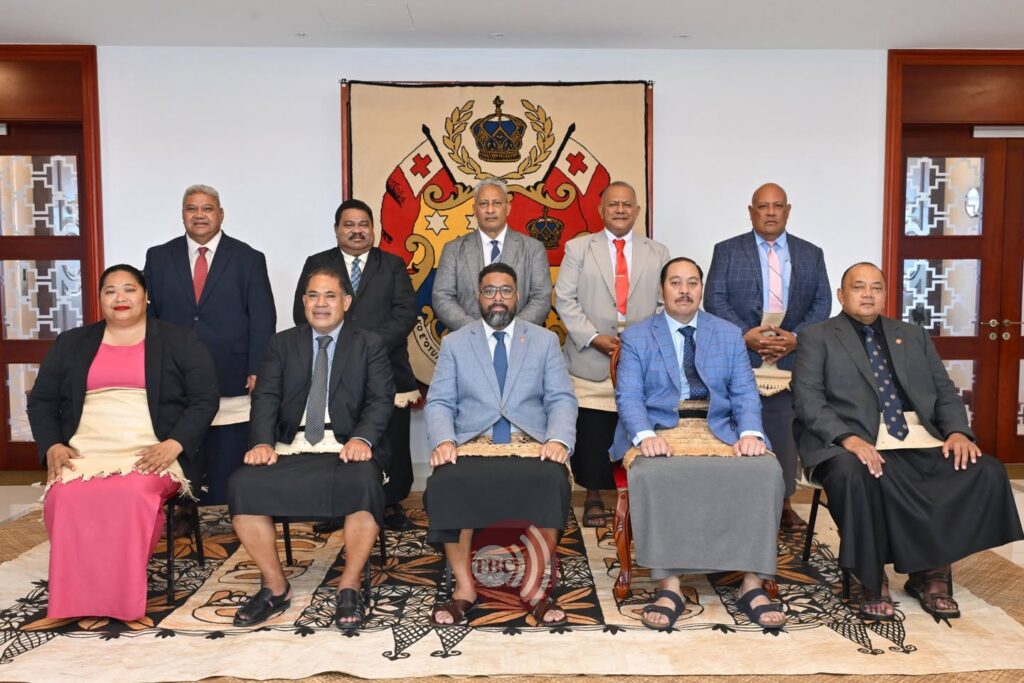
The Cabinet under Lord Fakafanua brings together independents, nobles, and former rivals with very different political histories and approaches to governing. Alongside the Prime Minister, the Crown Prince holds the powerful portfolios of Foreign Affairs and Defence, highlighting the central role of the nobility within the executive. Maintaining cohesion in such a Cabinet will be difficult in a system without formal party alignment.
One of the most closely watched aspects of the new lineup is the presence of former Prime Minister Siaosi Sovaleni. He resigned after losing a vote of no confidence led by ‘Aisake Eke, yet four ministers from his former Cabinet have now been given portfolios in the new government. Hon Fusimalohi, a key supporter of Dr Eke during that vote, has been appointed Minister for Lands. Another prominent figure from the same camp, Hon Piukala, was not awarded a portfolio, reportedly because of a pending case before the Anti-Corruption Commission.
Before and after the vote of no confidence, Fusimalohi and Piukala were among the strongest critics of the Sovaleni administration. Multiple complaints were lodged with the Anti-Corruption Commission against Sovaleni and Hon Seventeen, matters that remain unresolved. The fact that former critics and political allies are now operating within the same Cabinet raises questions about trust, cohesion, and how collective responsibility will work in practice.

A central structural risk for the Prime Minister lies in the continued influence of ministers aligned with Sovaleni’s policy outlook. Three ministers are widely seen as sharing his governing style. In a Cabinet of this size, the alignment of even two additional ministers on key issues could complicate decision-making and limit the Prime Minister’s ability to maintain control, particularly on contentious matters.
Political observers note that such arrangements often lead to prolonged internal negotiation rather than clear Cabinet direction. Where trust is limited, governments tend to move slowly, rely on informal deals, or centralise authority in the Prime Minister’s office to manage divisions.
More broadly, the situation highlights a long-standing feature of Tonga’s political system. Without political parties or ideological blocs, Cabinets are often formed on numbers rather than shared policy direction. While this can produce short-term stability, it also increases the risk of mixed signals, internal tension, and uneven policy delivery.
Tonga Independent understands from sources familiar with proceedings that unresolved differences among some ministers were evident during the first Cabinet meeting. Whether those tensions remain contained, or begin to shape the pace and clarity of Cabinet decisions, will be an early indicator of how effectively the government is able to function.
Tu’ifua Vailena