China challenges trafficking claims after US expert’s visit to Tonga
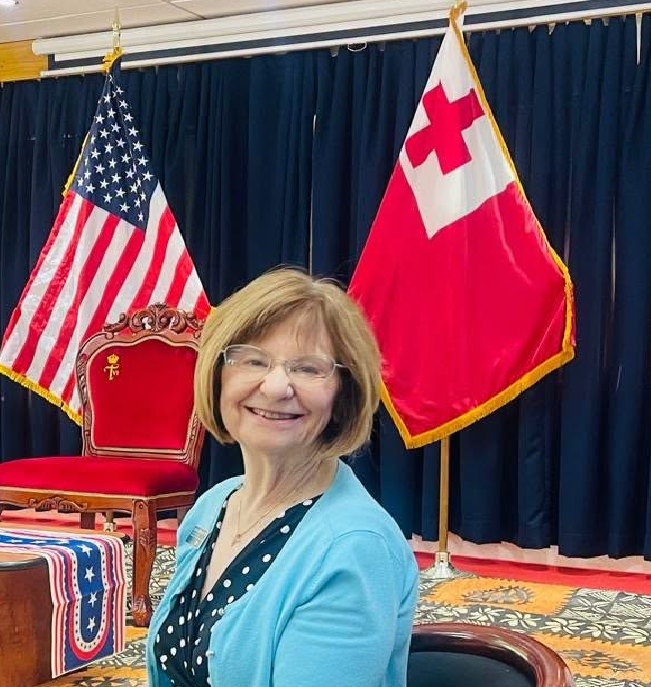
Human-trafficking expert Dr Sandra “Sandie” Morgan during a media engagement hosted by the US Embassy in Nuku’alofa on 18 August 2026. Comments she made about alleged trafficking involving Tongan women were subsequently challenged by the Chinese Embassy in Tonga. Photo: U.S. Embassy Nuku’alofa/Facebook
Nuku’alofa, Tonga — A diplomatic disagreement has emerged between China and the United States over allegations that Tongan women were trafficked to China through marriage arrangements.
The dispute follows a visit to Tonga by internationally recognised human-trafficking expert Reverend Dr Sandra “Sandie” Morgan, executive director of the Global Center for Women and Justice.
During a media discussion hosted by the US Embassy in Nuku’alofa on 18 August, Dr Morgan was asked whether the circumstances reported by the Tongan women constituted human trafficking.
“Yes. It’s classic signs—grooming and recruiting, luring the girls with a promise of a wedding, a bride price that would help their families,” she said. “Then when they get there, it’s not what they thought it would be.”
Dr Morgan said the reported circumstances appeared to involve fraud because the women had allegedly been offered a life or marriage that was different from what they encountered after travelling to China.
The US Embassy later shared her comments on its social-media page, saying it stood with survivors and vulnerable communities and would continue supporting “dignity, accountability and justice across the Pacific.”
China rejects premature conclusions
The Chinese Embassy in Tonga subsequently issued a strongly worded statement challenging public claims that trafficking had occurred.
“Human trafficking is a serious criminal offence and runs counter to the common values of humanity,” the embassy said. “China firmly opposes and is actively involved in cracking down [on] all forms of human trafficking, which represents a global challenge.”
According to the statement, Chinese police investigated recent reports concerning transnational marriage-related disputes but had not found evidence of human trafficking.
“To date, no evidence of human trafficking has been found,” the embassy said. “We stand ready to conduct further investigations and advance practical cooperation with Tongan law-enforcement bodies.”
The embassy also criticised public assertions made before investigations had reached definitive findings.
Without directly naming the United States, it said statements issued by “a certain diplomatic mission in Tonga” risked circulating misinformation or disinformation and could harm both the interests of the parties involved and the investigation.
“All public comments should be grounded in solid facts and evidence,” the embassy said.
Tonga Police investigation continues
Tonga Police Commissioner Geoff Turner has previously said that the cases involving Tongan women allegedly trafficked as brides to China had not reached the legal threshold required to establish human trafficking.
The police investigation, however, remains ongoing.
The three positions reflect an important distinction between identifying potential indicators of trafficking and reaching a formal conclusion supported by evidence that satisfies the requirements of criminal law.
Dr Morgan’s assessment focuses on reported indicators such as recruitment, grooming, deception and promises that were allegedly not fulfilled. Chinese authorities say their investigation has not uncovered evidence of trafficking, while Tonga Police have not made a final finding and continue to investigate the allegations.
A statement that evidence has not been found to date does not necessarily mean the allegations have been conclusively disproved. Equally, the presence of recognised trafficking indicators does not by itself amount to a legal determination that trafficking occurred.

Calls to protect the women
Dr Morgan also urged journalists and members of the public to take a survivor-centred approach when discussing the allegations.
She warned that it may be too early for women who recently returned to Tonga to recount their experiences publicly. Their immediate needs, she said, include safety, emotional recovery, restoration and rebuilding trust.
Recovery from trafficking or other forms of exploitation can take years, according to Dr Morgan. Pressuring potentially vulnerable women to provide detailed public accounts could expose them to further trauma.
She also cautioned against blaming women who accept offers of marriage, financial assistance, employment or travel. Traffickers frequently exploit economic hardship, family circumstances and the desire for a better life, she said.
Wider questions for Tonga
The allegations have prompted wider questions about how Tonga identifies and investigates potential trafficking, particularly when recruitment occurs locally but the alleged exploitation takes place overseas.
Dr Morgan encouraged authorities and the media to examine other forms of potential exploitation, including labour trafficking, rather than focusing exclusively on marriage or sexual exploitation.
Tonga launched its first National Action Plan to Counter Trafficking in Persons and Protect Vulnerable Migrants in 2023. Its Migration Technical Working Group brings together government and non-government organisations involved in combating trafficking.
As the diplomatic dispute develops, no competent authority has yet announced a final finding that the women were trafficked or that no offence occurred.
The case now places greater importance on cooperation between Tongan and Chinese law-enforcement authorities, an independent examination of the evidence and protection of the women at the centre of the allegations.
Until the investigation is completed, public reporting will need to distinguish carefully between allegations, expert assessments, investigative findings and legally established facts.