A Historic Appointment, but the Real Test Lies Ahead
By Melino Maka
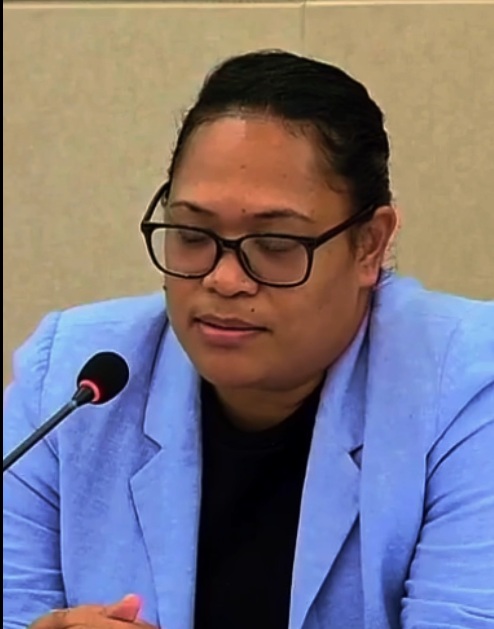
The recent Cabinet reshuffle by Prime Minister Lord Fakafanua has brought fresh faces and, as the Prime Minister himself stated, “renewed blood” into the Tongan government. The appointment of Hon. Vika Sivoki Lavemaau as the new Minister of Finance is historic and marks a significant milestone. She is among the youngest ministers in Tonga’s history and is now a woman leading this critical portfolio.
It is a moment for Tonga to celebrate. Women’s and youth organisations have rightly welcomed the appointment as a powerful signal to the next generation about leadership opportunities. Her deep technical expertise, gained as a senior public servant and deputy chief executive at the Ministry of Finance, is a valuable asset that should not be underestimated.
However, while we congratulate Hon. Lavemaau, we must also be clear-eyed about the immense challenge she faces. The applause is deserved, but what Tonga needs now is not only a historic appointment, but also a transformative leader capable of navigating severe economic turbulence. The question we must ask is not simply whether she can do the job, but whether her background has prepared her to address the deep, systemic problems the country faces.
The scale of the problem was starkly laid out in the Auditor General’s report released in June 2025, which delivered a qualified audit opinion for the second consecutive year. This is a formal declaration that the government’s financial statements may contain material misstatements—a finding that points to systemic failure, not merely a minor accounting error. Two material issues stand out:
- The $4.54 million variance: The government’s cash on hand does not match its recorded Development Fund balance, leaving a significant $4.54 million gap. Reconciliation was “still in progress” at the time of the audit.
- Unverified assets: The government reports $737 million in public assets, but the Auditor General stated that this figure could not be independently verified for completeness, existence or value. There is neither a complete fixed-asset register nor a depreciation policy, and a $292 million revaluation was recorded without full supporting documentation.

These are not new problems; they are recurring issues. The same qualified opinion was issued in 2023, indicating that the action taken since then was insufficient.
The core of my concern lies here: if Hon. Lavemaau was a senior official within the Ministry of Finance while these issues remained unresolved, can she now be the person to fix them? The Prime Minister praised her role in drafting the budget, but preparing a budget is different from ensuring that a nation’s financial house is in order. The Kingdom requires a Finance Minister with both deep internal knowledge and the external perspective and authority to break the cycle of failed accountability. The Auditor General’s report provides a clear roadmap for action: reconcile the variance, complete a verified asset register, and address deep weaknesses in procurement and internal controls.
The true challenge for Hon. Lavemaau is not only to fix the numbers, but also to change the culture that allows these issues to recur. The Prime Minister has placed a significant bet on youth and “new ideas”, but for this bet to pay off, she will need to demonstrate leadership and independent resolve that transcend her history within the system. She will need more than experience; she will need the determination to implement the difficult but necessary reforms that her ministry has so far failed to deliver. We will watch closely to see whether Fakafanua’s bet proves successful—or whether the historic nature of her appointment is overshadowed by a failure to deliver the “true and fair” accounts the public deserves.