Tonga Needs More Than a Budget of Warnings
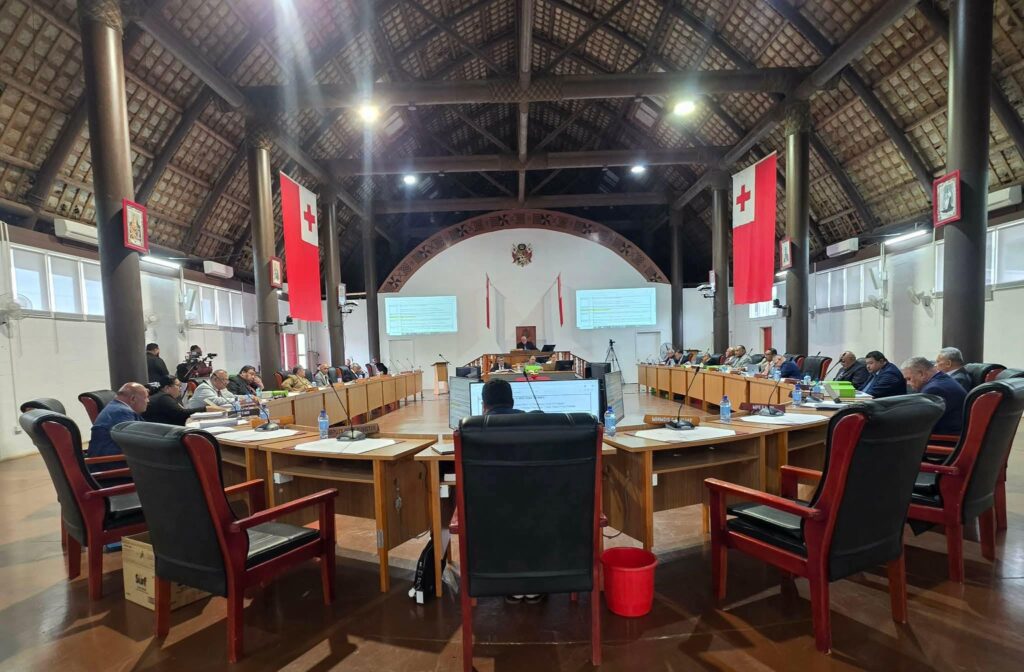
The most striking aspect of Tonga’s 2026/27 Budget was not the projected $38.1 million deficit, nor the millions allocated toward electricity subsidies and emergency energy relief. It was the sense that the Government had suddenly shifted from reassuring the country to warning it.
For the past two months, Tongans have been told there was no reason for panic. Fuel supplies were secure. The country was stable. While the global energy crisis was acknowledged, the public message from the Prime Minister remained measured and calm, projecting the impression that Tonga was managing the storm better than many feared.
Then came the budget speech.
In presenting the Government’s financial roadmap for the year ahead, Prime Minister Lord Fakafanua painted a country weighed down by structural weakness and economic vulnerability. He spoke of declining growth, high operational costs, youth unemployment, skills shortages, migration of educated workers, incomplete legislation, weak decision-making systems and an economy struggling under the weight of imported inflation and rising fuel prices.
None of this is inaccurate. The problem is that very little of it is new.
Tonga’s dependence on imports did not begin with conflict in the Middle East. The migration of skilled workers did not emerge overnight. Nor did the country suddenly discover that its private sector remains too small, its economy too narrow and its opportunities too limited for many young people.
These are longstanding issues that have accumulated over decades, often discussed privately but rarely confronted honestly in national policy conversations. Fuel prices may have intensified the pressure, but they did not create the underlying weaknesses now being highlighted to justify the budget.
That contradiction matters politically because it raises an uncomfortable question. If the country’s position is now serious enough to warrant such a bleak assessment, why were Tongans repeatedly assured in recent months that things were under control?
Governments cannot simultaneously project confidence abroad while presenting near-economic despair at home without eventually creating confusion about which version of reality the public is supposed to believe.
More concerning, however, was the absence of a compelling sense of direction.
Budgets are not merely accounting exercises. They are political statements about where a country believes it is heading. This one often sounded less like a strategy for growth than an explanation for decline.
Tongans already understand the pressures facing the country. They experience them daily through rising electricity bills, more expensive food, fuel costs filtering through the economy and the growing reality that many of the nation’s best-trained workers continue leaving for opportunities overseas.
What many hoped to hear was not simply an explanation of hardship, but a vision for what comes next.
Where is the economic reform agenda capable of expanding the private sector? Where is the strategy to create industries that retain young people rather than export them? Where is the long-term plan to modernise tourism, improve productivity, support local enterprise and reduce dependence on imported goods and government spending?
The Government deserves credit for recognising the immediate pain facing ordinary households. The $18 million electricity subsidy and cost-of-living support measures will provide relief to many families already stretched by inflation and rising energy costs. In the short term, such intervention is both understandable and necessary.
But subsidies alone cannot become the country’s economic philosophy.

At some stage, Tonga must move beyond emergency management and begin addressing the deeper structural limitations successive governments have acknowledged but struggled to reform. Otherwise, each external shock, whether fuel prices, natural disasters or global economic instability, will continue exposing the same vulnerabilities over and over again.
Even the Government’s comments on tourism revealed a tendency to emphasise decline without fully acknowledging evolving opportunities. Concerns about falling whale watching numbers may be legitimate, but broader migration and visitor data has also shown strong movement from the Tongan diaspora and returning families attending cultural, sporting and community events.
That distinction is important because Tonga’s tourism future may not depend solely on traditional international visitor markets. The country’s strongest long-term advantage may increasingly lie in its diaspora connections, cultural identity and regional Pacific relationships. Those are assets that can be built upon if approached strategically.
Leadership during difficult economic periods requires more than realism. It requires confidence, clarity and the ability to persuade people that hardship is temporary rather than permanent.
A country repeatedly told that its economy is weak, constrained and vulnerable can eventually begin to internalise that narrative. Investors hesitate. Businesses become cautious. Young people look elsewhere. Public confidence erodes slowly, then all at once.
Tonga’s challenges are real, but so are its strengths. The country possesses resilient communities, strong family networks, an influential diaspora, valuable marine resources, tourism potential and a cultural identity that continues to resonate strongly across the Pacific.
What many Tongans were searching for in this budget was not denial of the country’s problems. They were searching for signs that their leaders still believed the country’s best years were ahead of it.
That sense of optimism was harder to find.