
Tonga’s Election Petitions Reveal a Deeper Problem Than Individual Politicians
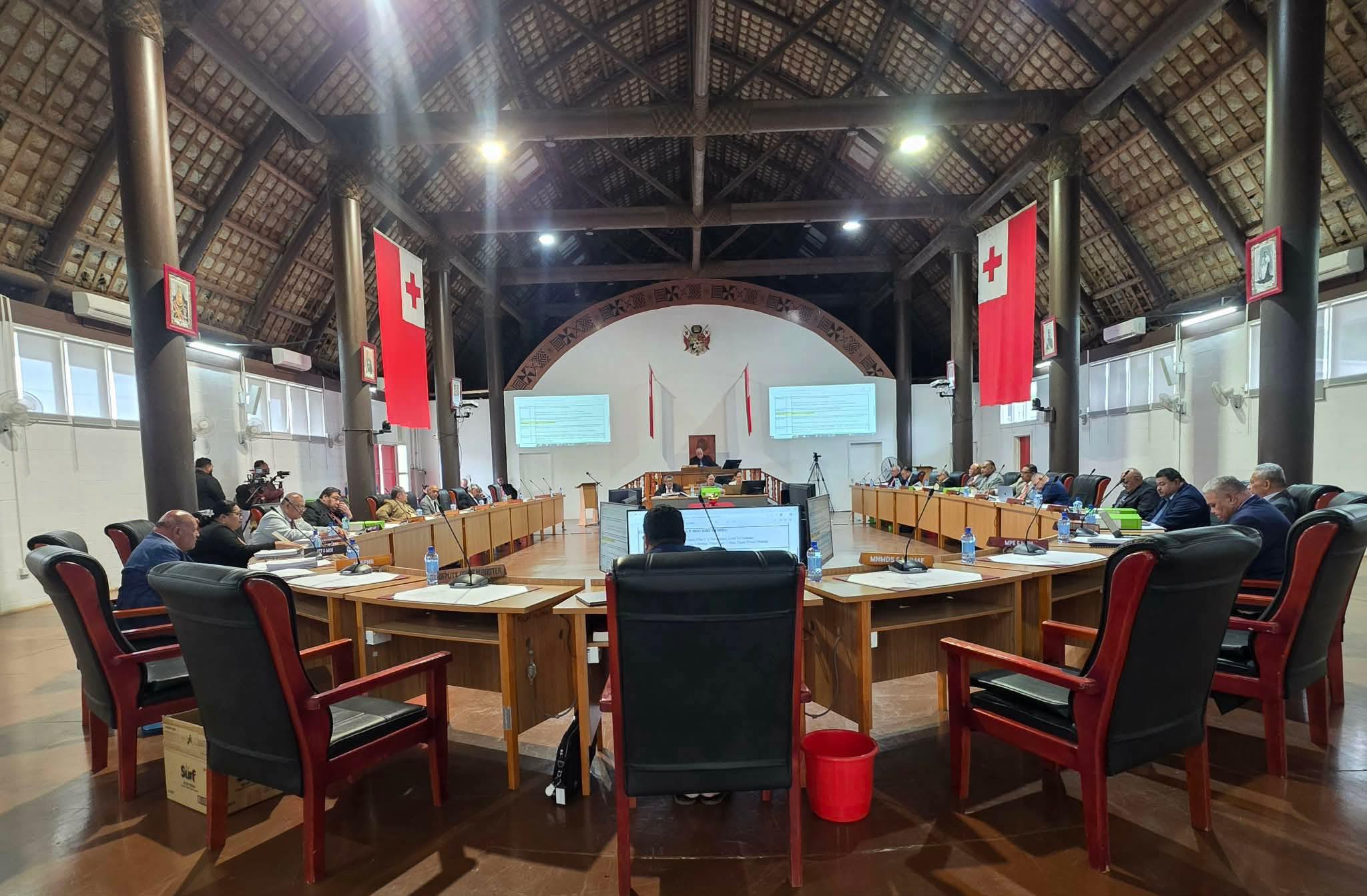
Figure 1.Members of Parliament during the current Budget session. Recent election petition rulings gave raised wider questions about electoral law, democratic representation, and the balance between judicial enforcement and voter choice in Tonga
By;Tuífua Vailena
The recent election petition rulings involving Cabinet ministers have generated headlines, political debate and growing uncertainty about the future composition of Tonga’s government.
Much of the discussion has focused on the individuals involved. One minister has resigned from Cabinet, while others have chosen to remain in office as they pursue appeals through the courts. Further legal proceedings may yet alter the makeup of Parliament.
The situation has also created an unusual constitutional dilemma. At the very moment Parliament is debating the nation’s Budget and making decisions affecting every Tongan household, two ministers whose elections have been declared void by the Supreme Court remain active participants in those debates while their appeals are pending.
But focusing solely on the politicians risks missing the larger issue.
The real question facing Tonga is not whether one minister, three ministers, or several MPs ultimately lose their seats. The question is whether our electoral system is producing the balance between integrity and stability that a modern democracy requires.
The Supreme Court is not the problem. The judges are doing exactly what they are required to do: apply the Electoral Act as written by Parliament. If the law says a particular action constitutes bribery, the Court has little choice but to enforce it.
The increasing number of successful election petitions should therefore prompt a broader conversation about whether the current legal framework is achieving its intended purpose.
Nobody disputes that elections must be protected from corruption. Voters should never be influenced by gifts, payments or favours offered in exchange for political support. Strong anti-bribery laws are essential to maintaining public confidence in democracy.
Yet the recent cases also expose a difficult reality. Tonga’s political culture operates within a society where community support, charitable giving and assistance to local organisations have long been part of public life. Church groups, schools, sporting organisations and village projects frequently rely on contributions from community leaders and political representatives. Activities that many people view as ordinary acts of support can, under election law, become matters for judicial scrutiny once an election period begins.
This creates uncertainty not only for candidates but also for voters.
A healthy democracy should not rely on politicians learning the limits of election law after they have already been elected and taken office. If multiple election petitions continue to succeed against candidates who appear surprised by the outcome, the question is not only whether the law is being enforced, but whether the system is adequately educating those expected to comply with it.
The purpose of electoral regulation should be prevention, not simply punishment. The current situation suggests that Tonga has become increasingly effective at identifying breaches after elections have occurred, but less effective at preventing those breaches before ballots are cast.
That failure of prevention matters because the consequences extend far beyond the candidates themselves.
The recent cases also highlight a tension that deserves greater attention: the relationship between the rule of law and the democratic will of voters.
In Niua 17, former Finance Minister Lata’ifaingata Tangimana won his seat with 539 votes. His nearest rival received just 195. Tangimana became the only minister to immediately resign from Cabinet, accepting political responsibility while pursuing his legal options. Regardless of one’s view of the case itself, many voters in Niua may feel frustrated that a representative they elected by such a decisive margin now faces the prospect of losing his seat through post-election litigation.
The case of Lands Minister Dr Taniela Fusimalohi raises similar questions. Fusimalohi secured 1,179 votes at the election, while the candidate who later petitioned the result received 409. Nearly two-thirds of voters supported Fusimalohi. Yet under the Electoral Act, the overwhelming nature of that mandate is legally irrelevant if the Court determines electoral bribery occurred.
Semisi Sika won with 951 votes compared with 764 for his nearest rival. The same principle applies.
The courts are concerned with legality, not popularity. Their role is to determine whether the law has been breached. But democracy is about more than legal compliance. It is also about representation. When an election is voided, the consequences are not borne solely by the candidate. They are borne by the thousands of voters whose collective decision is set aside.

Parliament may also need to revisit whether the penalties in the Electoral Act remain proportionate. A deliberate attempt to buy votes should attract severe consequences. But Parliament may wish to consider whether all breaches, regardless of their nature or scale, should automatically produce the same outcome: the loss of a seat and the potential disenfranchisement of an entire constituency until a by-election can be held.
Every successful election petition carries consequences beyond the courtroom. Constituencies face uncertainty, governments lose ministers, taxpayers may fund by-elections, and public confidence in the electoral process can be tested.
The issue is not whether the law should be enforced. It absolutely should be. The issue is whether the law provides sufficient certainty for those expected to comply with it.
The contrast with Fiji is instructive. In recent years, the Fijian Elections Office and Electoral Commission have taken an active role in providing campaign guidance, regulatory information and briefings to political parties and candidates before elections. Candidates are given opportunities to understand their obligations and the rules governing campaign conduct before nominations close, rather than learning those lessons through litigation after an election.
Tonga’s Electoral Commission provides information to candidates, but the growing number of successful election petitions suggests that information alone may not be enough. If candidates are repeatedly finding themselves before the courts over conduct they did not believe breached the law, Parliament should ask whether the current system is doing enough to educate those seeking public office. That is not a minor administrative issue. It goes to the heart of electoral integrity and democratic stability.
Clearer legislative definitions of prohibited conduct, transparent rules around donations and community contributions, and a graduated penalty framework that distinguishes between deliberate vote-buying and conduct arising from misunderstanding would all strengthen public confidence in the system without weakening enforcement.
The goal should never be to make election petitions harder to bring. Genuine corruption must always be exposed and punished. But Tonga should not accept a cycle in which elections are routinely followed by litigation, appeals and prolonged political uncertainty.
The recent cases have confirmed the strength of Tonga’s judiciary. The next challenge is ensuring the legal framework itself provides the clarity and stability that democracy requires.
The issue is not merely electoral law. It is whether Tonga’s democratic institutions are evolving at the same pace as the country’s constitutional reforms. Strong democracies require not only independent courts and free elections, but systems that provide certainty, predictability and public confidence. The current wave of election petitions suggests that work remains unfinished.
If these cases produce only more removals, little will have been gained. If they prompt Parliament to clarify the law, strengthen candidate education and improve public confidence in the electoral process, Tonga’s democracy will emerge stronger for it.