Millions Spent but MIA Sports Division Ranks Last
MIA’s Sports and Active Recreation Division was the Ministry’s lowest-performing division in the third quarter, as the Sports Bill, National Sports Strategy, high-performance development and grant acquittals remained unfinished.
This is a follow-up to our previous analysis of the Ministry of Internal Affairs. The Sports Division deserves a separate investigation because its reports reveal a structural problem. It is heavily funded as a grant-distribution and facilities unit, but it is not delivering the national sporting system Tonga needs.
Rugby Union, Rugby League and Netball are not simply recreational activities. They are national institutions, international brands and potential sources of employment, tourism, sponsorship and national pride.
Yet the reports provide little evidence of a functioning national high-performance system, long-term athlete pathways, sports science, coaching development or a completed national sports strategy.
Instead, the Ministry of Internal Affairs appears more capable of distributing grants, supporting overseas tours and renovating facilities than building the systems needed to develop athletes and strengthen national federations.
This is despite sport receiving millions of pa’anga in public funding.
A division built around grants
The Sports and Active Recreation Division received an original recurrent budget of approximately $6.87 million for the 2025/26 financial year.
Of this, approximately $6.11 million was originally allocated across three sports grant lines.
That means close to 89 per cent of the original Sports Division budget was allocated to grants.
Even after transfers and revisions, grants continued to represent more than 80 per cent of the Division’s budget by the third quarter.
This makes the Sports Division, in practical terms, largely a grant-distribution and facilities-management unit.
There is nothing inherently wrong with government supporting national federations, clubs and athletes. Tonga’s sporting organisations operate in a small economy and often need public assistance to attend international competitions.
But when such a large share of public funding is distributed through grants, the process must be transparent and closely monitored.
The quarterly reports do not provide a complete public list showing who received each grant, how much was awarded, what it was intended to achieve and whether it was properly acquitted.
That leaves the public unable to determine whether sports funding is being distributed fairly or whether it is producing lasting results.
Forty-one grants reported
The quarterly reports record that the Division awarded 20 sports grants in the first quarter, ten in the second quarter and 11 in the third.
That amounts to 41 reported grant awards over nine months.
In the first quarter, the Division exceeded several performance targets because it registered 20 grant applications, vetted 20 applications and awarded 20 grants against targets of ten.
Each stage was treated as a separate performance achievement.
But registering, vetting and awarding a grant are all parts of the same administrative process.
The real test comes afterwards.
Did the money produce more qualified coaches?
Did it develop more athletes?
Did it strengthen domestic competitions?
Did it improve Tonga’s international results?
Did the recipient properly account for the money?
The reports provide far less information about these outcomes.
A grant can therefore be counted as a success several times before the Ministry knows whether it delivered any sporting result.
Acquittals fall behind
The first-quarter report said ten grant acquittals would be due in the second quarter.
When Q2 arrived, only three of the ten targeted acquittals had been submitted.
The three identified recipients were Tonga Rugby Union, Kolomotu’a Netball Club and Kolomotu’a Rugby Club.
The report said those three were compliant with their grant agreements.
It did not identify the recipients whose reports remained outstanding, the amounts involved or what action was taken.
In Q3, the Division awarded another 11 grants but deferred its grant-acquittal target to the final quarter.
The report itself admitted that reporting after funds had been used remained a challenge.
This does not necessarily mean that only three of all grants were acquitted, because different agreements may carry different reporting deadlines. But the reports clearly show that acquittal targets were missed while additional grants continued to be awarded.
There is no consolidated public register identifying which grants are fully acquitted, overdue or non-compliant.
Nor do the reports say whether any organisation received further funding while an earlier grant remained unaccounted for.
With millions of pa’anga allocated to sports grants, that information should be available.
Sports becomes Ministry’s lowest-performing division
The Division reported achieving or exceeding 66 per cent of its targets in Q1.
That fell to 29 per cent in Q2 before recovering slightly to 38 per cent in Q3.
By the third quarter, Sports was the Ministry’s lowest-performing division.
The relatively strong Q1 result was driven partly by processing grants and delivering the junior Rugby Union programme.
Once the Division moved into the longer-term work required to build the national sporting system, its performance deteriorated.
The repeated failures involved:
- The Tonga Sports Bill
- The National Sports Strategy
- High-performance development
- Donor proposals
- Coaching attachments
- Strength and conditioning
- Sports-for-health programmes
- New facility projects
- 0Grant acquittals
These are not minor administrative activities.
They are the foundations of a national sporting system.
Sports Bill remains unfinished
In Q2, the Division planned to secure technical assistance to develop the Tonga Sports Act and conduct public and federation consultations.
It aimed to consult 12 sports federations and involve 100 participants.
None of those targets was achieved.
The Q3 report set February 2026 as the target for submitting the Sports Bill to Parliament.
That did not occur.
Confusingly, the report states that submission was postponed “until Parliament approved.”
Parliament cannot approve legislation that has not been submitted to it.
The report does not make clear whether the Bill is waiting for further work by the Division, technical assistance, Crown Law, the Minister, Cabinet or Parliament.
The National Sports Strategy was also delayed, with consultation apparently waiting for progress on the Bill.
This creates a serious gap.
Tonga continues to distribute millions of pa’anga in sports funding without a completed national strategy explaining which sports should be prioritised, what outcomes government expects and how success will be measured.
No replacement for China programme
The 2024/25 annual report confirmed that the China International Sports Technical Assistance Project had concluded.
The programme began in 2018 and provided Tongan athletes with access to high-performance facilities and training in China.
The final group of 89 athletes travelled to China by November 2024.
The conclusion of such a significant programme should have been followed by a clear replacement plan.
Instead, the Q2 and Q3 reports record no successful donor proposal for high-performance development.
The result is listed simply as “NIL.”
The reports do not explain what evaluation was undertaken after the China programme, which athletes benefited, what results were achieved or how those athletes were supported after returning to Tonga.
Nor do they identify a replacement programme.
Where is the High Performance Unit?
MIA’s earlier Corporate Plan referred to establishing a High Performance Unit, developing financial investment plans and expanding access to sports science.
The quarterly reports identify grants provided to selected national federations and athletes, but they do not demonstrate that a properly resourced High Performance Unit is operating.
There is no clear reporting on:
- Dedicated high-performance staff
- Strength and conditioning services
- Sports medicine
- Physiotherapy
- Athlete nutrition
- Performance testing
- Video and performance analysis
- Injury management
- National athlete databases
- Individual development plans
Without these services, high-performance support risks becoming little more than financial assistance to help teams travel overseas.
Funding a team to attend a tournament is important.
It is not the same as building a high-performance system.
Rugby Union receives visible support
Rugby Union is clearly identified throughout the quarterly reports.
Government support included the junior rugby tour to New Zealand, coaching clinics, assistance for the ‘Ikale Tahi Northern Tour and support for Tonga Rugby Sevens to compete in Dubai.
Tonga Rugby Union was also one of three organisations identified as having submitted a compliant grant acquittal in Q2.
Rugby Union remains an important national sport and should receive government support. However, the reports do not show how that support fits into a long-term development plan covering schools, clubs, coaches, referees, women’s rugby, player welfare and the national team pathway.
Tonga Rugby Union has criticised MIA’s approach, arguing that the Ministry has taken over parts of its role as the recognised administrator of Rugby Union by providing funding directly to applicants. The Union’s position is that funding intended for its affiliated clubs and bodies should be coordinated through the Tonga Rugby Football Union as the recognised national governing body.
This raises questions about whether MIA’s grant process supports the established sporting structure or risks creating a parallel system outside it.
The assistance identified in the reports appears centred on particular tours and events rather than a transparent, multi-year Rugby Union development strategy.
Rugby League is largely absent
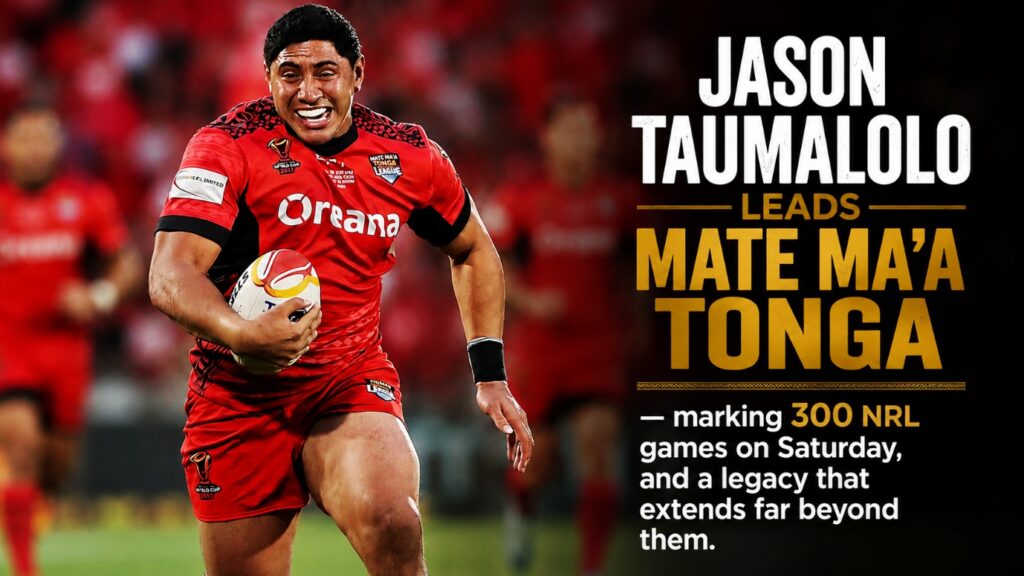
Rugby League is one of Tonga’s most popular sports and Mate Ma’a Tonga is one of the country’s most valuable international sporting brands.
Yet the quarterly reports do not identify a comparable Rugby League development programme.
There is no clear reporting on government support for:
- Domestic Rugby League competitions
- Grassroots participation
- School Rugby League
- Junior pathways
- Women’s Rugby League
- Coaching and refereeing
- Club development
- International pathways
This does not prove Rugby League received no support. Some assistance may be included within grant totals that do not identify every recipient.
But that is part of the problem.
The reports do not provide enough detail for the public to determine how much support each major sport received or how funding decisions were made.
Netball lacks a visible pathway
Netball appears in the reports mainly through community activities, the Fiefia Sports programme and the acquittal submitted by Kolomotu’a Netball Club.
There is little information about a national high-performance pathway for Tala or elite Netball.
The reports do not clearly identify long-term investment in junior development, coaching, umpire accreditation, sports science, athlete scholarships or international preparation.
Netball is one of Tonga’s leading women’s sports and provides an important pathway for girls and young women.
It should not appear in government reporting mainly as a community participation activity.

Facilities absorb more funding
The reports also show substantial expenditure on national sporting facilities.
A renovation vote revised to $312,800 was almost fully spent in Q1.
By Q3, another revised renovation allocation of $392,800 had recorded approximately $321,000 in expenditure, with further commitments.
A separate $78,300 renovation line was also almost fully spent.
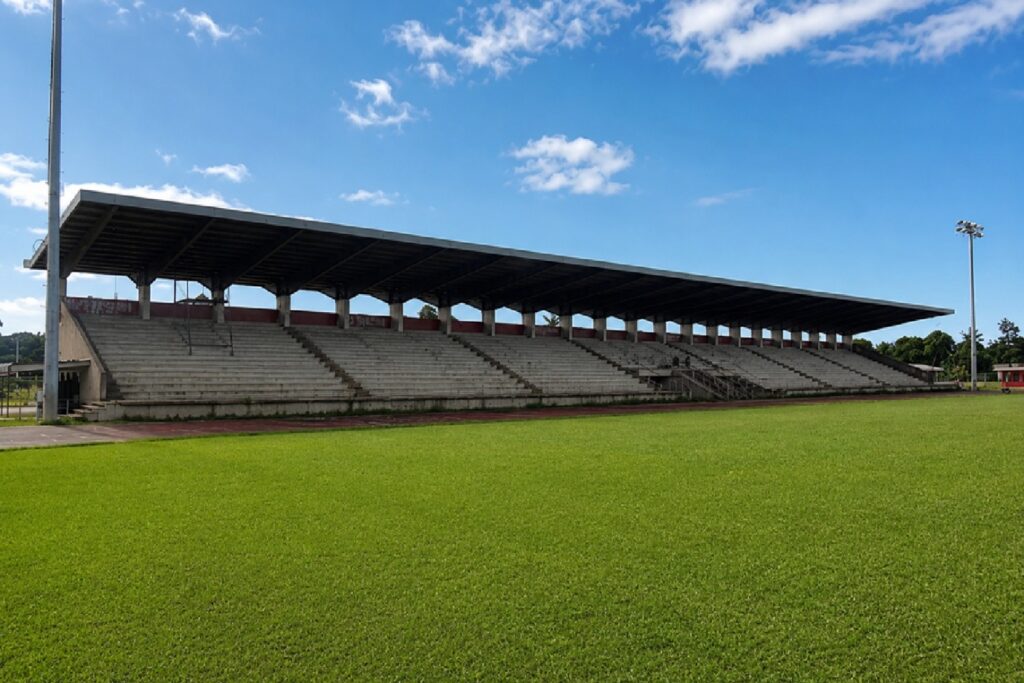
The Q3 report says work at Teufaiva Stadium was undertaken in preparation for the UB40 concert and the 2026 Inter-Collegiate Sports Competition.
But the annual report had already identified weaknesses in the management of sports-facility revenue.
These included the absence of a proper booking register, weak revenue reconciliation and no effective process for recovering unpaid facility-hire charges.
The Ministry recommended establishing registers, monthly reconciliation and a credit-recovery policy.
The quarterly reports do not clearly confirm whether those controls were implemented.
They also do not disclose how much the UB40 event paid to use Teufaiva Stadium, how much government spent preparing the venue or whether the event produced a financial return for the Ministry.
Events without a system
Tonga has no shortage of sporting talent.
Its athletes have reached international competitions despite the country’s small population, limited facilities and narrow funding base.
The problem revealed by the reports is not a lack of talent.
It is the absence of a stable system around that talent.
Government funding appears to rise when a team needs to travel, a tournament approaches or a facility requires urgent work.
What remains difficult is the slower work of building pathways, training coaches, supporting sports science, planning across four-year competition cycles and holding funded organisations accountable.
Tonga is funding sport for events.
It is not yet clear that Tonga is funding a national sports system.
Questions sent to the Ministry
Tonga Independent News contacted the Deputy CEO responsible for Sports and Active Recreation seeking clarification on the issues raised by the Ministry’s reports.
The questions included requests for a list of sports federations and organisations that received grants, the amount and purpose of each grant, and the number that were fully acquitted, overdue or non-compliant.
TIN also asked whether organisations with outstanding acquittals received further funding, what criteria were used to allocate grants and how much support was provided to Rugby Union, Rugby League and Netball.
Further questions covered the delayed Sports Bill and National Sports Strategy, the replacement for the concluded China high-performance programme, the status of the proposed High Performance Unit and weaknesses in sports-facility revenue management.
The Deputy CEO responded and advised TIN that she would need to check with her superiors before providing some of the information requested, including the list of federations approved for funding and the amount each received.
TIN agreed to hold publication until Wednesday, July 29, to allow the Ministry additional time to obtain the necessary approval and provide the information.
The requested grant breakdown had not been provided at that stage.
The information relates to public funding already reported as approved and distributed by the Ministry. The need for further approval before the Sports Division can release a basic breakdown of grant recipients and amounts raises additional questions about transparency and where authority for sporting decisions ultimately rests.
TIN also sought comments from the responsible Minister and will fairly include any further response received before publication.
The bigger decision
The evidence raises a larger question for government.
Can one division inside the Ministry of Internal Affairs realistically develop and oversee Tonga’s entire sporting system while also administering grants, managing facilities, supporting national teams and delivering community programmes?
The reports suggest the current structure is not producing the strategic leadership the sector needs.
Tonga must decide whether sport will continue to be managed as one programme within a broad government ministry or whether it requires a dedicated, independent and properly legislated national sports body.
Such a body would still rely on government funding, but it could operate under a clear national strategy, publish funding decisions, enforce grant conditions and plan across sporting and high-performance cycles.
Rugby Union, Rugby League and Netball carry Tonga’s name around the world.
They should not have to survive from tournament to tournament, grant to grant and crisis to crisis.
They need a system.