Tonga backs regional coordination on fuel disruption while maintaining “Green” domestic status
Tonga is backing regional preparations for potential fuel disruption while maintaining that conditions at home remain stable.
Leaders across the Pacific are moving to coordinate under the Biketawa Declaration, a regional agreement used in times of crisis that allows countries to coordinate and act together.
It is not a framework that is used lightly, it was last used during periods of regional stress, including the COVID-19 pandemic and the Regional Assistance Mission to Solomon Islands.
Its use signals that the risk is being treated as more than a routine market fluctuation.
Solomon Islands Prime Minister Jeremiah Manele said the Pacific Islands Forum Troika leaders, including Palau President Surangel Whipps and Tonga’s Prime Minister Lord Fakafanua, had agreed to invoke the framework.
At the same time, Tonga’s domestic fuel status remains at “Green”, indicating that supply conditions are considered stable.
A question of alignment
Across the Pacific, policy responses are beginning to diverge.
Tuvalu has declared a state of emergency in its capital. The Marshall Islands has implemented fuel restrictions. Other governments are assessing rationing options and contingency plans as visibility on supply beyond May and June becomes uncertain.
Tonga has not adjusted its alert level.
At the same time, its international positioning points to growing concern.
The result is a gap between regional positioning and domestic classification.
Why timing matters
Fuel plays a central role in Tonga’s economy, as it does across small island states. It underpins transport, electricity generation, freight and the cost of goods.
When supply tightens, the impact moves quickly through the system.
That is why timing matters.
Early measures, even if limited, can ease the adjustment. Targeted support, temporary buffers or demand management can help businesses and households plan.
Delayed action reduces those options and increases the risk of sharper disruption.

Interpreting the signal
Supporting coordination under the Biketawa framework suggests regional leaders are preparing for a scenario where supply risk becomes more acute and collective action is needed.
Maintaining a “Green” setting domestically suggests those conditions are not yet seen as material.
Both positions can exist. But not indefinitely.
At what point does external risk lead to domestic action?
What indicators trigger that shift?
The broader constraint
This situation reflects a structural reality for Pacific economies.
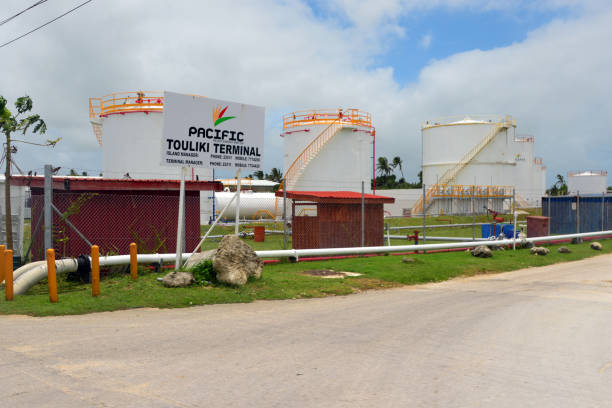
Fuel supply is imported and exposed to global pressures, including price movements, shipping disruption and geopolitical events. Storage capacity and supply chains offer limited buffer.
Regional coordination helps manage that risk. It does not replace the need for domestic readiness.
The bottom line
Tonga has recognised the risk at a regional level while maintaining a stable domestic position. The challenge is keeping those two positions aligned.
Because in an economy where supply shocks move quickly, the risk is not in recognising the problem.
It is in acting too late.