The Illusion of Victory: How Trump’s War Handed Iran the Real Win
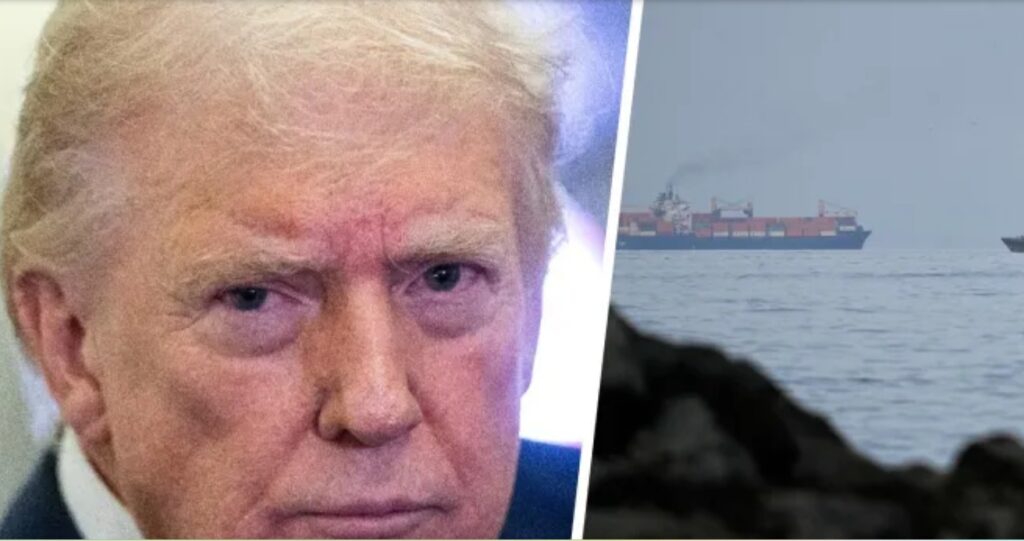
Donald Trump desperately wants to frame the ceasefire with Iran as a personal triumph. But the facts say otherwise: the Iranian regime has not only survived—it may emerge wealthier, more influential, and more entrenched as a regional power.
A two-week ceasefire, which spared us from an even more catastrophic bombing campaign and likely war crimes, is a welcome reprieve. But it is not a victory. Not for the United States, and certainly not for the Iranian people, who remain trapped under a brutal theocracy.
The Spectacle of a Weak Leader
The past 48 hours have revealed not American strength, but the erratic behavior of a weak leader doing irreparable damage to U.S. credibility. On Monday, Trump dismissed Iran’s 10-point proposal—brokered by Pakistani mediators—as “not good enough.” By Tuesday, the same document had magically become a “workable basis on which to negotiate.” What changed? Only the president’s mood.
This was a global spectacle. It began with a social media post warning that an “entire civilization will die tonight.” Hours later, Trump pivoted to a “double-sided CEASEFIRE.” White House press secretary Karoline Leavitt declared on X: “This is a victory for the United States.” But a ceasefire you almost didn’t agree to, after threatening genocide, is not a victory—it’s a face-saving retreat.
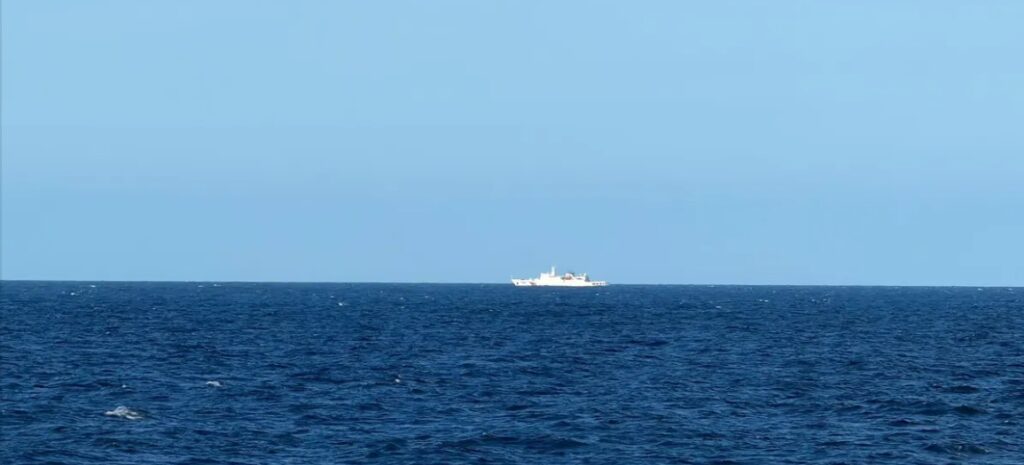
And how can Trump claim to have “reopened” the Strait of Hormuz when Iran still controls it?
Iran’s Windfall: $55 Billion a Year for Terror
If you want to understand who actually won, follow the money. Before the war, Iran shut down the Strait of Hormuz at the low cost of blowing up a few oil tankers. Now, as part of the “workable basis” Trump is celebrating, Iran proposes to lift its blockade in exchange for a fee of roughly $2 million per ship—a toll shared with Oman.
Roughly 150 ships transit the strait daily. That’s nearly $55 billion per year flowing to the world’s most prolific state sponsor of terrorism. For context, that is more than 32 times the $1.7 billion Iran received from the Obama administration’s nuclear deal—a cash transfer Trump has spent years demagoguing. He even invoked that $1.7 billion figure in his address to the nation last week. Now, his “victory” could hand the Iranian regime $55 billion annually.
The Islamic Revolutionary Guard Corps—a terrorist organization that murders dissidents—will be enriched on a scale that makes the 2015 nuclear deal look like austerity. The Wall Street Journal reports that Iran’s Supreme National Security Council understands this perfectly, framing their peace plan as conferring upon Iran “a unique economic and geopolitical standing.”
The Big Picture We Must Not Ignore
So yes, Americans can breathe a small sigh of relief that we are not, for the next two weeks, committing war crimes against Iranian civilians in our name. But we cannot lose sight of the larger reality:
Our commander-in-chief has once again given us reason to doubt his leadership, mental acuity, and basic decency.
Trump’s war has killed many civilians, upended the post-WWII international order, and handed America’s most dangerous adversary a historic financial victory.
The message to every other rogue regime is perverse: shut down a global chokepoint, blow up some ships, and you won’t be destroyed—you’ll be rewarded.

Three Deeper Consequences
First, the erosion of deterrence. Trump just inverted the unspoken rule of American power. Iran’s calculus will now be that low-cost, high-disruption tactics are not risks but investments that pay off at the negotiating table.
Second, the collapse of allied trust. America’s partners in the Gulf—Saudi Arabia, the UAE, Israel—saw the U.S. president threaten armageddon, then fold. The quiet question echoing from Riyadh to Abu Dhabi: Can we still rely on Washington? The answer will drive them further into China’s and Russia’s orbits.
Third, the regime’s domestic survival. Nothing unites an unpopular theocracy like an external enemy. Trump’s bombing campaign and whiplash diplomacy have allowed Iran’s leaders to crush internal dissent by waving the bloody shirt of American aggression. The brave Iranian protesters have been shoved aside.
Conclusion: No One Should Feel Safer
Trump will likely proclaim his “great victory” on social media. He will cite the ceasefire, the “reopened” strait, and his deal-making genius. But a victory lap is not warranted—it’s a dirge for American credibility.
The Iranian regime lives to fight another day. It is about to get $55 billion richer. It has legitimized its control over the world’s most important waterway. And it has exposed the commander-in-chief as a man whose threats are as unstable as his concessions.
I don’t feel safer. Neither should you. And if this is what “victory” looks like, I shudder to imagine defeat.
By Melino Maka