Every time global oil prices spike, Pacific households pay the price through higher electricity bills, freight costs and food prices.
For decades, Pacific nations have searched for ways to reduce their dependence on imported fuel. The region has invested heavily in solar energy, but one major problem has always remained unresolved: what happens when the sun goes down?
That question may now finally be getting answered, and the answer is increasingly pointing towards batteries.
Recent developments in Western Australia are showing the Pacific that large-scale battery storage may be the key technology that finally unlocks the path towards near 100 per cent renewable electricity systems.
Australia has just been confirmed as the third-largest utility-scale battery market in the world, sitting behind only China and the United States — a position that would have seemed unlikely just five years ago, according to the Clean Energy Council’s Clean Energy Australia 2026 report. Western Australia is at the forefront of that surge, committing AU$4.6 billion to 2,246 megawatts of battery capacity, making it one of the nation’s leading states in storage investment.
Source: Clean Energy Australia 2026 — Clean Energy Council
That development is highly significant for Pacific island nations like Tonga, Samoa, Fiji and others that continue to rely heavily on imported diesel fuel to generate electricity.
WA’s Lessons Matter to Island Nations
Western Australia operates one of the largest isolated electricity grids in the world. Unlike eastern Australia, WA cannot simply draw electricity from neighbouring states when demand rises.
In many ways, that challenge mirrors the Pacific.
Island nations operate isolated grids with small populations spread across multiple islands. Electricity generation is expensive, fuel imports are vulnerable to global shocks, and maintaining stable supply has always been difficult.
For years, critics argued that renewable energy alone could never provide reliable baseload power for isolated systems. WA is now helping prove otherwise.
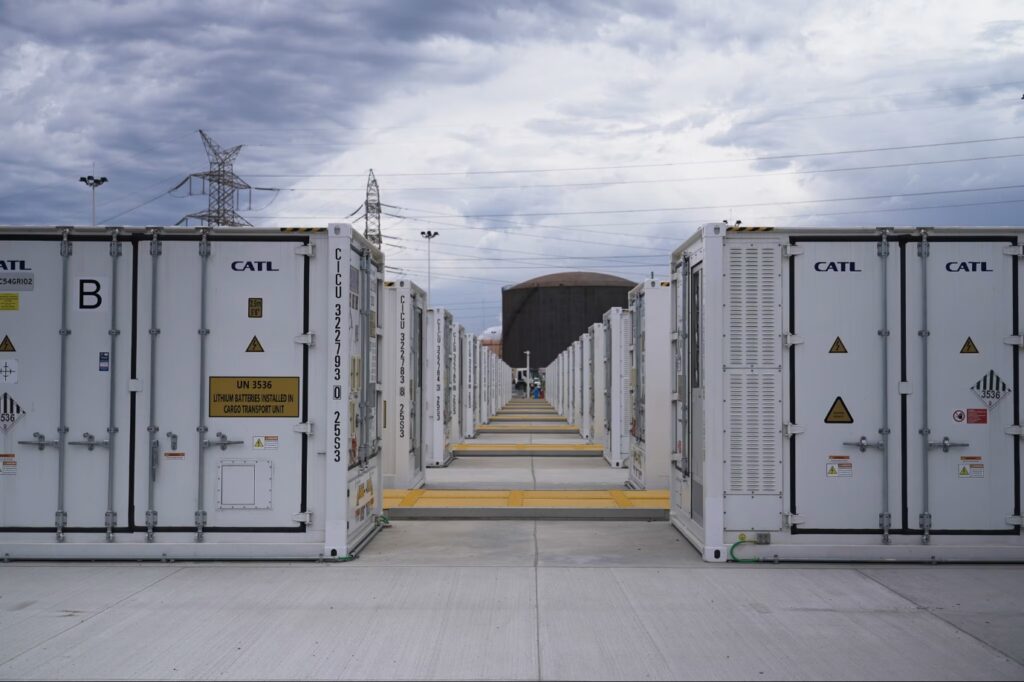
The rapid expansion of large battery projects across WA — backed by billions in committed investment — is allowing excess solar energy generated during the day to be stored and released back into the grid during peak demand periods at night. Nationally, batteries are playing an increasingly important role in shifting excess energy during peak generation periods to periods of peak demand, with the technology setting the wholesale price more frequently and closing the gap on gas peaker plants, according to the Clean Energy Council.
One new large-scale battery is the Neoen Collie Battery, which has a total planned capacity of 500 megawatts. At full output, it can supply 560,000 homes using 1 kW each for four hours. Based on the average Australian household using about 15–18 kWh per day, the full battery could power roughly 125,000 to 150,000 homes for one full day.
“Batteries are increasingly acting like giant fuel tanks for renewable energy.”
A Major Shift Away From Diesel Dependency
For Pacific nations, the implications are enormous.
Many Pacific economies remain heavily exposed to global oil prices. Recent fuel disruptions and rising shipping costs have shown how vulnerable island nations are to events occurring thousands of kilometres away. Every spike in global fuel prices eventually flows through to higher electricity prices, increased freight costs, rising food prices and greater pressure on ordinary households.
Renewable energy without storage can reduce fuel usage. Renewable energy with battery storage can potentially replace diesel generation entirely for long periods. That is a completely different conversation.
Countries like Tonga have already invested heavily in solar generation and governments have pledged to be 100% renewable by 2035. The next major step may now be expanding storage capacity large enough to stabilise national grids around the clock.
Batteries Are Becoming an Economic Decision — Not Just an Environmental One
One of the most important lessons from Australia’s battery surge is that this transition is no longer being driven purely by climate policy. It is increasingly about economics.
Utility-scale battery costs declined 20 per cent through 2025, driven by surging investment and economies of scale. A record 4.3 gigawatts of new large-scale battery capacity worth $4.8 billion reached financial commitment in Australia in 2025 — a 67 per cent increase on the investment level in 2024, according to Renew Economy.
Source: Renew Economy — Clean Energy Australia 2026 Report
Globally, Australia’s position is even more striking. According to PV Magazine, Australia is the first nation to surpass one gigawatt-hour of utility battery capacity per million people — far ahead of China and the United States, which each have less than 400 megawatt-hours per million people.
Source: PV Magazine — Australia Becomes World’s Third-Largest Utility Battery Market
Solar and wind developments are increasingly being paired with battery storage, helping to manage price volatility, reduce curtailment risk and improve access to grid connections — a trend that is turning previously unviable projects into commercially sound ones, as reported by Saur Energy International.
Source: Saur Energy International — Australia Ranks 3rd Globally in Battery Storage
For small island nations where fuel transportation alone adds major costs, the long-term savings could be transformative. The more diesel a country replaces, the less foreign currency leaves the economy. That has major implications for national budgets, inflation and economic resilience.

The Pacific Cannot Simply Copy Larger Countries
However, experts caution that Pacific nations cannot simply replicate Australia’s model overnight.
The Pacific faces unique challenges, including smaller grids, limited financing capacity, cyclone exposure, maintenance capability and infrastructure limitations across outer islands. Battery systems also require strong technical planning and long-term maintenance support.
Australia’s own experience also contains a warning worth noting. Despite the battery boom, financial commitments for new large-scale wind and solar projects fell 46 per cent year-on-year in 2025 — one of the lowest levels in a decade — threatening to stall the broader transition at a time when energy demand continues to rise. Storage needs generation to fill it, and Pacific planners would do well to prioritise both together rather than treating batteries as a standalone solution.
But Australia’s success is important because it demonstrates that isolated grids can operate with far higher renewable penetration than many previously believed possible. Renewable energy generated 42.7 per cent of Australia’s electricity in 2025, and for the first time in the nation’s history, clean energy generated more electricity than fossil fuels during the final quarter of that year.
That psychological shift matters. For years, renewable energy targets were often viewed as aspirational political goals. Battery technology is increasingly turning them into realistic engineering possibilities.
A Strategic Opportunity for the Pacific
The transition also presents a broader strategic opportunity. Pacific nations spend significant portions of national income importing fuel. Reducing that dependence could improve economic sovereignty and resilience.
It could also strengthen disaster preparedness. Battery-backed renewable systems can continue operating during supply disruptions, shipping delays or emergencies where imported fuel becomes difficult to access. For remote island communities, that reliability can become a national security issue as much as an energy issue.
The Future Is Moving Faster Than Expected
Perhaps the biggest takeaway from Australia’s battery revolution is how quickly the technology is advancing.
Australia added a record two gigawatts of new large-scale battery capacity in 2025 — a 233 per cent increase on 2024 — in what the Clean Energy Council described as a “breakthrough year.” The pipeline of battery projects nationally jumped from 109 gigawatts in August 2024 to 154 gigawatts just one year later. Only a few years ago, critics questioned whether batteries could meaningfully support large electricity systems. Today, they are becoming central to them.
The Pacific may not have oil reserves or massive industrial economies. But it has something equally valuable: abundant sun, falling battery costs and the chance to escape permanent dependence on imported fuel.
Australia — and Western Australia in particular — is now proving that future may arrive faster than anyone expected.