Tonga’s Economy Grew 4.4 Per Cent, But the Numbers Reveal a Deeper Challenge
The latest GDP figures show a strong recovery, driven by construction, consumption and services. But falling exports and rising imports highlight the difficulty of building a more productive economy.
Tonga’s economy recorded a significant recovery in the 2024/25 financial year, with real GDP growth reaching 4.4 per cent, according to the latest figures from the Tonga Statistics Department.
The Tonga Statistics Department’s own technical notes suggest this year’s headline figure should be read with some caution. In the appendix to the National Accounts Statistics Bulletin, TSD reports that the statistical discrepancy in the Goods and Services Account reached 1.7 per cent of total resources and uses at current prices, above its own preferred limit of one per cent. The gap between the Production and Expenditure measures of GDP was even wider, at minus 4.4 per cent at current prices, compared with an average of just minus 0.2 per cent over the past decade. TSD states plainly that this “suggests the need for further review of the source data and estimation methods.” The department also notes that this year’s rebasing and revision work required a two week technical assistance mission from the IMF’s Pacific Financial Technical Assistance Centre, brought in because of staff turnover and new recruitment within the National Accounts team. None of this means the 4.4 per cent growth figure is wrong. But it does mean the number carries more measurement uncertainty than usual, by the compiler’s own admission, and that is worth telling readers before they take it at face value.
That headline growth figure still represents a considerable improvement from the previous year, when the economy grew by 1.4 per cent (as revised from the previous bulletin), and reflects stronger activity across several key sectors, particularly construction, wholesale and retail trade, agriculture and forestry, and accommodation and food services.
The figures provide evidence of an economy regaining momentum after several years of disruption caused by the COVID-19 pandemic, the Hunga Tonga-Hunga Ha’apai volcanic eruption, tsunami recovery and global inflationary pressures.
However, while the overall growth figure is positive, the composition of that growth raises a more complex question: whether Tonga is expanding its productive capacity or whether the recovery remains heavily dependent on consumption, construction and external support.
Growth driven by construction and services
The industrial sector recorded strong growth during the year, increasing by 5.7 per cent, supported largely by increased construction activity from both public and private projects.
Construction has played an important role in Tonga’s economic recovery. Infrastructure projects create employment, increase demand for local businesses and generate economic activity across supporting industries such as transport, supply, accommodation and services.
However, construction-led growth has limitations.
While major projects can significantly increase GDP during the construction phase, the longer-term economic benefit depends on whether those investments create new productive capacity after completion.
The question is whether infrastructure investment will translate into stronger industries, increased exports and higher private sector activity, or whether economic activity will slow once major projects are completed.
The GDP figures show that services continue to dominate Tonga’s economic structure. The services sector accounted for 51.8 per cent of GDP, remaining the largest contributor to overall economic activity.
Wholesale and retail trade remained one of the strongest contributors within the services sector, reflecting increased domestic demand and improved business activity.
Household spending becomes a major driver of growth
The expenditure side of the GDP report highlights the importance of household spending in supporting the economy.
Final consumption expenditure increased by 8.7 per cent, reaching TOP $1.361 billion, while household final consumption expenditure grew by 11.7 per cent during the year.
The increase reflects stronger consumer activity across areas including food, household goods, transport, communication and other services.
For businesses, stronger household spending provides an important boost. Retailers, wholesalers and service providers benefit when consumers have greater purchasing power and confidence.
However, consumption-driven growth presents a challenge for Tonga because much of that spending is directed towards imported goods.
When domestic demand increases without a corresponding increase in local production, a significant share of economic activity flows overseas through imports.
The trade figures show this imbalance becoming more pronounced.
Imports rise while exports decline
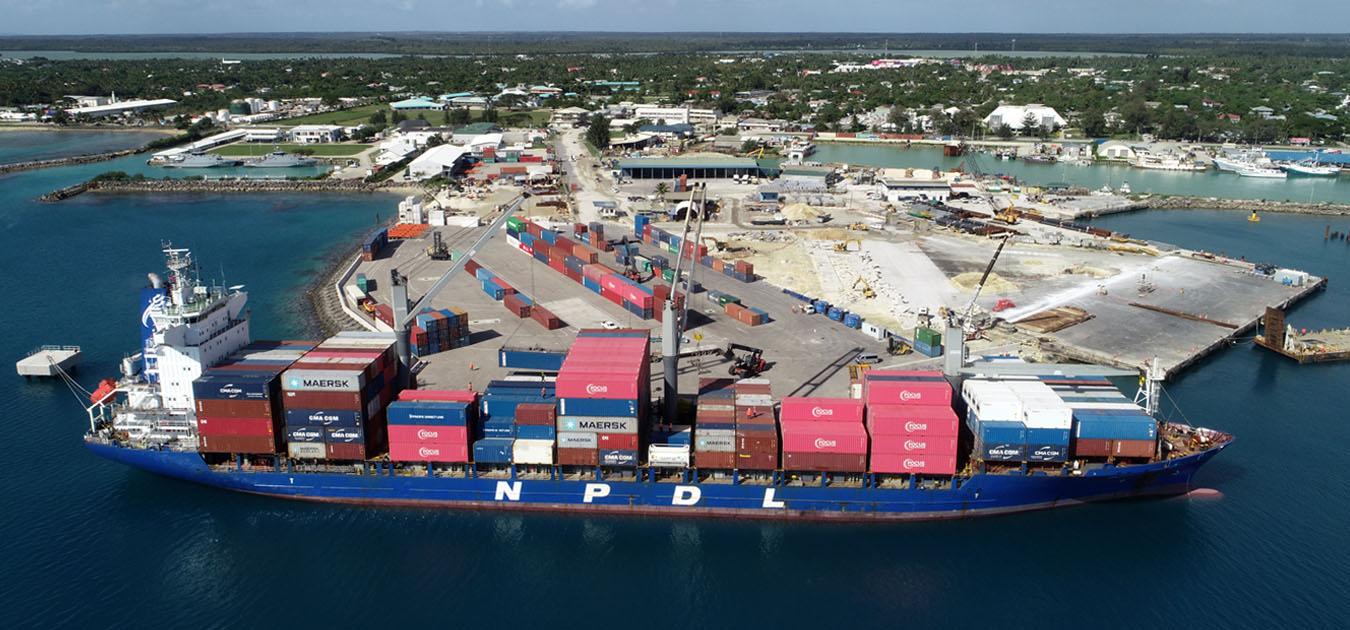
During 2024/25, Tonga’s exports of goods and services declined by 7.1 per cent, falling from TOP $197.4 million to TOP $183.4 million. At the same time, imports increased by 12.1 per cent, rising from TOP $653.1 million to TOP $732.1 million.
The widening gap between exports and imports highlights one of Tonga’s long-standing economic challenges.
Small island economies naturally depend heavily on imports because of geographic limitations, limited manufacturing capacity and the cost of producing goods domestically.
However, long-term economic resilience depends on increasing the ability to produce goods and services that generate income from overseas markets.
The latest GDP figures suggest that while domestic economic activity has strengthened, Tonga’s export base remains under pressure.
The economy is expanding, but the growth is not yet being matched by a similar expansion in locally produced goods and export earnings.
Agriculture recovers, but its potential remains largely untapped
The primary sector recorded a modest recovery during the year, growing by 2.9 per cent. Agriculture and forestry increased by 3.6 per cent, supported by improved production following the recovery from previous adverse weather conditions.
Agriculture remains an important part of Tonga’s economy, contributing approximately 13.6 per cent of GDP.
Yet despite Tonga’s agricultural advantages and internationally recognised products, the sector has struggled to develop into a major export industry.
Products such as vanilla, kava, squash, coconut products and root crops have demonstrated export potential, but production remains constrained by issues including scale, market access, processing capacity and supply chain development.
The GDP figures show agriculture recovering, but they also reinforce the broader challenge facing the economy: converting existing resources into industries capable of generating sustained income.

Tourism recovery provides opportunity, but growth must translate into wider benefits
Accommodation and food services recorded one of the strongest increases in the economy, growing by 31.4 per cent in real terms during the year.
The recovery reflects renewed activity in tourism-related businesses following the disruption of recent years.
Tourism remains one of Tonga’s most important opportunities for economic diversification because it brings foreign exchange into the country and supports a wide range of businesses.
However, the GDP report also notes that lower tourism-related earnings contributed to the decline in exports during the year, reflecting a slight easing in visitor arrivals.
The challenge for Tonga is ensuring tourism growth creates broader economic value by increasing local participation, supporting domestic suppliers and encouraging more locally produced goods and services within the tourism sector.
Investment growth remains a key issue
Investment activity improved during the year, but growth remained relatively modest.
Gross Capital Formation increased by 2.7 per cent, rising from TOP $267.5 million to TOP $274.6 million. Fixed investment increased by 4 per cent, reflecting higher investment in buildings, infrastructure, machinery and equipment.
Investment is critical because it determines the future productive capacity of an economy.
For Tonga, the focus is not simply increasing the amount of investment, but ensuring investment supports sectors that can generate long-term economic returns.
A stronger productive base would require investment in areas such as export agriculture, local processing, tourism infrastructure, digital industries and private sector development.
The next stage of Tonga’s economic development
The 2024/25 GDP figures demonstrate that Tonga’s economy has recovered strongly.
Growth has returned, businesses have become more active and key sectors have expanded.
However, the figures also highlight the structural challenges that remain.
Economic activity continues to be heavily influenced by consumption, imports, construction projects and external sources of income. At the same time, export performance remains weak and domestic productive industries have not yet expanded enough to significantly change the economic structure.
The challenge for Tonga is now moving beyond recovery towards transformation.
Sustained economic progress will depend on whether growth can be converted into stronger domestic industries, greater export capacity and more opportunities generated within Tonga itself.
The latest GDP figures show an economy moving forward.
The next question is whether Tonga can turn this momentum into a more productive and resilient economic foundation.