By Melino Maka, Tonga Independent News
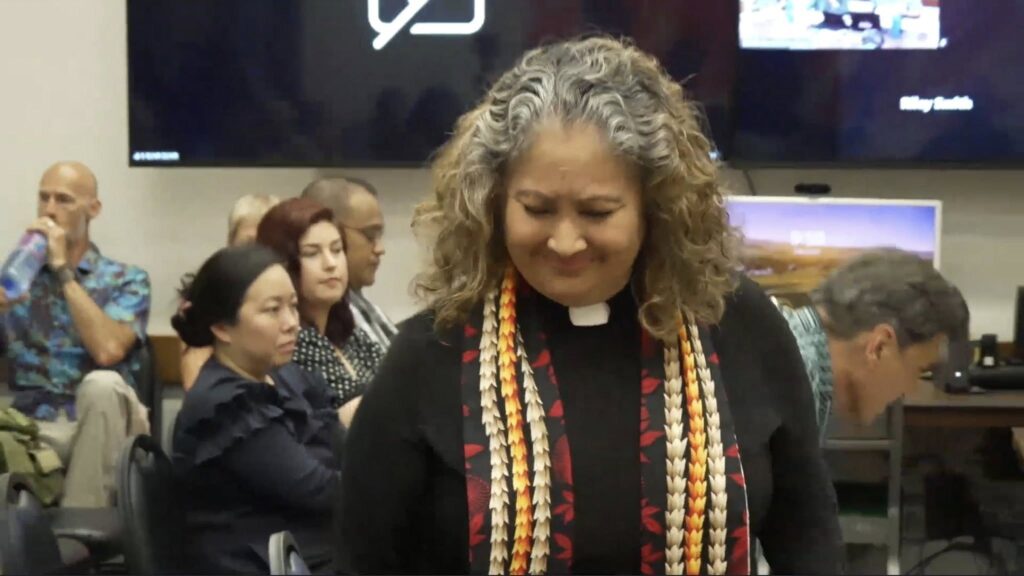
A recent Facebook post by Dr. Tēvita O. Kaʻili brought to light a profound moment of moral leadership: Christian leaders in Hawai‘i publicly rejecting the use of Hawaiian lands for U.S. military training. Reverend Steve Costa of the Episcopal Church and Reverend Amy Wake of the United Methodist Church took a courageous stance during a Board of Land and Natural Resources (BLNR) hearing, referencing indigenous Hawaiian cosmogonies and the sacred relationship between people and the land (‘āina). Their testimonies were a call to conscience — both religious and cultural — reminding us that the Earth is not just a resource, but a divine trust.
Their moral stance deserves our reflection, not our ridicule.
Yet, as the comment thread beneath Dr. Kaʻili’s post reveals, not everyone welcomed this view. One reply, from a fellow Tongan with military ties, dismissed the Christian leaders’ testimony as illogical and even foolish — implying that opposing military training while benefiting from military protection is hypocritical. These types of responses are not unique, and they point to a broader problem: the inability or unwillingness to engage with perspectives different from our own, especially when those perspectives challenge dominant narratives about power, security, and faith.
Respecting Conscience Over Consensus
What the Christian leaders did was not reject protection or safety — they rejected the desecration of land deemed sacred, both spiritually and culturally. Their position is not about eliminating protection, as one critic argued, but about redefining what protection means. Protection, in their eyes, includes safeguarding creation, honoring indigenous sovereignty, and preserving the land for future generations.
This moral logic may not align with military logic — but that doesn’t make it any less valid.
As people of faith and culture, we must learn to listen when others speak from conscience. Dismissing their views as “religious extremism” or “foolishness” betrays not only a lack of humility but also a dangerous presumption that only one worldview — often Western, militarized, and male-dominated — is rational or legitimate.
Acknowledging Alternative Worldviews
Dr. Kaʻili’s response was both gracious and incisive. He reminded us that the U.S. military has been one of the world’s greatest polluters, especially in the Pacific, including in Hawai‘i. This isn’t an ideological attack; it is a matter of record. The environmental degradation caused by military activities — oil leaks, toxic waste, unexploded ordnance — has long-lasting effects, often borne by Indigenous and Pacific Islander communities.
To ask hard questions about military presence and environmental justice is not to undermine national security; it is to broaden the conversation beyond the narrow confines of militarism. It is to ask, “At what cost does this protection come, and who pays that cost?”