Opinion: Tonga Must Confront a Cultural Crossroads — Burial or Cremation?
By Melino Maka, Tonga Independent News
Tonga stands at a cultural crossroads, one where the deep respect for tradition is colliding with the urgent realities of modern life—most pressingly, land shortage due to population growth. Nowhere is this tension more pronounced than in the national debate we must have, but continue to avoid: should we, as a nation, begin to embrace cremation as a viable, dignified alternative to traditional burial?
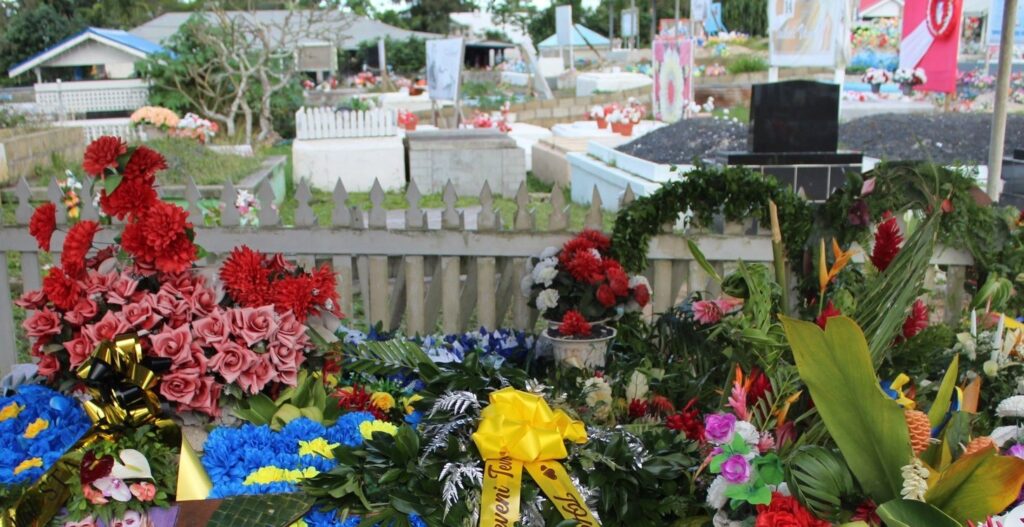
Recent discussions in Parliament and among community leaders have highlighted the grim truth: Tonga is running out of land for cemeteries. From the capital in Nuku’alofa to villages like Fua’amotu and Kolomotu’a, families are struggling to find resting places for their loved ones. In some cases, people have had to exhume and relocate family remains due to overcrowding. Town officers report rising frustration from residents, especially in urban areas, as public cemeteries fill to capacity.
Former Prime Minister Huʻakavameiliku openly admitted that in his own constituency of Tongatapu 3, there is no more space for burials. Deputy Prime Minister Taniela Fusimālohi acknowledged the issue is now at the forefront of government planning. The proposed development of a new cemetery in Nualei—20 minutes away from Nukuʻalofa—demonstrates just how desperate the situation has become.
But herein lies the uncomfortable truth: this is a short-term solution to a long-term crisis.
What We Don’t Want to Talk About: Cremation
We must ask ourselves: why is cremation still taboo in Tonga?
Culturally and spiritually, Tongans hold strong ancestral connections to land. Many believe that to be buried in ancestral ground is not just tradition—it is a spiritual necessity. We are taught that disturbing the dead can bring misfortune, or provoke the spirits through manifestations like ngaue ngaahi, the belief in possession or retribution by the deceased.
But perhaps, in our reverence for the past, we are failing to face the present.
Across the diaspora—in Auckland, Sydney, Los Angeles—Tongan families are increasingly choosing cremation. Not out of disrespect for tradition, but out of necessity, practicality, and cost. In many urban areas overseas, burial plots are prohibitively expensive or simply unavailable. Cremation offers a solution that allows families to honor their loved ones without adding further stress or debt.
Why then, do we in the Kingdom continue to pretend that cremation is a foreign or shameful practice?
The Real Challenge: A Growing Population, Limited Land
According to the 2021 Census, Tonga’s population continues to grow slowly but steadily, while land remains fixed. The vast majority of usable land is already taken up by settlements, agriculture, noble estates, or reserved for future development. If we continue down this path of relying solely on burial, we risk sacrificing land needed for housing, schools, and food production.
Moreover, the cost of maintaining cemeteries is rising. In many areas, graveyards are becoming unregulated zones vulnerable to vandalism, as we saw earlier this year in Fua’amotu. These issues are not isolated—they are symptoms of a system under pressure, and our unwillingness to adapt.

Leadership Must Lead the Conversation
This is where true leadership is required.
The government must do more than relocate cemeteries or negotiate tax allotments for graveyards. Leaders must convene national discussions and conduct public education campaigns about cremation—not as a replacement for burial, but as an option that aligns with Tongan dignity, respect, and faith.
Churches, too, have a role to play. If they are to guide the nation spiritually, they must help the people reconcile cremation with Christian values. It is worth noting that many Christian-majority countries, including deeply Catholic nations like the Philippines or Italy, widely practice cremation today.
The same care and ceremony that we apply to burials can be applied to cremations. Ashes can be scattered in meaningful places, placed in family homes, or interred in beautifully designed columbaria—structures that require a fraction of the space of cemeteries.
A Shift in Mindset: Honoring the Dead, Protecting the Living
To move forward, we must shift from thinking solely about honoring the dead to also protecting the living. That means ensuring our children have space to grow, learn, and live—not just land to bury their ancestors.
This is not about discarding our culture. It is about evolving it, responsibly and respectfully, in the face of real-world pressures.
Let us not wait until the situation becomes a national emergency. The time to act is now.
Let the conversation begin.
Related Global Insights:
- Japan, a deeply spiritual society with strong ancestral reverence, now cremates over 99% of its deceased due to land scarcity.
- New Zealand, where many Tongan families reside, reports a rise in cremation rates due to cost and space limitations. Funeral directors report that many Pacific families are now opting for cremation when given the right information and choices.
In Samoa, recent proposals have also discussed centralized cemeteries and even columbarium options as urban land becomes scarce.