OPINION: After the QSC Ball, the Church Should Show Grace
By Melino Maka
The centennial celebration of Queen Salote College was meant to be a homecoming defined by unity, nostalgia and pride for one of Tonga’s most respected institutions.
With former students travelling from across the world to mark 100 years of the college named after Queen Salote Tupou III, the week was widely seen as a success.
That is, until the controversy surrounding the ex-students’ ball.
I write this as the son of a late Reverend who grew up within the Free Wesleyan Church during the 1960s and 70s. I understand the discipline, the structure and the moral expectations the Church believes it must uphold.
But I also understand people. And in this case, the leadership of the Free Wesleyan Church appears to have misread the moment.
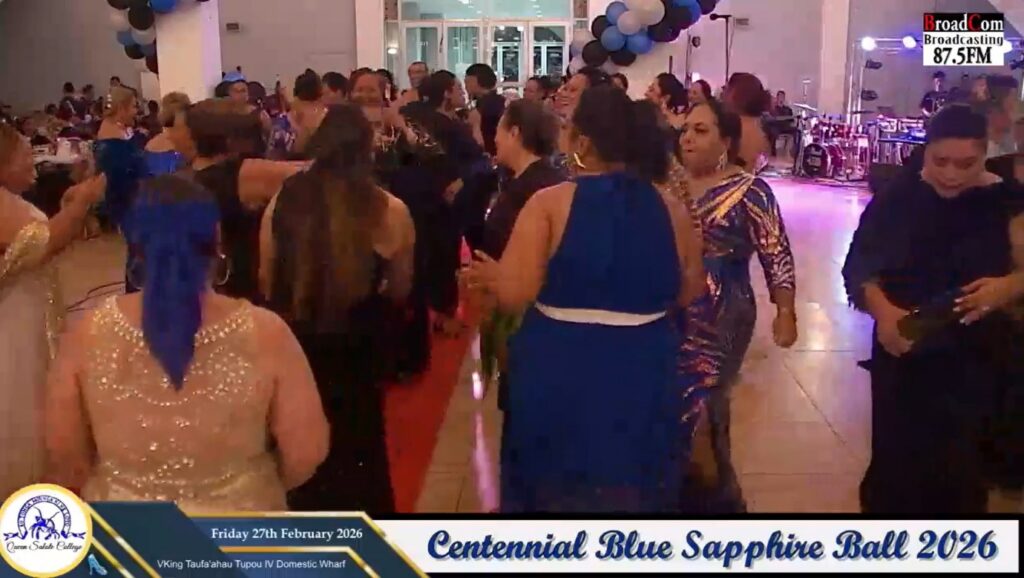
The ball was not held on school grounds. It took place at the Taufa’ahau Tupou IV Domestic Wharf — a public venue far removed from the school chapel or classrooms.
From the footage available, alcohol was present but the evening appeared largely orderly and respectful for a major celebration.
The event was also attended by members of the Royal Family and a former Prime Minister — figures who represent the highest levels of our national life.
Yet despite not being present at the event, the President of the Free Wesleyan Church, Dr Tevita Havea, publicly expressed deep disappointment that alcohol had been served.
Reports say he met with school leaders and called for action after seeing footage of the evening.
But this was not a church service. It was a celebration — a reunion for women who had travelled thousands of kilometres to celebrate their shared history.
Yes, perhaps some guests drank too much. Human celebrations are not always perfect.
But condemning the entire event risks alienating the very community that helped make the centennial possible.
Many of the women who attended live in New Zealand, Australia and the United States, where alcohol is part of normal social life. They attend churches that allow it in moderation.
These same alumni are also the people who helped fund much of the college’s development.
Recent reports indicate that overseas alumni fundraising raised close to 8.5 million pa’anga for dormitory renovations and other improvements.

These women have supported their school with extraordinary generosity.
Publicly shaming them for having a glass of wine at a celebration risks sending the wrong message.
There is also a deeper issue the Church leadership must consider.
When moral authority is exercised without understanding, it can push people away rather than draw them closer.
Many young Tongans growing up overseas are navigating two worlds — the traditional expectations of home and the social realities of the countries where they live.
If the Church hopes to remain central to their lives, it must show understanding of that reality.
The Tonga of the diaspora is not identical to the Tonga of Nuku’alofa.
Bridging that gap requires grace, not condemnation.
The centennial week showed the deep love that former students still have for their school and for Tonga.
From the performances of hundreds of students to the presence of the Royal Family, the celebrations reflected pride in an institution that has shaped generations of Tongan women.
That pride should not be overshadowed by controversy.
If anything, this moment calls for reflection — and perhaps an apology.
Respect, after all, runs both ways.