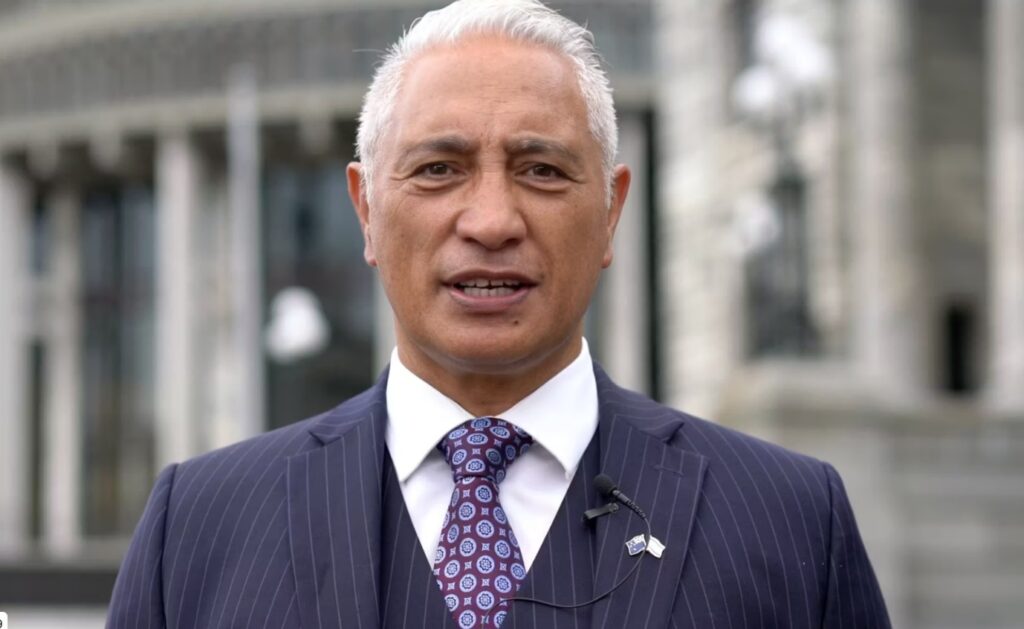
Opinion :A Test of Leadership- The Piukala Affair Demands Immediate Action

The Prime Minister has the power and the duty to sack his Police Minister. Hesitation only undermines public trust.
The fundamental contract between a government and its people is built on one unwavering principle: that no one, no matter how powerful, is above the law. This principle is not a mere slogan; it is the bedrock of public trust and the very legitimacy of a democratic government. The recent actions of the Honourable Piveni Piukala, Minister of Police and Public Enterprises, have shattered this contract. In allegedly facilitating his friend, Pita Hopoate, to flee the country in direct contravention of a court order, Minister Piukala has demonstrated a breathtaking disregard for the judiciary and the rules he is sworn to uphold.
The Prime Minister now faces a critical test of his leadership. Some may argue he must seek extensive legal advice from the Attorney General before acting. This is a delay tactic, a retreat into procedural obscurity when moral and political clarity is what the moment demands. The Prime Minister does not need a lawyer’s permission to understand a fundamental breach of ministerial responsibility. He has the authority, and more importantly, the duty, to act now.
The Prime Minister has publicly stated that he has sought advice from the Attorney General prior to making any decisions regarding Minister Piukala. While it is proper for the Prime Minister to ensure that his actions are legally sound, the seriousness of the allegations demands more than procedural caution. In matters that strike at the heart of public trust and the rule of law, leadership requires both prudence and immediacy. The Prime Minister can respect due process while also demonstrating accountability by suspending the Minister pending the Attorney General’s advice. Such an interim step would uphold the integrity of his government, reassure the public that no one is above the law, and reinforce confidence in the independence of the police and judiciary.
The Power is Already in His Hands
The Cabinet Manual and the conventions that govern our system are clear: Ministers serve at the pleasure of the Prime Minister. They are expected to adhere to the highest standards of probity and judgment. Minister Piukala’s actions are not a minor misstep or a simple error in judgment. They strike at the heart of two of his core portfolios:
As Minister of Police: He leads the institution responsible for enforcing the law. By allegedly assisting someone to evade the authority of the courts, he has actively subverted the very system he commands. How can the public and the police force have any confidence in a minister who places personal loyalty above his constitutional duty?
As Minister of Public Enterprises: He is the steward of public assets and trust. His actions demonstrate a profound lack of the integrity and accountability required to manage the people’s business.
This is not a matter for a protracted inquiry. The facts, as they are publicly understood, present an open-and-shut case of a minister violating his oath of office. The Prime Minister can, and should, invoke the cabinet ruling that holds ministers accountable for their conduct. To hide behind a need for further legal advice is to misunderstand the nature of the transgression. This is not a legal nuance; it is a catastrophic failure of ethical leadership.

Expanding the Principle: Why Swift Action is Paramount
The Prime Minister’s hesitation, should he choose to delay, sends a series of damaging messages.
It Erodes the Rule of Law: The public must see that the law applies equally to the powerful and the powerless. When a court order is ignored by a minister, and the consequence is merely a “review” or “investigation,” it creates a perception of a two-tiered justice system. The swift dismissal of Minister Piukala would be a powerful reaffirmation that the judiciary’s authority is absolute and that ministerial power is not a shield against accountability.
It Damages the Government’s Credibility: Every day the Minister remains in his post is a day the government’s integrity is questioned. The opposition will rightly seize upon it, and the public’s cynicism will grow. By acting decisively, the Prime Minister can control the narrative, demonstrating that his government is self-correcting and intolerant of corruption and abuse of power. It transforms a scandal into a demonstration of strength.
It Undermines the Police Force and Judiciary: How can a police officer be expected to arrest a citizen for contempt of court when their own minister appears to have committed a similar act with impunity? How can the judiciary maintain its authority if its orders can be flouted by members of the executive branch? The Prime Minister must stand with these institutions, not the individual who has betrayed them.
Minister Piukala Understood the Responsibility: No one is conscripted into cabinet. Minister Piukala sought and accepted the immense privilege and responsibility of his office. He knew, or certainly should have known, that his conduct would be held to the highest standard. Pleading ignorance or claiming personal loyalty is not an excuse; it is an admission of being unfit for the role.
Conclusion: Leadership, Not Legalism
The Prime Minister stands at a crossroads. One path leads to legalistic delay, eroding public trust and emboldening those who believe connections trump the law. The other path requires courage and clarity: to immediately dismiss Minister Piukala.
The public is watching. They do not expect their leaders to be infallible, but they do demand accountability. The sooner the Prime Minister acts to sack his minister, the sooner he can send an unequivocal message: in this country, the law is supreme, and no one—not even a cabinet minister—is above it. The time for action is now.
By Melino Maka