ICJ Ruling on Climate Duties Sends Warning on Seabed Mining and Extractive Industries
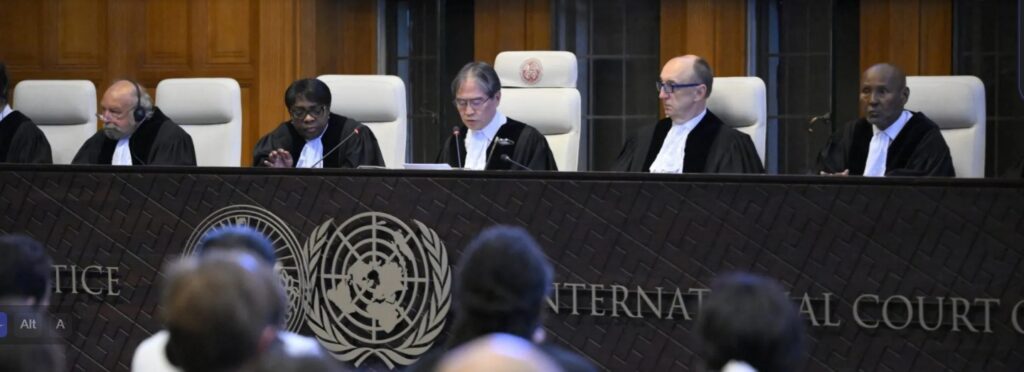
A powerful message from the world’s highest court may reshape how countries—especially Pacific Island states—approach controversial activities like seabed mining, fossil fuel extraction, and ocean governance.
In a landmark advisory opinion, the International Court of Justice (ICJ) has clarified that states have binding legal duties under international human rights and environmental law to mitigate climate change and protect ecosystems—even beyond the obligations set out in treaties like the Paris Agreement. The ruling suggests that issuing licences for high-emission activities, such as fossil fuel exploration or destructive ocean mining, could constitute a breach of international law.
The unanimous opinion of all 15 ICJ justices affirms that:
- States are legally obligated to prevent environmental harm under customary international law.
- The right to a clean, healthy, and sustainable environment is recognized as a human right.
- Even countries not party to the Paris Agreement must still act to mitigate climate change.
- Polluting nations may be held liable for reparations to vulnerable states affected by climate impacts.
Implications for Seabed Mining in the Pacific
The ruling’s consequences go far beyond fossil fuels. Deep-sea mining, often framed as a solution to the green transition, is increasingly under scrutiny for its potential irreversible harm to ocean ecosystems and its contribution to marine carbon cycle disruption.
Countries like New Zealand and others in the Pacific that have considered or permitted exploratory seabed mining could now face legal risk under this new interpretation of international law. Granting extraction licences—whether for oil, gas, or critical minerals in the deep sea—may now be seen as an “internationally wrongful act” if it significantly endangers ecosystems or vulnerable populations.
This casts doubt on whether large-scale seabed mining operations can continue under current legal frameworks without facing serious litigation or claims for reparations from affected states—especially low-lying Pacific nations at the front lines of climate and environmental collapse.
Tonga’s Role and Opportunity
For Tonga, this ruling presents both a warning and a strategic opening.
- Legal Leverage in Regional Advocacy
As a low-emission country disproportionately affected by rising sea levels and warming oceans, Tonga now holds moral and legal standing to challenge policies or activities—by other states or international corporations—that threaten its ecological integrity or violate global climate responsibilities.
If foreign companies or governments pursue extractive projects in Tonga’s Exclusive Economic Zone (EEZ), or adjacent high seas areas, Tonga could use the ICJ ruling to argue that such actions breach its people’s right to a sustainable environment and long-term survival.

- Strengthening the Case for Personhood Legislation
The ICJ judgment aligns with growing international recognition of nature’s rights and legal personhood for ecosystems. Tonga’s proposed Personhood legislation, which would recognize the legal status of land, reefs, or marine areas as entities with rights, gains new legitimacy under this evolving legal paradigm.
By granting personhood to critical ecological zones (such as coral reefs, fisheries, or sacred lands), Tonga would not only honor indigenous and spiritual traditions but also establish a robust legal defense against destructive practices like seabed mining.
Such legislation could mirror legal innovations seen in New Zealand (Whanganui River), Ecuador, and India—where rivers and forests have been granted legal rights—and would help shield Tonga’s natural heritage from exploitation under the guise of economic development.
- A New Pacific Model of Environmental Governance
Tonga, alongside Vanuatu and other Pacific nations, has been at the moral forefront of the climate justice movement. The ICJ’s opinion validates the long-held Pacific principle that those least responsible for climate change must be protected, not sacrificed.
This is an opportunity for Tonga to:
- Push for a moratorium on seabed mining in regional forums until full ecological impact assessments are made.
- Develop new environmental law frameworks rooted in customary law, human rights, and climate justice.
- Lead calls for an Oceanic Climate Reparations Mechanism to hold polluting nations accountable for the loss and damage suffered by Pacific communities.
Conclusion: From the Classroom to the Courtroom—and Back to the Coral Reef
The ICJ’s ruling began as a student-led campaign by Pacific Islanders demanding justice. Today, it sets the tone for the future of global environmental law.
For Tonga, it is a reminder that the power to defend the future lies not only in international diplomacy, but also in how we legally recognize and protect our lands, seas, and people. Whether in resisting deep-sea mining or asserting the rights of ecosystems through personhood legislation, Tonga has both the moral voice and the legal tools to lead by example.
Melino Maka