Don’t Let One Misstep Tarnish a Decade of Progress for Pacific Whānau
Tonga Independent News
Opinion
Monday, 30 June 2025
The recent revelation that Whānau Ora funding was used to support the Moana Pasifika rugby team has stirred understandable public concern. And rightly so. At a time when many Māori and Pacific families are struggling to access healthcare, housing, and education support, hearing that public funds were directed toward a professional rugby franchise is both disappointing and damaging to public confidence.
But amid the outrage, let us not lose sight of a larger truth: Whānau Ora is one of the most impactful, community-driven funding models Aotearoa has ever seen—and one misstep should not unravel ten years of Pacific progress.
The Origins: A Community-Led Revolution
Whānau Ora was born out of the political accord between the National Party and the Māori Party in 2010. Under Prime Minister John Key’s leadership and the tireless advocacy of the late Hon. Tariana Turia, the programme was introduced to empower families, not just individuals, to take control of their own futures—moving away from one-size-fits-all service delivery.
From the beginning, Whānau Ora recognised that Māori and Pacific peoples had unique cultural, economic, and social needs that mainstream services failed to meet. So it created distinct commissioning agencies—including one for Pacific peoples.
That agency was Pasifika Futures, established in 2014 under the leadership of the Pacific Medical Association (PMA). Its task was to work with regionally based providers to build the capability and capacity of Pacific families across the country—from Auckland to Invercargill, from Porirua to Gisborne.
A Decade of Impact
Despite early logistical and resource challenges, especially in reaching Pacific families outside major urban centres, Pasifika Futures delivered exceptional results.
- Over 395,000 individuals and 80,000 families were reached.
- Around 89% of Pacific families in New Zealand have been connected through the Whānau Ora network.
- Dozens of Pacific providers grew their operations with Pasifika Futures as a lifeline, delivering essential services such as immunisations, education support, housing navigation, budgeting services, and mental health support.
- The Family Voices Report 2024 showed consistently high satisfaction and measurable impact across multiple wellbeing indicators.
These were not just numbers. These were lives improved—elderly migrants accessing primary healthcare, young parents getting support with newborns, and schoolchildren with the resources to thrive.
A Changing of the Guard
In 2023, just under two years after the current government took office, a retendering process was launched for the Pacific Whānau Ora Commissioning Agency. Despite its track record, Pasifika Futures lost the contract, and it was awarded instead to The Cause Collective, operating under the new name The Tātou Collective, effective 1 July 2025.
The change coincided with growing political tensions, with some critics alleging that the government was more focused on restructuring than preserving effectiveness. The abrupt shift introduced uncertainty for many Pacific providers, some of whom had built their business models on the security and sustainability of Whānau Ora contracts.
While The Tātou Collective has been tasked with building a more “data-driven and outcome-focused” approach, the sudden transition has created anxiety about continuity and capacity, especially among smaller providers and regional communities.

The Moana Pasifika Funding Controversy
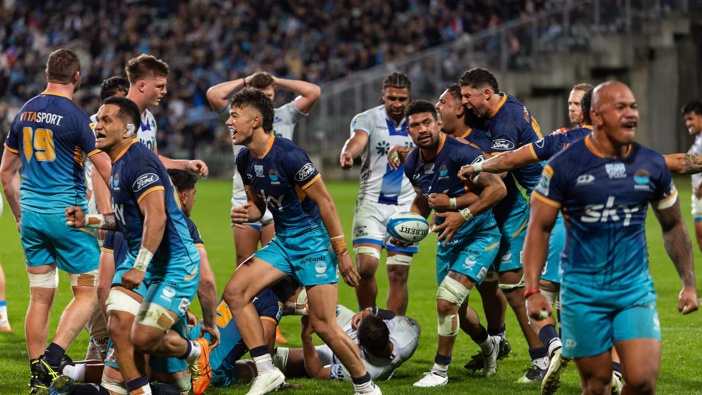
Then came the blow to public confidence: reports surfaced that Pasifika Medical Association Group had directed $770,000 per year for two years—possibly totaling $2.3 million—to support the Moana Pasifika rugby team.
This revelation, while not an indictment of the team itself—which has been a source of pride and representation for Pacific communities in Super Rugby—raises valid questions about the appropriate use of taxpayer money earmarked for vulnerable whānau.
Whānau Ora was never meant to fund elite sports. It was intended to address deep-rooted socioeconomic disparities in Pacific communities. And while PMA may have had its reasons—perhaps to inspire youth or promote Pacific pride—this decision crossed a line in the public’s mind.
To their credit, the Whānau Ora Minister and Te Puni Kōkiri acted quickly, removing PMA from its commissioning role and tightening oversight mechanisms under the new agency.
Don’t Dismantle What Works
What’s most concerning now is not just the funding error—it’s the potential that the entire commissioning model may be undermined because of one bad judgment.
Let’s be absolutely clear: the solution is not to throw the baby out with the bathwater.
- We need stronger governance frameworks to prevent similar funding decisions in the future.
- We need transparent guidelines that define what Whānau Ora funding can and cannot be used for.
- We need independent audits and performance evaluations to track impact—not just spending.
- And we need support for Pacific providers, especially those in vulnerable regions, to ensure they are not collateral damage in the fallout.
Whānau Ora remains one of the few systems that trusts communities to know what’s best for their own people. It’s a model that has been replicated globally as a benchmark in Indigenous development.
We should be fixing the gaps—not dismantling the foundation.
A Call to Leadership
As The Tātou Collective steps into its new role, it carries a heavy burden—but also an incredible opportunity.
They must:
- Engage with Pacific providers across all regions.
- Rebuild trust after a disruptive transition.
- Provide clarity and continuity to families relying on services.
- Avoid politicising funding and refocus on measurable wellbeing outcomes.
And for the government—this is a chance to reaffirm commitment to Whānau Ora as a lasting solution for Pacific health and social equity, not just an election-era policy.
Final Reflection
It is deeply disappointing that Whānau Ora funds were used in a way that undermines their core purpose. But we should not let this misstep undo a decade of hard-earned gains.
Whānau Ora for Pacific peoples has worked. It has delivered. It has empowered.
Let’s not let a funding error become the excuse to retreat from a system that finally put our communities at the centre.
Sources:
- Pasifika Futures Impact Report 2022–2023: Download PDF
- Family Voices Survey 2024: Download PDF
- Government announcement – Scoop: Link
- Moana Pasifika funding – RNZ & PMN
By Melino Maka, Political and Economic Commentator (NZ & Tonga)