Inflation Hits 14.9% as Tongans Face Another Fuel Price Hike
Nukuʻalofa, 27/11/2026
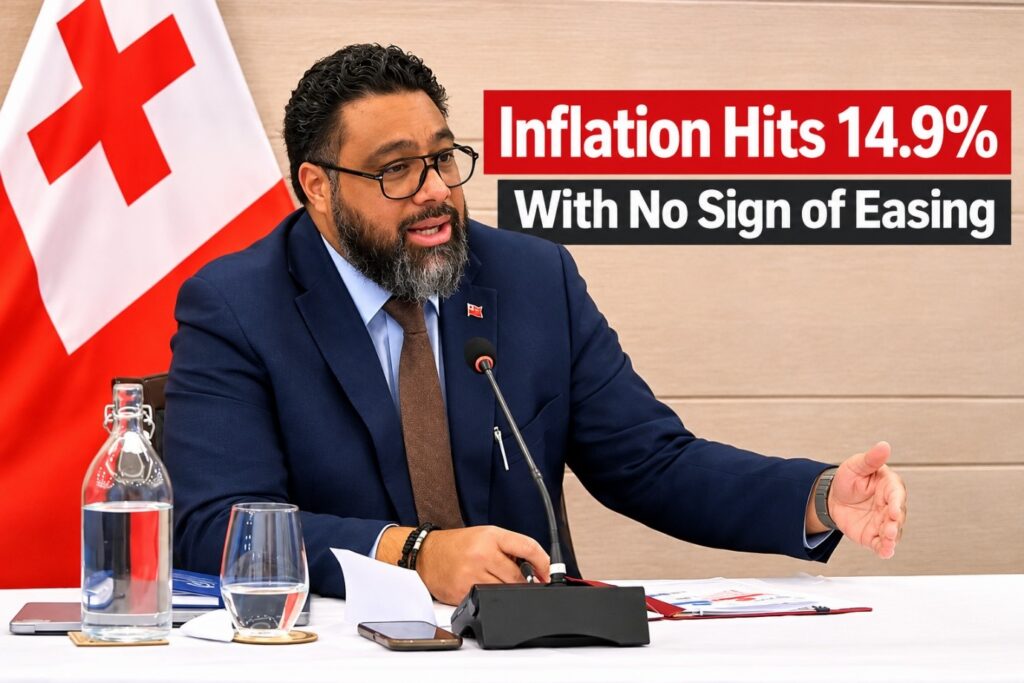
Annual inflation has reached 14.9 percent. Fuel prices are rising again and food costs are climbing, despite months of warnings about the economic and farming impact of Super El Niño.
In October, $20 bought 5.13 litres of petrol in Tongatapu. From Tuesday, December 1, the same $20 will buy just 4.35 litres.
According to the Tonga Competent Authority, petrol, diesel and kerosene prices are rising for the second month in a row. Petrol in Tongatapu will cost $4.60 a litre, up from $3.90 in October. That is a rise of nearly 18 percent in two months.
In Niuafoʻou, petrol will cost $5.50 a litre. Motorists there will get just 3.64 litres for $20.
Diesel in Tongatapu has gone from $4.55 to $5.05 a litre since October. Kerosene has gone from $3.55 to $4.30, a rise of more than 21 percent.
The latest figures from the Tonga Statistics Department show that annual inflation climbed from just 2 percent in January to 14.9 percent in October.
That is higher than the peak of 12.2 percent in June 2008, during the global food and fuel crisis. It is also higher than the 14.1 percent peak in September 2022, after the volcanic eruption and tsunami.
Households are losing buying power
Over the year to October, transport costs rose 27.5 percent. Housing, water, electricity and gas rose 24.9 percent. Food and non-alcoholic beverages rose 15.2 percent.
A household that spent $100 on a typical basket of goods and services a year ago would now pay about $114.90 for the same basket.
For families whose income has not changed, that is a loss of about 13 percent in buying power.
Drought adds to the pressure on farmers
The drought linked to Super El Niño is damaging farm production and putting food supplies at risk across the Kingdom.
Farmers are losing crops and paying more to run their farms. Fishermen and transport operators are paying more for fuel.
Local food and non-alcoholic beverage prices rose 25.3 percent over the past year. Imported equivalents rose 5.9 percent. Local prices rose more than four times as fast.
Reports from Haʻapai have already documented crop failures, livestock deaths and severe water shortages. The Tonga Meteorological Service forecasts that El Niño could peak in December.
Months of warnings
The pressure did not arrive without notice. Here is what was said, and when.
- 19 June: Tonga Meteorological Service declared El Niño and warned of widespread drought.
- 22 June: The National Disaster Risk Management Committee met and agreed to start drought preparedness and response measures straight away.
- 3 August: The Prime Minister’s Office publicly acknowledged Super El Niño and announced that drought relief supplies would be sent to Haʻapai.
- 28 August: The National Reserve Bank warned that rising inflation was putting more strain on household and business budgets.
- 9 September: The Reserve Bank warned that El Niño could limit farm production, disrupt food supplies and add to inflation.
- 24 September: Tonga Meteorological Service warned that El Niño could be the strongest since reliable records began in 1950.
- 16 October: The Reserve Bank warned that inflation had reached double figures and was expected to stay high.
- 22 October: SPREP said more consultation was needed to finalise Tonga’s National ENSO Directive. This is the plan meant to coordinate the government’s preparation and response.
- 9 November: Tonga Meteorological Service warned that severe drought conditions were continuing nationwide.
- 19 November: The government declared a nationwide state of emergency.
By then, households were already paying more and farmers in drought-hit communities were already losing crops and livestock.

Relief announced, but some farmers say they cannot apply
Cabinet has approved a $1.8 million relief package for farmers and livestock owners hurt by the drought.
Agriculture Minister Viliami Sisifā has told affected farmers to collect application forms from district agriculture offices. Some farmers have since complained on social media. They say they were given conflicting information at these offices and were told the forms were not available.
Tonga Independent News is following up on these complaints. We want to know whether the application process is working and whether farmers are receiving the help the government announced.
It is now five months since authorities agreed to start drought preparedness measures straight away. With crops failing and livestock dying, it is still unclear how much of the $1.8 million has reached farmers.
IMF calls for more targeted help
Food, fuel and electricity costs are all rising at the same time.
The International Monetary Fund has recommended that the government move away from broad electricity and transport subsidies. It says help should be aimed at the households that need it most, especially those losing food and income because of the drought.
Tonga Independent News has asked the government for comment. We have also asked for a copy of the Ministry of Finance’s El Niño Finance and Economic Response Plan, including how much money it sets aside and how it will be carried out.
A follow-up article will look at the government’s preparedness, how much financial help has been provided and what is being done to protect households and farmers as the drought continues.
Inflation is already higher than in two earlier crises. Fuel prices are rising again. Drought conditions are expected to last into 2027. Tongans need to know what more help they can expect from the government.