Australia should be “grateful” for the notice it got, Victor Gao on China’s missile test
Chinese foreign policy commentator pushes back on ABC’s 7.30 over Beijing’s short warning of a nuclear-capable missile launch in the Pacific
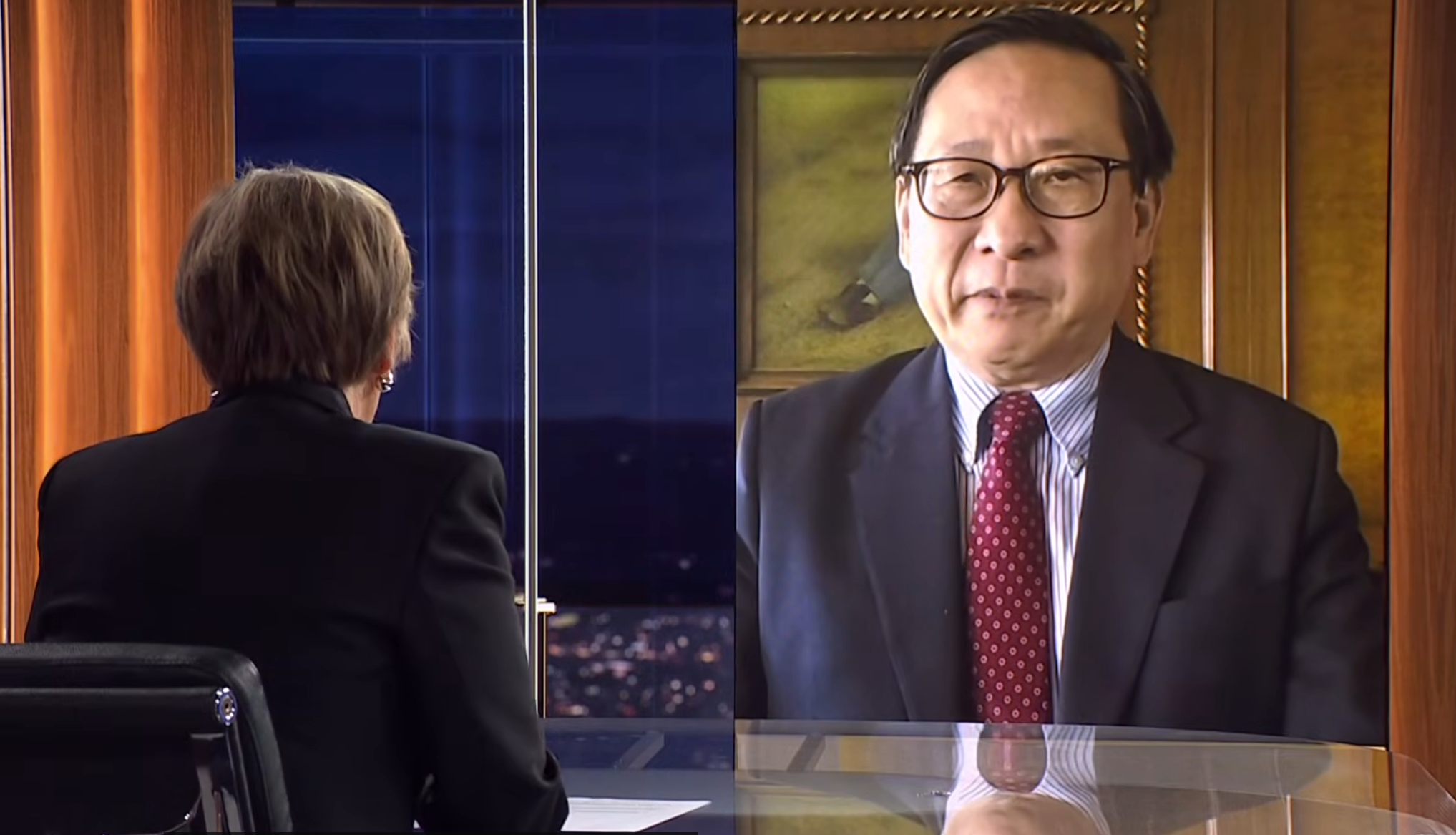
Professor Victor Gao, vice-president of the Center for China and Globalisation, defended China’s short notice ahead of a nuclear-capable ballistic missile test in the Pacific this week, telling ABC’s 7.30 that Australia “should be grateful” for the warning it received — even as he repeatedly rejected suggestions the test was destabilizing.
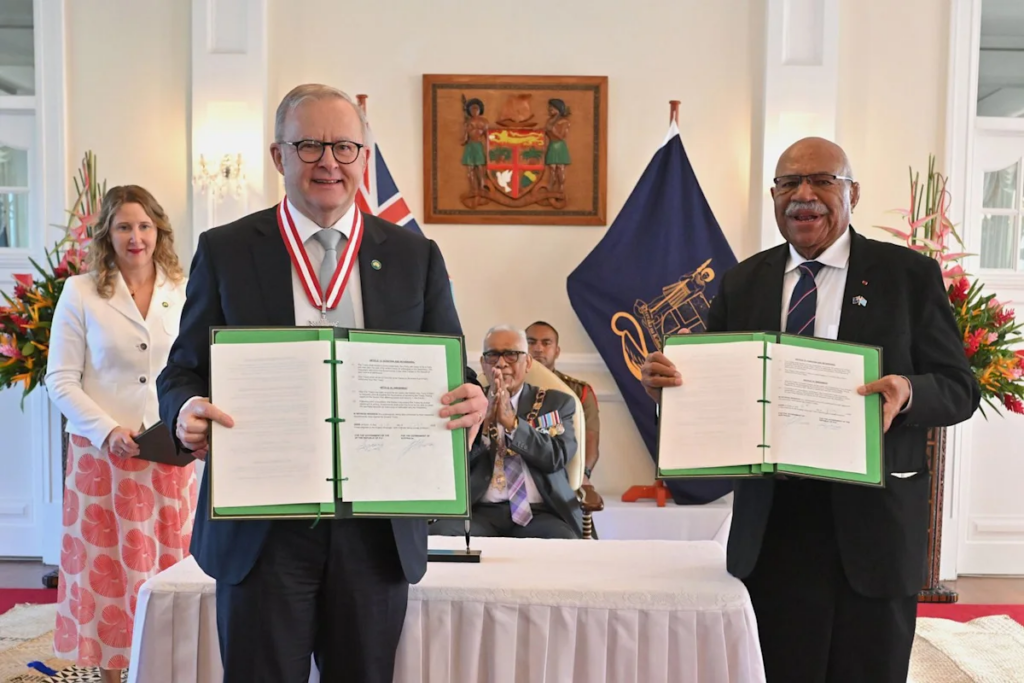
The missile, fired from a Chinese submarine, landed in the Pacific just hours after Australia signed a new mutual defence pact with Fiji. Pacific leaders were quick to condemn the launch, with the Philippines describing it as a “reckless display of military power.”
In an at-times combative interview with 7.30’s Sarah Ferguson, Gao downplayed the significance of the test, cast doubt on criticism from Canberra and Pacific capitals, and used the platform to warn Australia against deepening its military ties with the United States under AUKUS.
“Australia should be grateful”
Ferguson pressed Gao on Foreign Minister Penny Wong’s comments that Canberra had received only very short warning of the test, asking whether that undermined regional stability. Gao dismissed the concern outright.
“I think China follows international protocol notifying countries of concern for this testing,” he said, adding that “Australia should be grateful that China give Australia the courtesy of advanced notice about the testing, about the flight details, etc.”
Pushing back on “routine”
Gao repeatedly characterized the launch as unremarkable, telling Ferguson that “no one should second-guess about China’s military capabilities” and that “for China to launch such a testing fire is very routine and very normal. No country should pretend to be surprised about that.”
Ferguson challenged that framing directly, noting the last comparable test was in 2024, and before that not since the 1980s. Gao did not concede the point, insisting the launch was consistent with a recent land-based missile test near French Polynesia and that “Australia should have no reason to be surprised about that.”
On the size of China’s arsenal
Asked whether China — believed to hold around 600 nuclear warheads — intended to match the United States, Gao declined to give a figure, calling the ambiguity deliberate.
“You never know how many nuclear warheads China has, and this is the biggest strategic ambiguity in our times,” he said. “China will have enough nuclear warheads to [devastate] the country which dares to impose a nuclear war on China. This is the strategic certainty and the assurance in our time.”

Denying any link to the timing of Australia’s Fiji pact
Ferguson asked whether the test’s timing — hours after Australia and Fiji signed their new defence agreement — was deliberate. Gao rejected the suggestion, instead linking the July 6 start of testing to the anniversary of Japan’s 1937 invasion of China, calling it “the main reason in my best judgment of why this testing started on July the 6th, one day before this very important anniversary.”
Warning to Australia over AUKUS
The interview’s sharpest exchange came when Ferguson asked whether Australia’s growing military interoperability with the US — including hosting American forces — made it more of a target for China. Gao used the moment to renew his opposition to AUKUS.
“Australia should really treasure the luxury of being a nuclear-free country,” he said, warning that acquiring nuclear-powered submarines risked eroding that status. He urged the country to “stay away from being a nuclear power, because you do not know what will be the consequence.”
Ferguson noted that his remarks did not “sound like terribly peaceful words,” a characterization Gao did not directly dispute.
Gao also declined to rule out further long-range missile tests, saying China had “already declared to the world its nuclear launch capabilities can touch any corner in any part of the world within 20 minutes or so,” and that “no country should be surprised” by future tests.