Fuel prices have spiked sharply across Tonga, with diesel leading the surge and placing immediate pressure on electricity costs. With global tensions in the Middle East continuing to threaten supply routes, the full impact is still months away, raising urgent questions about whether Tonga is prepared.
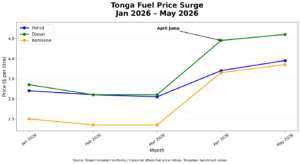
Fuel prices across Tonga have jumped in recent months, with May recording the sharpest increase across all island groups. Petrol $3.95 and Diesel $4.60
Diesel, the backbone of the country’s energy system, is now pushing close to $5 a litre nationally and even higher in the outer islands.
This is not an isolated spike. It reflects growing instability in global oil markets, driven by conflict in the Middle East and ongoing risks around the Strait of Hormuz, one of the world’s most critical oil shipping routes.
This is only the first wave.
Fuel pricing moves with a delay, and what is hitting Tonga now reflects earlier shocks in global markets. If disruption continues, further increases over the next one to two months are not only possible, they are already being locked in.
That risk goes far beyond the pump.
Diesel is not just another fuel in Tonga. It powers electricity generation, drives transport, supports fishing and agriculture, and underpins the cost structure of almost every business in the country.
When diesel rises, everything rises with it.
Electricity is where the impact will be felt most directly.
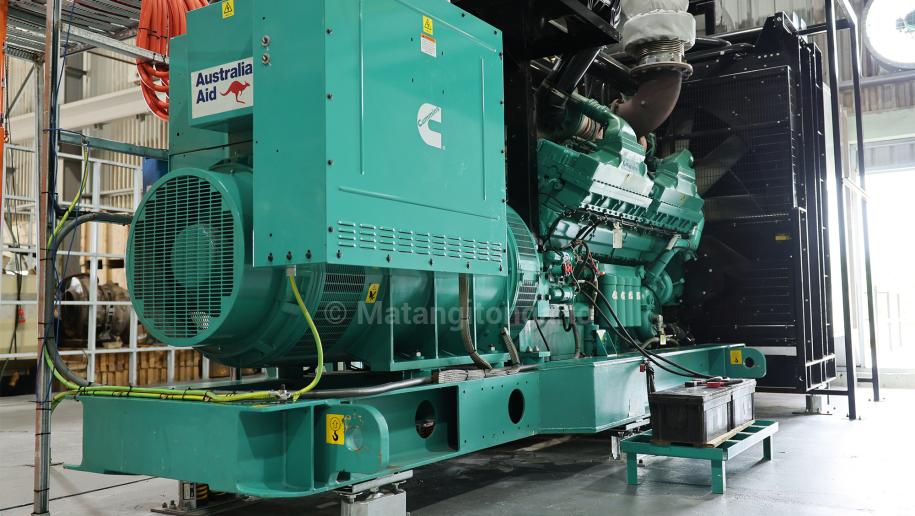
 Tonga remains heavily dependent on diesel for power generation. As diesel costs climb, the cost of producing electricity rises with it. That leaves only two outcomes. Either electricity prices increase, or financial pressure builds within Tonga Power and eventually flows through to consumers.
For households already under pressure, and for businesses operating on tight margins, that squeeze is coming.
PM says supply is satisfactory, but price danger remains
The Prime Minister said Tonga remained in a satisfactory position on fuel supply, despite growing concern across the Pacific.
He said local checks showed there was sufficient fuel in storage and that deliveries were continuing as scheduled.
But the more revealing issue is price.

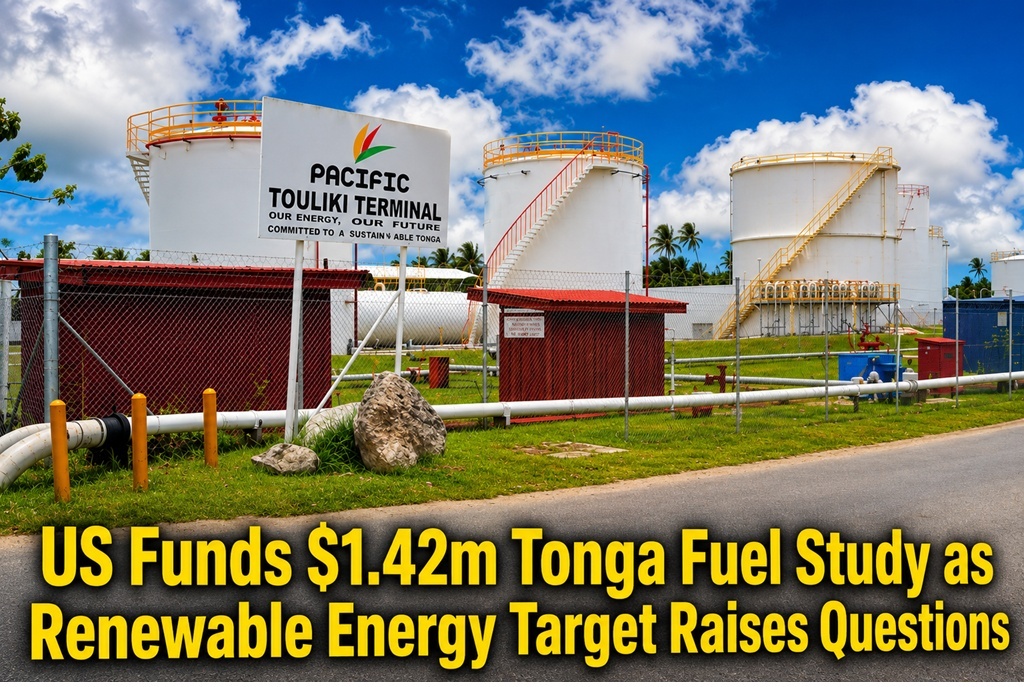
According to the Prime Minister, oil companies had sought a 100 percent increase. Government negotiated that down to 50 percent. He also confirmed Tonga had been operating on spot pricing, but suppliers have now reverted to contract pricing, opening the door for the Competent Authority to reassess local fuel prices.
Asked whether that shift could lead to lower prices, the Prime Minister said it would be up to the Competent Authority and suppliers to decide.
That answer leaves a critical gap.
If the recent increase was driven by fuel already in transit during the Iran conflict and shipping disruptions, then any movement in global oil prices today may not reach Tonga for weeks or months.
In other words, the country may not yet have felt the full impact.
So far, there has been no clear sign of a coordinated government response.
There has been no indication of whether temporary relief measures are being considered, no clarity on fuel duty adjustments, and no public signal on how electricity pricing will be managed if diesel continues to rise.
That silence is becoming harder to justify as costs begin to bite.
The strain is already showing in the outer islands.
In the Niuas, diesel prices have moved well beyond $5 per litre, reflecting the added cost of distance and supply. That gap is likely to widen if global pressures continue.
Tonga is not insulated from what is happening overseas. It sits at the end of the supply chain, where shocks arrive later, but hit harder.
The question is no longer whether prices will rise again.
It is how much households and businesses will be forced to absorb before anything is done.