Tonga Faces Inflation Risk From Middle East Conflict As Reserve Bank Holds Neutral Policy
Reserve Bank warns global fuel and shipping disruptions could push up costs, while analysts say faster investment and infrastructure development may help strengthen Tonga’s economic resilience.
Tonga could soon face rising prices linked to the escalating conflict in the Middle East, according to the National Reserve Bank of Tonga, which this week released its February 2026 Monetary Policy Statement.
The Reserve Bank warned that global instability and disruptions to fuel and shipping routes could create an inflation shock for the Tongan economy, increasing pressure on the cost of living for households and businesses.
At a meeting with commercial banks and government officials on 9 March, the Bank confirmed it would maintain a “neutral” monetary policy stance, keeping its policy rate unchanged at 2 percent for the next six months.
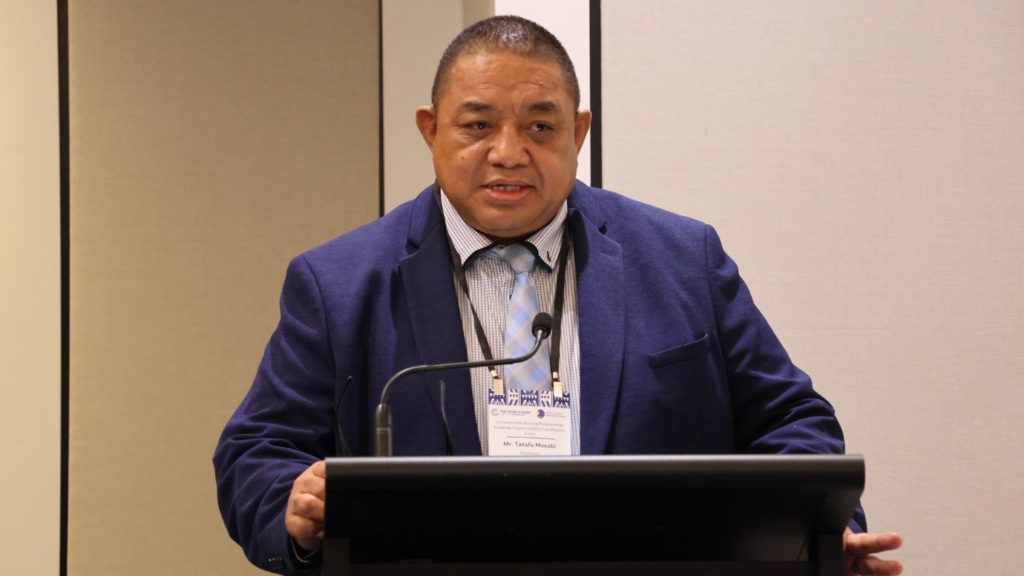
Governor Tatafu Moeaki said the Bank would continue to monitor global developments closely, particularly the economic consequences of the conflict in the Middle East.
“Even before the recent escalation in the Middle East, the outlook for Tonga was already becoming more challenging amidst rising global fragmentation and geopolitical tensions,” the Governor said.
“A short and contained conflict may lead to a temporary inflation shock. However, prolonged disruption — particularly affecting fuel and shipping costs — could intensify cost-of-living pressures on households and businesses.”
Inflation pressures remain
The Reserve Bank said headline inflation eased to 3.1 percent in December 2025, below the Bank’s reference rate of 5 percent.
However, core inflation remains significantly higher at around 10 percent, indicating that underlying domestic price pressures are still elevated.
Economic growth also remains modest. The Bank estimates Tonga’s real GDP grew 2.5 percent in FY2025, below the Pacific regional average of 2.9 percent and the global average of 3.3 percent.
Foreign reserves remain above minimum thresholds and the financial system is considered stable, although the Bank warned that the medium-term outlook is becoming more uncertain.
For now, the central bank’s approach is to maintain stability while closely watching global developments before considering any tightening of monetary policy.
Global shocks quickly reach Tonga
For small island states such as Tonga, conflicts thousands of kilometres away can quickly push up prices at home.
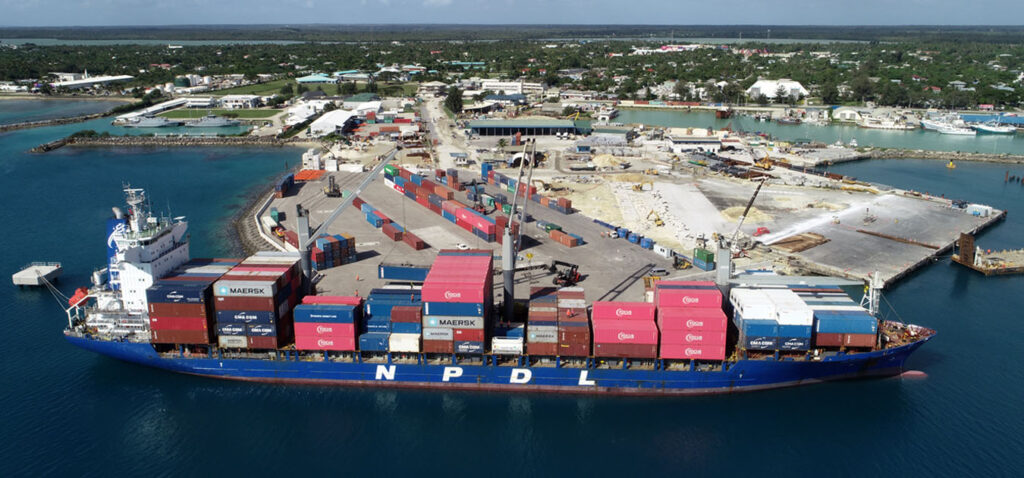
Much of the country’s fuel and goods move through global shipping networks tied to energy markets in the Middle East and Asia. When oil prices rise or shipping routes are disrupted, the effects ripple through electricity costs, transport, freight and ultimately food prices.
Industry estimates suggest global shipping costs could rise significantly if tensions escalate further, potentially pushing freight prices sharply higher across the Pacific.
For import-dependent economies, these external shocks often drive inflation far more than domestic economic activity.
Growth seen as part of the solution
While monetary policy can help stabilise the financial system, many of the pressures facing Tonga originate outside the country’s control.
Some economists and business leaders argue that strengthening economic resilience will also require faster domestic growth.
The Reserve Bank itself has estimated Tonga’s long-term growth trend at around 1.5 percent, a rate many analysts consider too slow to absorb rising living costs, unemployment pressures and productivity challenges.

In that context, accelerating major infrastructure and development projects has increasingly been discussed as one way to support stronger economic momentum.
Projects already identified within Tonga’s development pipeline include large infrastructure works, renewable energy investments and public sector construction projects such as resilient schools and government facilities.
Such projects are often seen as important economic drivers in small island economies, generating employment, stimulating local businesses and attracting development financing.
Energy diversification gaining attention
Energy security is also emerging as a critical issue.
Tonga’s electricity generation remains heavily dependent on imported diesel, leaving the country vulnerable to global oil price fluctuations.
Expanding renewable energy capacity, including solar power projects, could reduce exposure to volatile fuel markets while strengthening long-term economic resilience.
Development partners such as the Asian Development Bank and the World Bank have supported renewable energy initiatives across Pacific island economies for precisely this reason.
From reacting to building resilience
As global geopolitical tensions continue to affect energy markets and international shipping routes, the policy challenge for Tonga may increasingly extend beyond responding to inflation shocks.
Some economic observers also point to the need for faster government approval processes to unlock private sector investment. Streamlining regulatory procedures and reducing administrative bottlenecks could help accelerate projects already in the pipeline, allowing businesses to respond more quickly to changing economic conditions.
With global economic pressures building, enabling faster investment decisions may help stimulate economic activity and partially offset some of the pressures expected to build in the months ahead.
Ultimately, while monetary policy can help manage short-term stability, long-term resilience may depend on how effectively Tonga can expand economic activity, attract investment and strengthen its productive sectors.
As global conditions become more uncertain, the question facing policymakers may not simply be how to manage inflation — but how to position the economy to withstand the next external shock before it arrives