When the Architect Steps Back: How US Policy Shifts Are Reshaping Tonga and the Pacific
By Tu’ifua Vailena
As Washington redraws the boundaries of global power, Tonga and the Pacific are being forced to rethink long-held assumptions about development, diplomacy and multilateralism.
That is the central warning from former prime minister Dr Aisake Eke, whose assessment of the United States’ recalibration of its relationship with multilateral institutions offers a rare, unsentimental reading of a global order in transition.
The United States’ decision to directly challenge the operations and funding of multilateral institutions marks a decisive break from decades of bipartisan orthodoxy. For Pacific Island countries, long accustomed to navigating global policy through the United Nations system and its affiliates, the shift is not abstract. It is already altering the flow of money, the language of development, and the strategic calculations of small states.
Speaking from the vantage point of experience rather than office, the former prime minister argues that the move is less an ideological rupture than a strategic recalibration. The United States, as the principal architect and largest funder of the post-war multilateral system, is now questioning whether those institutions still serve their original purpose or American interests in a world defined by fiscal constraint and intensifying rivalry with China.
At one level, he says, Washington’s actions reflect a long-overdue push for efficiency. Large international organisations, once insulated by reliable funding, are now being forced to confront bloated bureaucracies and programmes whose relevance has drifted. At another level, the shift is overtly political. The United States is reasserting control over where its money goes, how it is used, and which values it supports.
Debt looms large in this calculation. With public liabilities at historic levels, Washington’s tolerance for open-ended global commitments is narrowing. Reducing contributions to multilateral bodies is one of the few levers available to contain spending without directly cutting domestic programmes. In that sense, the former prime minister suggests, fiscal pressure is shaping foreign policy as much as ideology.
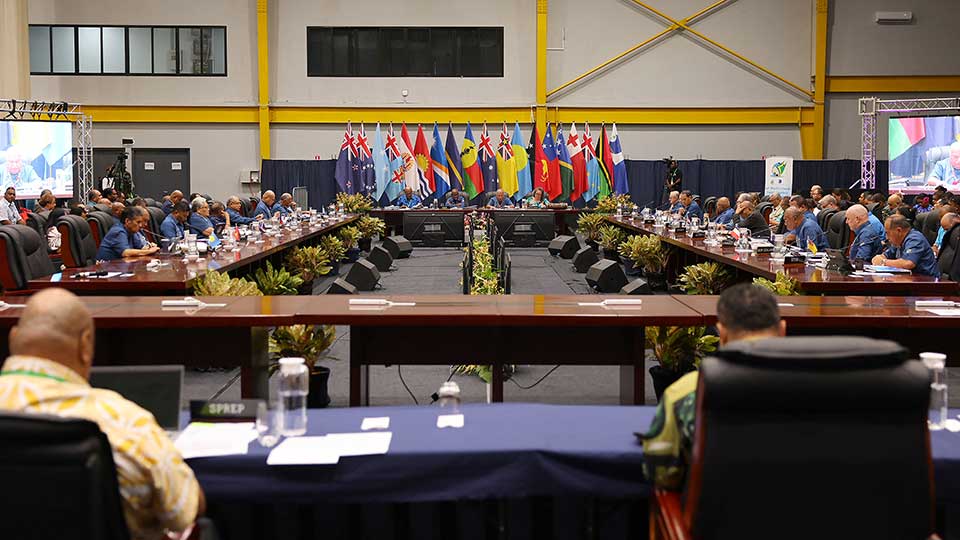
The cultural dimension is harder to ignore. Funding withdrawals from programmes related to women’s rights and social policy, including initiatives implemented through Pacific regional organisations, signal the extent to which domestic political coalitions in the United States are now influencing international engagement. This is not a rejection of multilateralism outright, but a selective, conditional participation.
Yet the former prime minister cautions against reading permanence into the moment. US foreign policy, he notes, is cyclical. Today’s “America First” posture may soften or reverse under a future administration more inclined towards global cooperation. For Pacific governments, however, waiting for political winds to change is not a strategy.
Multilateral institutions have already begun adjusting. Operational austerity at the United Nations, curbing overtime, compressing meetings, reviewing programmes and trimming staff, reflects a recognition that reform can no longer be deferred. The former prime minister describes this as necessary pruning rather than decline, a painful but essential process if these institutions are to remain credible.

The consequences for the Pacific are uneven but unmistakable. Some development funding has already been cut. Climate-related finance routed through global institutions faces uncertainty as Washington distances itself from climate policy frameworks. But the former prime minister draws a crucial distinction. While climate advocacy may be out of favour, resilience-building is not.
This distinction matters. US support for initiatives such as the Pacific Resilience Facility, headquartered in Tonga, signals a pragmatic shift rather than disengagement. The language has changed, not the underlying recognition that small island states face acute environmental vulnerability.
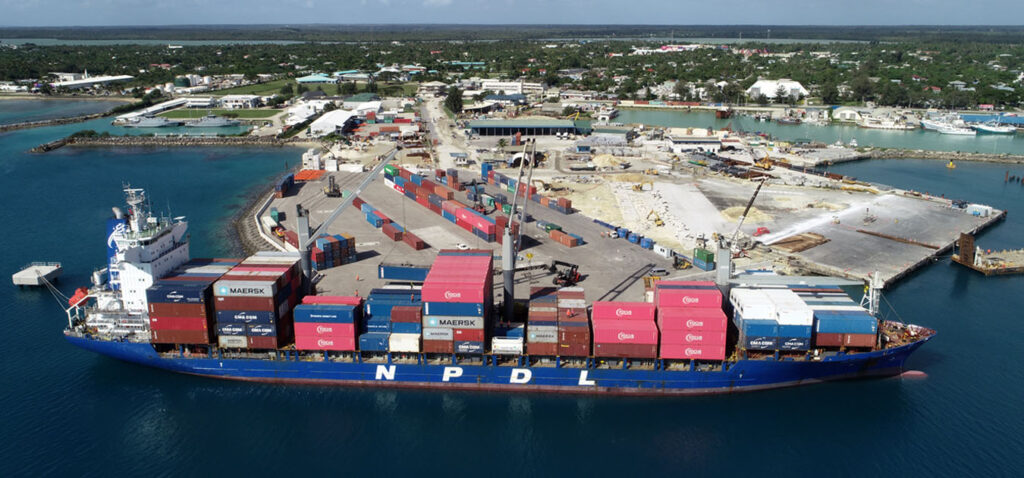
More significantly, the United States is redirecting its Pacific strategy towards economic development anchored in private sector growth. Support through the Millennium Challenge Corporation for countries such as Tonga and Fiji reflects a preference for bilateral arrangements that reward governance standards, economic freedom and measurable outcomes. Infrastructure projects, including fuel storage facilities that strengthen energy security, sit comfortably within this model.
Geopolitics is never far from the surface. The former prime minister stops short of framing US engagement as overt containment, but the subtext is clear. Private sector investment, visibility on the ground and tangible economic impact are tools for countering China’s expanding influence in the region.
His conclusion is neither alarmist nor complacent. The global system is changing, and Pacific Island countries cannot assume that old pathways will remain open. Multilateral institutions must reform to survive. Governments must adapt their development narratives. Good governance is no longer just a virtue. It is a prerequisite for access.
For Tonga, the lesson is blunt. Strategic relevance now depends less on rhetoric and more on readiness to adjust, to engage selectively, and to operate in a world where power is exercised more narrowly, and more deliberately, than before.