Rabuka’s Tightrope: Fijian PM’s China Remarks Spark Diplomatic Response, Regional Reflection
By Tonga Independent News
In the wake of Fiji Prime Minister Sitiveni Rabuka’s recent remarks at Australia’s National Press Club, the Chinese Embassy in Suva has issued a formal statement responding to what it described as misinterpretations by Australian media, while reaffirming China’s long-standing partnership with Fiji and other Pacific Island nations. The public exchange highlights the increasingly delicate balancing act Pacific leaders are navigating amid intensifying strategic competition between China and traditional Western allies.
A Careful Calibration: Rabuka’s Mixed Signals
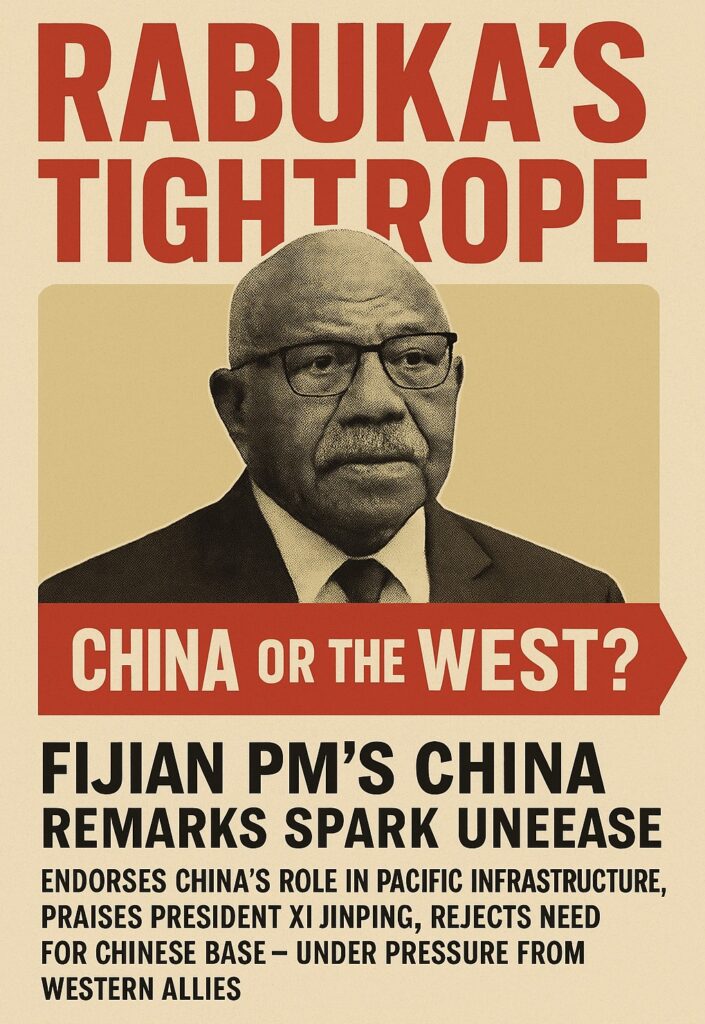
Prime Minister Rabuka, known for his efforts to reorient Fiji’s foreign policy after years of pro-China leaning under previous governments, appeared to strike a nuanced tone in his comments in Canberra. He acknowledged that China had stood by Fiji “when Australia turned away” and praised Chinese President Xi Jinping as “a great leader.” He emphasized Fiji’s sovereignty had never been intruded upon by China and acknowledged China’s valuable contribution to infrastructure development in the region.
At the same time, Rabuka made it clear that Fiji does not see the need for a Chinese military base in the Pacific, stating plainly that “China does not need a base here.” This remark—perhaps made to reassure Canberra and Washington—was seized upon by segments of the Australian media as a sign of unease with China’s intentions in the Pacific.
China’s Embassy Responds: ‘No Need to Choose Sides’
In its detailed response, the Chinese Embassy in Suva pushed back on what it called the “hype” around Rabuka’s remarks. It emphasized that China’s assistance in the Pacific has always respected sovereignty, lacked political strings, and focused on real developmental outcomes such as bridges, schools, and agricultural support.
The embassy reiterated the “Four Full Respects” doctrine guiding China’s Pacific diplomacy—full respect for sovereignty, will, culture, and unity of Pacific nations. The message was clear: China sees itself not as a geopolitical threat, but as a development partner offering alternatives to Western aid and influence. The embassy rejected the narrative of a looming Chinese military presence, labelling such claims as “false” and rooted in ulterior motives.
The statement also reinforced China’s uncompromising stance on the Taiwan issue, reiterating the One-China principle and urging continued support from Pacific nations—including Fiji.
Implications for the Region: Pacific Leaders Under Pressure
Rabuka’s comments—and China’s swift reaction—underscore the geopolitical dilemma confronting Pacific Island governments. With limited resources and enormous development needs, countries like Fiji, Tonga, Samoa, and the Solomon Islands are being courted by both Beijing and Western allies, particularly the United States, Australia, and New Zealand. But they are being asked—sometimes explicitly—to “choose sides.”
Rabuka’s reference to an “Ocean of Peace” reflects a regional desire to maintain neutrality and peace amid global rivalries. However, his “China does not need a base” remark, though diplomatically cautious, revealed the tightrope Pacific leaders must walk: welcoming infrastructure aid from China while placating the West’s security concerns.

What This Means for Tonga
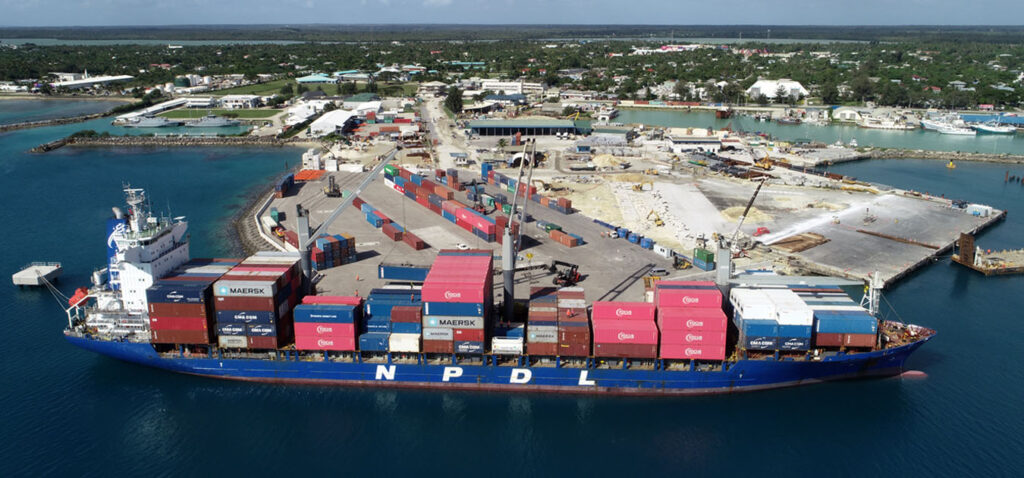
Tonga, like Fiji, is in a similar strategic bind. China’s assistance to Tonga over the past two decades has been substantial, including roadbuilding, school construction, and debt financing. At the same time, Tonga continues to benefit from strong ties with Australia, New Zealand, Japan, and increasingly the United States.
The public response by the Chinese Embassy to Rabuka’s speech serves as a warning to other Pacific leaders: Beijing is closely watching how its intentions are portrayed and will not hesitate to defend its narrative. For Tonga, this means any future statements about China—especially regarding security, Taiwan, or potential military bases—must be measured and diplomatic.
Tonga’s government, under Prime Minister Dr. ‘Aisake Eke, will need to carefully manage relations with both powers. Public sentiment in Tonga, particularly after the devastation of natural disasters, is sensitive to which partners show up with meaningful help—not just headlines. China’s infrastructure investments in Tonga are highly visible, but concerns about debt and transparency linger. Meanwhile, Western partners are increasing their engagement but often with more conditionality.
The Bigger Picture: Decolonising Development or Recolonising Strategy?
Rabuka’s comments and the resulting Chinese reaction raise deeper questions: Are Pacific nations genuinely free to pursue development partnerships, or are they being asked to become pawns in a new Cold War? Can they chart an independent foreign policy path, or will they be boxed in by superpower rivalry?
While Fiji has sought to remain open to both China and the West, it risks being perceived as hedging too heavily leading to mistrust on both sides. The same trap may await Tonga and other island nations.
Ultimately, Rabuka’s words— “China does not need a base here”—could prove to be a strategic understatement, designed to reassure the West without angering Beijing. But China’s response suggests that even mild rebukes will not go unnoticed. As the Pacific navigates this new era of multipolar engagement, leaders must master the art of strategic ambiguity, while ensuring that the true needs of their people—climate resilience, sustainable infrastructure, and regional unity—remain at the forefront.
By Melino Maka
Political and Economic Commentator (Tonga & NZ)
Published by Tonga Independent News