Viewpoint | Prime Minister Hon. Aisake Eke: Understanding Aid Finance and Tonga’s Development Path
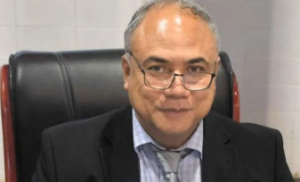
In response to recent public commentary and opinion pieces debating Tonga’s fiscal management and aid dependence, Prime Minister and Minister for Finance Hon. Aisake Eke explains the government’s position. He outlines what aid finance is, why it exists, and how it supports Tonga’s broader goal of building a viable and self-reliant economy.
By Hon. Aisake Eke
Prime Minister and Minister for Finance
Thank you for your article and for encouraging public debate. I agree that critical views are valuable and should be welcomed, but they must be based on facts.
The discussion about Tonga’s fiscal policy and sustainable economic development should not be judged solely on the level of aid the country receives. The assumption that increasing aid is bad and decreasing aid is good is misplaced and oversimplifies a much more complex issue.
The starting point of this debate should be the basic question: what is aid finance? Only after understanding that can we meaningfully discuss what, why, how, and when aid is used. Unfortunately, the current discussion has not followed that logical sequence. It began with the wrong assumption and therefore reached a misleading conclusion that has created confusion.
1. What is Aid Finance?
Aid finance is one of several ways to fund the Government’s expenditure budget. The other financing sources include domestic revenue (both tax and non-tax), domestic borrowing, external grants (aid), external borrowing, and external revenue streams such as licensing rights for fishing in Tonga’s Exclusive Economic Zone, use of our airspace, and satellite slots.
2. Why is Aid Finance Provided?
Aid finance arises from Tonga’s relationships with other countries (bilateral partners) and with multilateral organisations such as the World Bank and the Asian Development Bank, of which Tonga is a shareholder.
Aid is not free. It is often provided because it serves mutual interests. Donor countries and institutions may gain political or strategic benefits, such as support for their resolutions in the United Nations. Tonga, in return, benefits through development projects and financial assistance.
3. Aid as Climate Finance
Another major form of aid today is climate finance. This stems from United Nations resolutions that require industrialised nations, those responsible for most carbon emissions, to compensate countries that are victims of climate change impacts. Small island states like Tonga use these funds for resilience, mitigation, and adaptation projects. Aid in this sense is part of a global obligation, not a handout.
4. How Aid Finance Is Used
Aid finance should be used strategically to advance national development goals consistent with the Tonga National Strategic Development Framework. For example, our Government recognises the strategic importance of building a bridge to connect Nuku‘alofa to the eastern side of Tongatapu. This would reduce travel costs and time and serve as an evacuation route in the event of a natural disaster such as a tsunami.
Our responsibility is to use aid wisely to build the infrastructure necessary for a viable economy. Tonga has significant underdeveloped potential in fisheries, tourism, agriculture, and manufacturing. Investing in these sectors will make the economy stronger and generate more domestic revenue over time, reducing our reliance on aid.

5. Strategic Goals and Examples
The Government’s development strategy prioritises investment in projects with the greatest positive impact on national productivity. For example, expanding longline fishing can increase the fisheries sector’s contribution to GDP from 3 percent to 30 percent. This would provide affordable local fish for domestic markets and reduce imports from Fiji, where tuna and haukala puaka are sold for $10 to $12 per kilogram. We have engaged with local investors to expand domestic production and strengthen the national economy over time.
6. The Purpose of This Debate
The current debate about aid finance suggests a lack of understanding of the fundamentals: what aid is, why it exists, and how it should be used. We should return to these basics before drawing conclusions. Only then can public debate contribute meaningfully to national development and help us create a viable economy with the right strategy to achieve it.
The debate has also started with the assumption that aid finance is a bad thing. We must ask why that assumption is made, and who says it is true. Once those basic questions are answered, we can have a more productive discussion about how to use aid to make Tonga stronger, fairer, and more self-reliant.
I understand that some of the current debate may be influenced by political interests as elections approach. That is natural in any democracy. But I encourage everyone, in politics, media, and the community, to approach these discussions with intellectual honesty and a shared commitment to building a better Tonga.
Editor’s Note:
This Viewpoint is published in response to ongoing public debate about Tonga’s fiscal policy, including opinion pieces and commentary on aid dependence. Tonga Independent News welcomes informed discussion from all sides of national issues.
The following contribution from the Prime Minister and Minister for Finance, Hon. Aisake Eke, sets out the government’s perspective on the role of aid finance and its place in national development strategy. The article has been lightly edited for clarity and length.