The West vs. the Rest: Rethinking Democracy’s Broken Promises
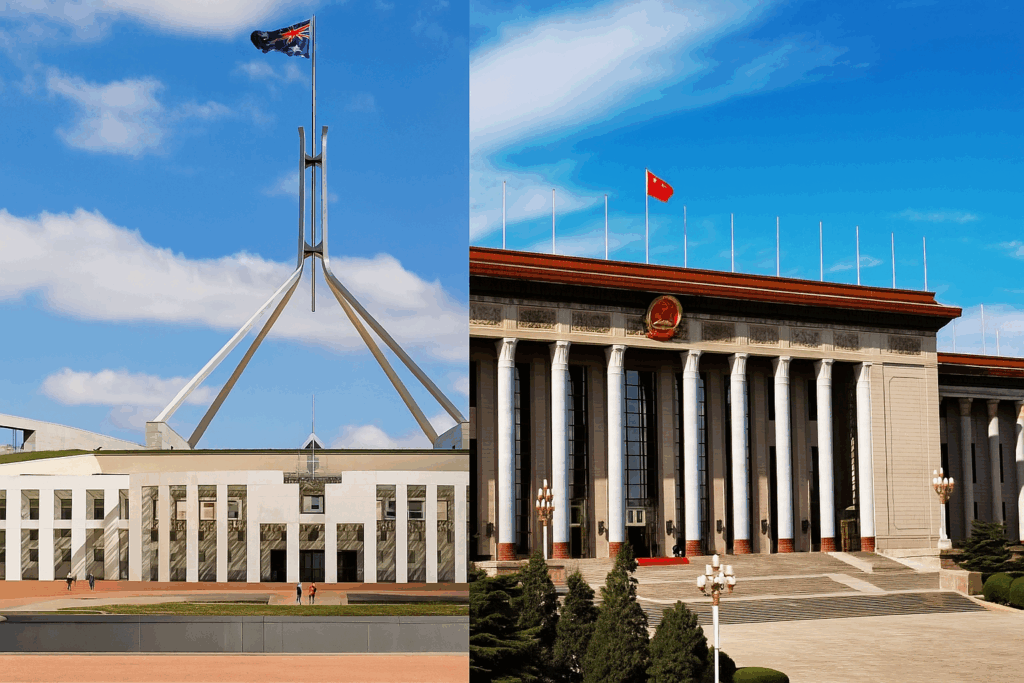
For decades, Western nations like the United States, Australia, and New Zealand have championed liberal democracy as the pinnacle of political maturity and moral leadership. These systems rest on pillars such as free elections, separation of powers, freedom of speech, and the protection of human rights. Yet the very nations that tout these ideals often fail to deliver them equally,especially to their most marginalised citizens. As cracks appear in the facade of Western democracy, China’s authoritarian model offers a competing narrative: that order, economic development, and social cohesion can be achieved without Western-style freedoms.
The Myth of Moral Superiority
In the United States, where freedom of speech is enshrined in the First Amendment, Black and Latino communities face systemic injustices from policing to healthcare to education. The U.S. imprisons over two million people, disproportionately people of colour and maintains a racial wealth gap that has barely shifted since the 1960s. Gun violence, homelessness, and unaffordable healthcare continue to plague a country that claims to protect individual freedoms.
Australia, despite its prosperity, rejected a modest proposal for an Indigenous Voice to Parliament in 2023 a symbolic step, not legislative power, that was nonetheless rejected by the majority. Indigenous Australians are incarcerated at 17 times the rate of non-Indigenous Australians, and disparities in health, education, and employment remain stark.
New Zealand, while more progressive in its bicultural approach, still records significant inequities between Māori and non-Māori populations. According to the New Zealand Productivity Commission and Stats NZ, Māori children are more than five times as likely to be taken into state care, and Māori adults face ongoing disparities in income, education, and health outcomes.
These nations project their political systems as models for the world, yet their own histories are rooted in colonisation, cultural erasure, and structural inequality. Despite the presence of diverse Indigenous and migrant communities, these states have failed to build true cultural pluralism. Instead, they often promote a shallow, consumer-driven identity. Increasingly, what these three nations share is a hollowed-out dominant culture, defined more by economic participation and individualism than by shared meaning or heritage.
Their claims to moral authority ,grounded in “freedom” and “rights”,ring hollow when whole communities remain excluded from those promises, and when governance is detached from cultural context, belonging, and spiritual connection to land and community.
The Chinese Counter-Narrative
China does not present itself as a liberal democracy. It offers a different social contract: the state delivers economic growth, infrastructure, and social stability in exchange for political obedience. And, materially, it has delivered. China has lifted over 800 million people out of poverty, developed world-class infrastructure, and implemented long-term national strategies that many Western democracies struggle to achieve. Its high-speed rail network, renewable energy leadership, and urban development contrast sharply with the decaying infrastructure of many Western cities.
Yes, China censors the press, suppresses dissent, and tightly controls civil society. Its treatment of Uyghurs and the dismantling of Hong Kong’s political autonomy have drawn international condemnation. Yet its leadership is highly technocratic, focusing on goals such as poverty eradication, housing, education, and public health as urgent national imperatives, not points of partisan debate.
According to the World Bank, China virtually eliminated extreme poverty by 2020 using the $1.90/day threshold. In contrast, the U.S. still reports that 11.1% of its population lives below its national poverty line, according to the 2023 U.S. Census Bureau data. To many in the Global South, China’s model appears less ideological and more results-oriented. It delivers physical infrastructure, healthcare access, and rising standards of living ,things often promised but not consistently realised in liberal democracies.
Crucially, it does so within a civilisational framework rooted in its own traditions, values, and history a cultural foundation often missing in Western nations shaped by settler colonialism and mass migration.

Which Freedom Matters?
Western democracies pride themselves on civil liberties, but what good is freedom of speech if no one in power is listening? What use is the right to vote when the political spectrum is narrowed by corporate money, media consolidation, and elite interests? What do human rights mean when refugees are imprisoned, racial minorities are overpoliced, and the working poor are one medical bill away from destitution?
China prioritises economic and social rights over political ones. Citizens may not enjoy political freedoms, but many benefit from job security, healthcare, and upward mobility. A 2022 Harvard study found that over 90% of Chinese citizens expressed satisfaction with their central government ,a striking contrast to the declining trust in democratic institutions across the West.
For many in developing nations, especially those still recovering from colonial legacies, China’s model is not a threat, it is a template for delivering prosperity without sacrificing sovereignty.
A Flawed Binary
Neither system is without grave shortcomings. China’s repression, surveillance, and absence of judicial independence are serious human rights concerns. But Western democracies are not morally superior. From America’s mass incarceration and child poverty to Australia’s offshore detention centres and New Zealand’s socio-economic disparities, liberal systems often protect privilege more than principle.
The real issue is not which system is better. It is that both are failing to live up to their promises, one through overreach, the other through moral hypocrisy.
Toward a New Vision of Governance
The debate should no longer centre on Western democracy versus Chinese authoritarianism. The deeper question is: Can either model, as currently structured, deliver a just, inclusive, and sustainable future?
True democracy must go beyond elections and individual rights. It must be anchored in dignity, equity, shared identity and yes, culture. The future may lie not in choosing between two imperfect powers, but in building a third path: one that combines economic justice with civil liberties, cultural sovereignty with civic participation, and local wisdom with global cooperation.
Such a model might draw from the relational governance of Pacific Island nations, the plurinational frameworks of Latin America, and the developmental pragmatism of China while preserving the freedoms liberal democracies have long promised but not yet fulfilled.
Perhaps the next chapter of global governance won’t come from those who conquered the world, but from those who endured it and are now rewriting its rules.
Tu’ifua Vailena