The King Speaks, But Who Listens?
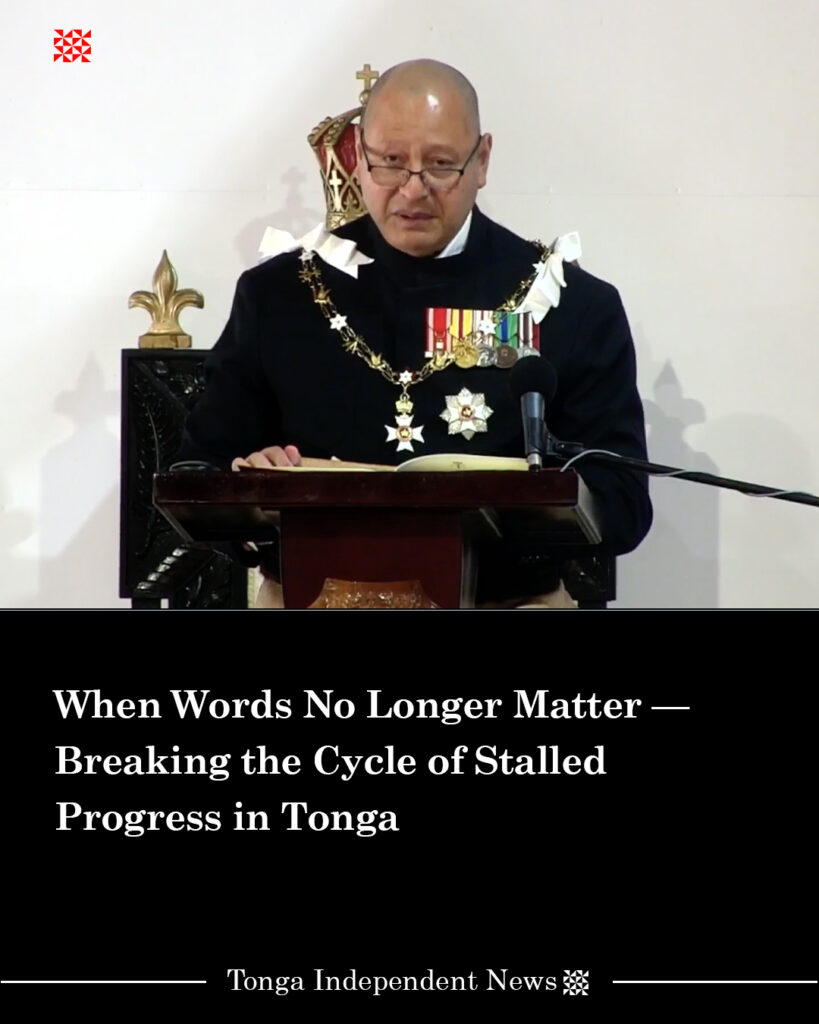
Every year, the Kingdom of Tonga gathers to hear the King’s solemn voice open Parliament with dignity and moral clarity. And every year, His Majesty calls for the same pillars of progress: financial accountability, investment in health and education, and unity across government for the good of the people.
This year was no different.
In his 2025 address, the King expressed gratitude to God for the nation’s journey, praised the stability of Parliament, and once again reminded leaders of their constitutional obligation to manage public funds responsibly. He warned of the dangers of unaccounted spending and called for stronger planning in health and education, particularly in the face of crises like COVID-19 and dengue fever.
Yet for many Tongans, the speech sounded more like a replay than a revelation.
“The King always says what needs to be said. But who is actually listening?” asks a retired public servant in Nuku‘alofa. “The speech is noble, but the action after it? That’s where we keep failing.”
The Echo Chamber of Parliament
Since 2015, Tonga’s royal speeches have consistently raised the same themes: fiscal discipline, reducing reliance on remittances, improving education, retaining skilled workers, and ensuring national unity. But progress has been slow and uneven.
A prominent businessman, who asked to remain anonymous for fear of backlash, believes the speeches have become “aspirational guidelines rather than directives.” He adds, “The King has a vision, but unless Parliament and the civil service turn that vision into policy and practice, it remains ceremonial.”
Quick Facts:
- Remittances currently make up over 35% of Tonga’s GDP
- In the last 5 years, Tonga has lost more than 60 nurses and 20 doctors to overseas employment
- Education outcomes have remained stagnant, despite ongoing policy reforms
Are the Wrong People in the Right Roles?
A growing number of citizens and analysts are now asking if the problem lies not with the message, but with the messengers.
“We have PhDs and Masters degree holders running ministries, but many have never managed a business or led a large project,” says Semisi Tu‘ivai, a local entrepreneur. “They know theory but struggle with execution. It’s killing our momentum.”
A university graduate working in the private sector agrees: “We’re taught to aim high, but when we return with ideas, we’re shut down by officials who fear change or don’t understand real-world challenges.”
This view is gaining traction among youth and professionals who feel that a new style of leadership is needed—one rooted in performance, results, and practical experience. While higher education is respected, many argue it has become a shield for inaction rather than a tool for transformation.

What Now? Turning Words Into Change
As Parliament begins its session, the pressure is rising. Citizens want more than eloquence; they want impact. Transparency is no longer a topic for speeches — it’s a demand for survival.
Several MPs have pledged to take the King’s message seriously. One member of the People’s Representatives, speaking anonymously, said, “This year, we must change course. We’re losing the people’s faith.”
What Needs to Happen:
A performance-based public service, where promotions are based on results, not connections
Education reform that matches market realities and prepares youth for real-world work
A Cabinet that balances academic knowledge with practical leadership and private-sector experience
Clear mechanisms for tracking implementation of parliamentary commitments
The Final Word
The King has done his part: he has spoken clearly, firmly, and with vision. The real question now is whether those in Parliament and Government will finally move beyond ceremony and into service.
Because the people are no longer content to watch this speech become an annual ritual. The time for talk has passed.
Action is overdue.
Tu’ifua Vailena