The Core Contradiction
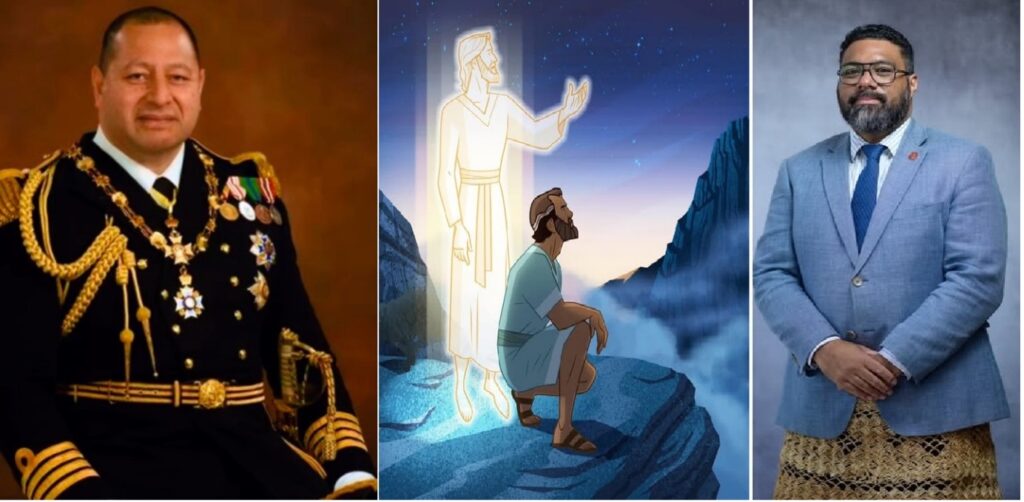
The King’s statement—morally unequivocal and grounded in Christian principle—sets a clear expectation of righteous leadership and explicitly condemns corruption. As a constitutional monarch, His Majesty King Tupou VI speaks not as a judicial or executive authority, but as a moral and cultural guide, articulating the standards by which leadership ought to be judged.
The practical difficulty, however, lies in the unresolved legacy of governance. Members of the newly elected government were previously subjects of investigations initiated by Tonga’s Anti-Corruption Commission (ACC) during the 2020–2021 period. Those investigations were never publicly concluded. No findings of wrongdoing were publicly determined in relation to those matters, and the existence of an investigation does not imply guilt.
This creates a clear perception gap. The King calls for integrity going forward, while sections of the public remain preoccupied with unanswered questions from the past. The moral warning, however sound, appears disconnected from unfinished legal and investigative processes that continue to cast a shadow over public trust.
At its core, the contradiction is this: the King urges leaders not to be corrupt, while citizens ask why earlier concerns were never fully examined or resolved. The absence of closure risks undermining the very accountability the address seeks to promote.
Why This Moment Is Particularly Delicate
The ACC occupies a precarious position within Tonga’s governance framework. Historically constrained by limited resources, legal complexity, and political pressure, an “unfinished investigation” often reflects structural impediments rather than resolution. Investigating sitting ministers would place extraordinary strain on the Commission’s independence and authority.
This tension is amplified by the fusion of traditional and modern authority in Tonga. The King’s words derive immense weight from his role as Head of State and moral leader. Yet in a democratic system, moral leadership must be reinforced by functioning institutions—an independent ACC, a capable judiciary, and transparent governance mechanisms. Where those institutions appear weakened or incomplete in their work, moral exhortation risks sounding aspirational rather than actionable.
The statement that “Tonga needs more than divine intervention” captures this reality succinctly. Ethical appeals assume a capacity for self-correction. Politics, however, operates through alliances, patronage, and power. Without institutional safeguards, principle alone is insufficient.

Public Trust and the Risk of Cynicism
For citizens aware of unresolved investigations, the King’s address may prompt scepticism rather than reassurance. Without visible institutional follow-through, such speeches risk being interpreted as ceremonial rather than catalytic. The real test will be whether the address empowers civil society, the media, and independent agencies to demand transparency and accountability—particularly regarding unresolved matters.
The Path Forward
Aligning moral vision with governance reality requires institutional action:
- Institutional Independence: The ACC must be adequately resourced and protected to conclude stalled investigations without fear or favour.
- Parliamentary Accountability: The Legislative Assembly should consider strengthening ethics oversight through a cross-party mechanism with genuine investigatory authority.
- Media and Civil Society Vigilance: The King’s words provide a legitimate benchmark against which journalists and NGOs can scrutinise public decision-making.
- Legal and Electoral Reform: Consideration should be given to disclosure requirements for unresolved investigations, ensuring voters are better informed while preserving due process.
Conclusion
The King’s address is not the problem. It articulates an ideal of governance that few would dispute. The challenge lies in the unresolved past it inadvertently exposes. For the speech to transcend inspiration, it must act as a catalyst—strengthening the institutions that translate moral principle into accountable practice. The space between biblical exhortation and unfinished ACC files is where Tonga’s struggle for credible governance now resides.
Melino Maka