Politics Is Strangling Tongan Sport — And It’s Time to Cut the Cord
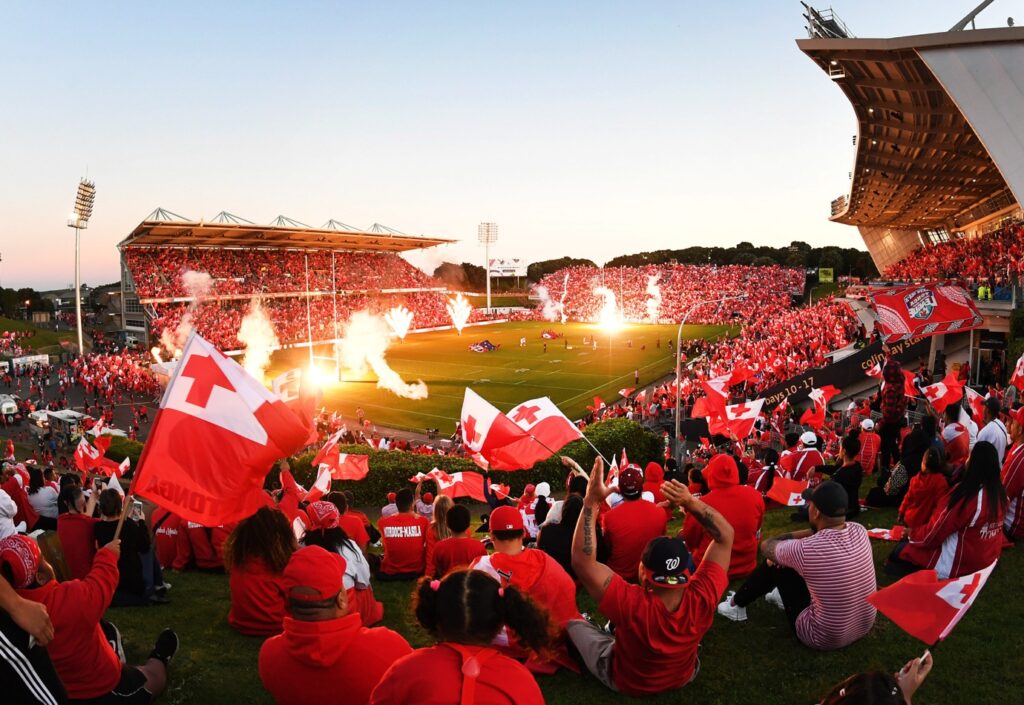
Global passion on the field — structural questions off it.
Tonga’s athletes compete with the best in the world. Its national teams command global respect and fierce diaspora loyalty. But behind the pride and performance sits a governance model weighed down by political control, financial pressure and short-term planning. If that structure does not change, the country’s most valuable sporting brands risk gradual decline.
By: Tu’ifua Vailena
Tonga does not lack talent.
It lacks administration.
From Mate Ma’a Tonga to Tala, and even the once-mighty ʻIkale Tahi, the Kingdom possesses sporting brands that punch far above its population size. These are not simply teams; they are national assets with genuine commercial and diplomatic value.
Yet they are being managed within a structure never designed for elite sport.
There was a time when ʻIkale Tahi was the golden child. The 1973 victory over the Wallabies declared that Tonga belonged on the world stage. That generation turned performance into opportunity, opening pathways in Australia and New Zealand and transforming rugby into a vehicle for economic mobility.
Today, rugby union remains the “national sport” in name, but it no longer commands the organic following that Mate Ma’a Tonga generates. That shift did not happen by accident. It reflects differences in governance, identity and connection with the public.
Mate Ma’a Tonga rose through authenticity and player alignment with the people. Its support base was earned, not manufactured. Meanwhile, sport administration drifted deeper into political oversight.
Sport now operates as one of five divisions under the Ministry of Internal Affairs. High-performance national brands are being managed inside a bureaucratic framework designed primarily for regulatory and social administration, not commercial growth or elite performance systems.
The Ministry’s own 2022–2025 Corporate Plan highlights the structural imbalance. The Sports and Recreational Development division operates within a total Ministry budget of just under TOP $4.9 million, with its specific allocation set at approximately TOP $754,600 in 2022/23 — marginally lower than the previous year. At the same time, the Plan calls for the establishment of a High Performance Unit, the development of financial investment plans, expanded sports science capacity and support for international tournaments. The ambition is articulated in policy language. What is absent is structural funding independence or a commercially driven framework capable of sustaining those ambitions beyond annual budget cycles.
The Ministry’s CEO oversees five divisions, supported by deputies and development officers who carry responsibility without decisive authority. They are expected to stabilise two politically sensitive and financially exposed codes while also managing the rest of their portfolio. That structure places strain on both accountability and strategic clarity.
The governance arrangements of the two major codes raise further structural questions. Rugby union has a sitting minister as chair of its board. Rugby league has the Prime Minister as chair, with the Minister of Sports as a board member. While this may reflect political commitment to sport, it also concentrates oversight, funding influence and fiduciary responsibility in the same hands.
The Deputy CEO for Sports, Mr Onetoto Anisi, was removed last year amid allegations he told Tonga Independent stemmed from his continued questioning of decisions made by senior officials. Mr Anisi, one of the most experienced sports administrators in the Ministry, having served for many years, has since been transferred to MEIDECC.
In modern corporate governance, conflict-of-interest principles are clear. Directors owe duties to the organisations they govern, independent of political cycles or ministerial portfolios. Board independence protects financial integrity, sponsor confidence and long-term strategic planning. When political office holders chair boards reliant on public funding, the distinction between regulator, funder and fiduciary narrows. Even the perception of conflict can weaken commercial credibility.
These concerns are not theoretical. They influence sponsorship decisions, investment confidence and debt management.
This is also a Rugby League World Cup year. At the previous tournament cycle, Tonga’s participation reportedly cost more than AUD $970,000, approximately TOP $1.59 million. Representation at the highest level carries substantial financial obligations.
With limited public resources, the question becomes unavoidable: how can political leaders chair individual sporting bodies while also overseeing funding allocations across the entire sporting sector? The issue is structural, not personal. It is about governance design and institutional safeguards.
Rugby union reportedly carries significant debt, has vacated office premises and operates without a clearly articulated long-term commercial strategy publicly available. There is no consistently published multi-cycle revenue framework aligned with high-performance planning. That creates uncertainty for sponsors and instability for athletes.
Sione Kalamafoni, an ʻIkale Tahi loose forward, has said Tonga’s rugby would improve if the “right person” were in charge of the union, implying current management issues are holding the sport back.
Waiting for World Cup cycles is not a sustainable model. It creates financial spikes, rushed preparation and post-tournament contraction. Instead of building continuity, it fosters dependency.

Tonga does not lack athletes. It does not lack pride or global visibility. What it lacks is structural consistency.
The case for a legislated, independent Sports Commission deserves serious consideration. Such a body, accountable to Parliament but operationally independent, would separate elite sport governance from broader social administration. It could employ technical expertise focused solely on long-term athlete pathways, commercial development, integrity systems and transparent funding frameworks.
Funding could then be smoothed across performance cycles rather than concentrated around tournaments. Preparation would begin immediately after a World Cup concludes, not months before the next one.
This is not about expanding bureaucracy. It is about professionalising governance. Australia, New Zealand and Fiji — all powerful sporting nations in their own right — operate under similar models. Australia’s Sports Commission functions at arm’s length from government, setting high-performance benchmarks and distributing funding based on merit, not political influence. Fiji’s success in rugby sevens reflects a comparable structure that provides consistent, professional support.
If reform is genuine, several baseline measures are available: separating political office from board leadership; introducing independent directors with financial and commercial expertise; imposing fixed term limits; mandating annual audited disclosures; enforcing formal conflict-of-interest declarations; and establishing a national high-performance and commercial framework insulated from direct ministerial control.
These are not radical proposals. They are standard governance practice internationally.
Mate Ma’a Tonga has merchandising power. Tala represents substantial growth potential in women’s sport. ʻIkale Tahi retains historic credibility and global recognition. But brand equity cannot survive on sentiment alone. It requires structure, discipline and independence.
Professional athletes require professional administration. Tier One performance cannot be sustained under Tier Three governance.
There must be a clear pathway for future sporting talent — and for parents to see and buy into — rather than an ad hoc system where too many fall through the cracks and never realise their full potential.
If reform does not occur, decline will not come from lack of talent. It will come from structural fragility. Over time, even proud institutions can be hollowed out by political concentration, financial instability and missed commercial opportunity.
Tonga’s players are global.
Its diaspora is global.
Its sporting brands are global.
Its governance model must become global as well.
If leadership is willing to modernise the structure, Tonga’s sporting future can remain strong. If not, the risk is not immediate collapse, but gradual erosion.
That would not be a failure of talent.
It would be a failure of institutional courage.
This is Part One of a series examining governance structures in Tonga’s public institutions.