PM Doubles Down on Economic Reform With Business-Led Dialogue
Nuku’alofa, 10 July 2025 – Tonga Independent News
PM Doubles Down on Economic Reform With Business-Led Dialogue
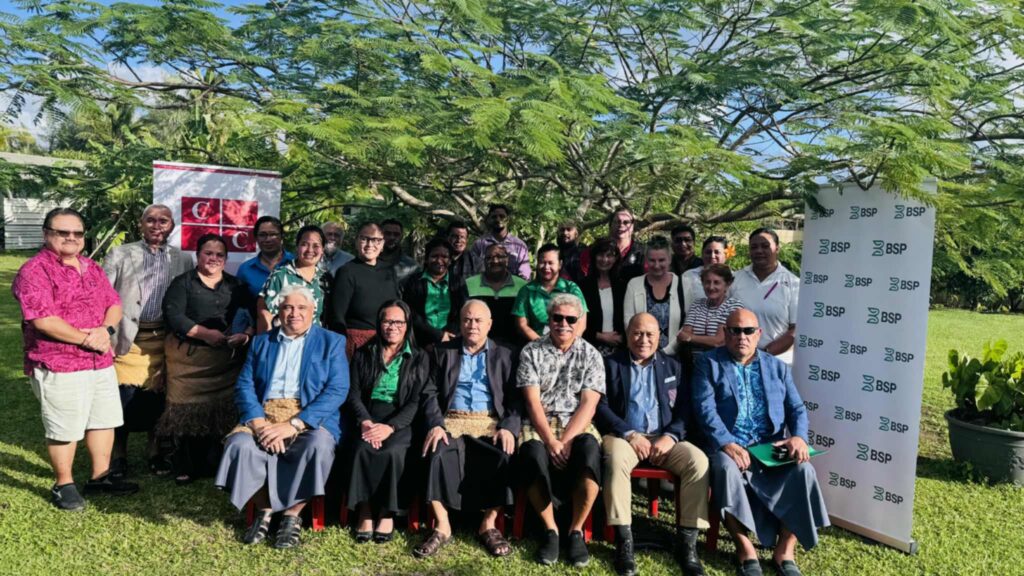
In a decisive step toward a more inclusive economic future, the Prime Minister — who also serves as Minister of Finance — has followed through on promises made during the recent National Economic Summit, meeting face-to-face with Tonga’s business community in a Talanoa session focused on partnership, recovery, and long-term growth.
Hosted by the Tonga Chamber of Commerce and Industry, the session brought together business leaders, entrepreneurs, and financial institutions for a candid and constructive exchange on the state of the economy and the way forward. In opening the event, the Prime Minister emphasised the importance of unity and dialogue, stating, “We cannot move forward without collaboration. This conversation is critical to shaping real solutions.”
He provided a transparent overview of Tonga’s economic outlook. National growth remains modest, between 1% and 1.5%, with the agriculture and fisheries sector — which contributes 19% of GDP — showing 2.4% growth. The industrial sector, largely driven by construction and infrastructure works such as the Parliament redevelopment, road projects, and the planned Fanga‘uta Bridge, makes up 14% of GDP. However, the Prime Minister acknowledged that private sector capacity remains a limiting factor in turning these opportunities into long-term value.
The wholesale and retail sector accounts for 48% of GDP, but is operating near full capacity and remains dominated by a small number of players. The Prime Minister noted that legislative review may be necessary to create more competitive space for local businesses. Tourism and accommodation services continue to underperform despite high demand, reflecting the underutilised potential of the tertiary sector, which currently contributes only 1% of GDP.
One of the structural gaps identified was the absence of a national stock exchange. While one does not yet exist, the government expressed its readiness to facilitate its future establishment as part of wider capital market development. At the same time, over $300 million is currently available in the banking sector for lending, but investment has been slowed by unfavourable interest rate spreads and low investor confidence. The Prime Minister signalled the need to boost lending activity and improve returns on equity.

The session also highlighted several major financial commitments now in place. These include a special budget allocation of $9 million aimed at empowering women economically, and a further $30 million in liquidity support from the Retirement Fund to encourage private sector lending and capital flow.
Business leaders welcomed the chance to speak directly to government, raising a range of sector-specific challenges and offering proposals. Concerns included the shortage of skilled labour, the need for better access to vocational training, restrictive loan terms, outdated regulations, and the need for greater clarity around the role of government in commercial activity. Several participants called for clearer separation between government functions and business activities, urging the state to empower the private sector instead of operating alongside it.
The Prime Minister acknowledged these concerns and reiterated his government’s commitment to creating an enabling environment for business to thrive. Suggestions from the private sector included support for developing bankable projects, reforms to make financing more accessible, investment in technical capacity, and the importance of adapting donor funding mechanisms to align with local market needs. Several participants also pushed for a stronger role for the Chamber of Commerce in bridging regulatory communication gaps.
In closing the session, the Prime Minister announced that a follow-up Talanoa will be held in two months to assess progress and maintain the dialogue. His closing message was a call to collective action: “We are all here because we care about Tonga’s future. Let us use our collective strength to turn ideas into action. Let us build a new era of collaboration.”
Chamber President Vea praised the initiative, noting that meaningful engagement of this kind had long been missing in past administrations. “The PM’s hands-on involvement and open-door approach marks a turning point. We’ve waited a long time for this kind of dialogue — one that sees us not just as taxpayers, but as partners in building Tonga’s future.”
As Tonga faces the ongoing challenges of slow growth, limited capital access, and structural reform, the Prime Minister’s commitment to sustained, inclusive dialogue could mark a significant shift in how government and the private sector work together to shape the nation’s future.
Tu’ifua Vailena