
Pacific trade deals: hype versus reality
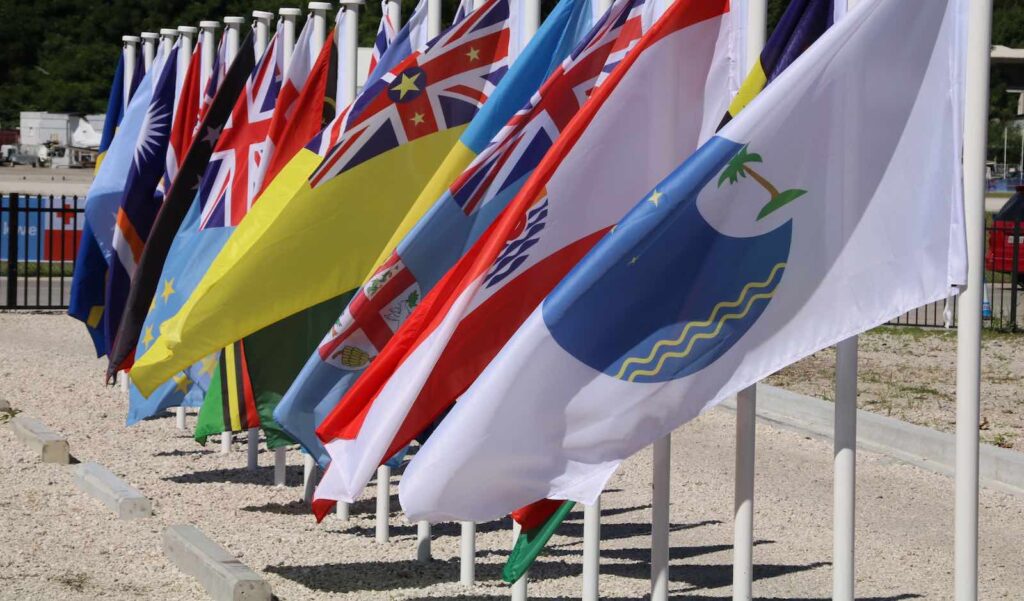
New Zealand’s government (and others) often tout Pacific trade initiatives as a win‑win. For example, NZ Trade Minister Nicola Grigg recently said trade “drives employment, economic growth, and lifts the standard of living in New Zealand and across the Pacific”. She highlighted meetings like the Pacific Islands Forum Trade Ministers Meeting (FTMM) in Suva and touted PACER Plus as the region’s “largest and most comprehensive” trade deal, helping businesses (even women-led ones) by cutting red tape and streamlining customs. An open-container ship image illustrates the promised flows of goods under such liberalisation. Yet many Pacific islanders wonder: after years of agreements, who has actually gained?
PACER Plus was signed in 2017 by Australia, NZ and eight Pacific Forum countries (Cook Is, Kiribati, Niue, Samoa, Solomon Is, Tonga, Tuvalu, Vanuatu), and entered into force in Dec 2020. It extends earlier Pacific access (like SPARTECA) but imposes deeper liberalisation. NZ and Australian officials say PACER Plus will build trade capacity, reduce e‑commerce costs, and boost investment flows. NZ even pledged to devote at least 20% of its aid to “Aid for Trade” in the Pacific (around NZ$340 million over three years) to support these goals. Pacific diplomats hear that labour mobility and technical assistance are also part of the package (for example, a regional labour mobility forum and training initiatives were established. In theory, this framework could help export-oriented firms (e.g. fish, timber, vanilla producers) reach NZ/Australia more easily.
However, analysts and local leaders point to a tilt in the balance. Under the previous SPARTECA arrangement, many Pacific exports (copra, fruit, garments) already entered Australia/NZ duty-free, but strict rules-of-origin limited actual shipments. PACER Plus relaxed those rules – but it did not open new Pacific exports to these big markets. In effect, PACER Plus mainly opens Pacific markets to Australian and NZ goods in exchange for giving up some tariff revenue and policy space at home. As one Pacific commentator bluntly put it, for Pacific countries PACER Plus “represents a squandered opportunity” and “a waste of time and significant resources”, whereas for Australia/NZ it “secured market access…at the expense of the region”.
Indeed, some Pacific governments did not join PACER Plus at all – notably Fiji and Papua New Guinea, which have larger manufacturing sectors. They felt the obligations (e.g. on tariff cuts, investor protection, domestic supports) were too onerous for their economies. Others that did join now face intense competition from subsidised or larger foreign suppliers. Economist Wadan Narsey has warned that without protective tariffs, up to three-quarters of Pacific manufacturing could collapse, causing thousands of job losses. Small businesses (from garment sewing in Tuvalu to specialty crops in Kiribati) may struggle to survive against cheaper imports. Some Pacific leaders have even protested exclusion of key local products – for instance Vanuatu’s kava growers were furious that PACER Plus didn’t guarantee kava exports to Australia.
Meanwhile, on-the-ground support has been modest. Australia’s PACER Plus Implementation Unit reports that by mid-2023 only 179 Pacific businesses had received capacity-building assistance, and about A$3.7 million had been spent helping Pacific governments implement the agreement. (For context, NZ’s ODA figure cited was over NZ$300m.) These funds have helped train customs officials and provide equipment, but critics say they fall far short of the sweeping economic transformation promised.
Other deals: new markets, new strings
PACER Plus is not the only game in town. Pacific nations are pursuing or signing deals with other partners – sometimes reflecting great-power competition. For example, in April 2025 Fiji announced it will introduce a Pacific–UAE Economic Partnership Agreement (EPA) framework to Pacific Trade Ministers. Negotiations aim to conclude a landmark Gulf–Pacific trade deal by late 2025. If finalized, this could give Gulf-based firms new access to Pacific markets (and vice versa). The prospect of UAE investment is lauded in Fiji’s press (e.g. “may reshape the Pacific’s trade landscape”), though no texts or impact studies are public yet.
Similarly, the UK has quietly established an EPA with four Pacific states. In 2019 Britain signed an Interim Pacific EPA with Fiji, PNG, Samoa and Solomon Islands. The UK commits to immediate duty-free, quota-free access for Pacific exports, while Pacific governments will phase out tariffs on British goods. In principle this could help Pacific exporters reach the UK market; in practice, these economies will also face competition from imports (along with reduced customs revenue).
The European Union too has a Pacific EPA. Already covering Fiji, PNG, Samoa and Solomon Islands since 2014–2020, it is now being expanded – as of early 2025 Niue, Tonga and Tuvalu moved to join. Brussels reports that its EPA “significantly boosted exports, economic growth…with total trade…up 44% since 2014”. Indeed, duty-free EU access has helped big Pacific exporters (like Fiji’s sugar and tuna) grow shipments. But critics note that even the EU deal was asymmetric: Pacific markets were opened more slowly and with exemptions for sensitive sectors. Across all these deals, Pacific negotiators worry about clauses that tie them down. For example, PACER Plus and other EPAs generally include “most-favoured nation” clauses: if a Pacific country later cuts tariffs for, say, the EU, it must grant the same cuts to Aus/NZ. This limits future policy flexibility.

These trade initiatives also play into geopolitics. China has dramatically stepped up its Pacific presence in recent years – though mostly via loans and resource deals rather than WTO-style free trade. A US think-tank notes that trade itself is “not a major factor” for China’s Pacific strategy; it’s after fisheries, minerals and strategic footholds. In response, Australia and NZ have begun tying Pacific trade programs to security. For instance, in 2024 Australia negotiated “trade and investment” deals with Tuvalu, Nauru and PNG that included security provisions to counter Chinese influence. The UK and US are also watching: for example, the Pacific trade ministers’ meeting in July 2025 was seen in some capitals as a platform for balancing new actors (the UAE’s interest, EU ties, and even New Caledonia discussions) against Chinese advances.
Winners and losers
Winners: So far, the clearest beneficiaries appear to be larger traders and investors from rich countries. Australian and New Zealand exporters gain easier access to Pacific markets and investment opportunities. For example, Australian firms in sectors like agribusiness, construction, telecoms and finance can bid for Pacific contracts with fewer restrictions (and vice versa for some NZ companies). PACER Plus also offers legal protections for foreign investors and an arbitration system, reducing risk for outside capital. To the extent that infrastructure or tech firms bring equipment (as [55] reports), those providers win business. Meanwhile, a handful of Pacific export niches (e.g. some high-value vanilla, honey or marine products) may win easier entry into big markets. Even Pacific governments might see short-run benefits: imports of consumer goods and machinery get cheaper (boosting purchasing power for some), and tourism or labour-mobility schemes can bring remittances back.
Losers: Many ordinary Pacific producers and workers may lose out. Small-scale farmers, fishers and manufacturers risk being undercut by imported goods from Australia, NZ or abroad. As noted, a shock like tariff removal could wipe out local factories, creating unemployment with few safety nets. Governments lose tariff revenue (or exchange it for uncertain development aid), reducing funds for services. The social sector can also suffer: critics warn liberalised services sectors (health, education, water) could bifurcate into urban “two-tier” systems where rural communities lack access. In fact, under PACER rules foreign companies could open clinics or utilities in cities and draw skilled staff, leaving poorer areas underserved.
Vulnerable groups are especially at risk. Gender equity advocates note that PACER Plus has no strong gender protections. Pacific women, who predominate in agriculture and informal trade, could face higher burdens if household incomes drop. (A UN study warned that PACER negotiations lacked any ex-ante social or environmental impact assessment – meaning the outcome for women, youth or indigenous communities wasn’t properly measured before signing.) Environmental safeguards are thin or absent in most of these pacts. For instance, expansion of logging, fishing or mining by foreign firms might accelerate without adequate local controls (the CSIS study notes China’s deals focus on resource rights, but Australia/NZ investors too may push resource projects). Pacific countries, already vulnerable to climate change, have little trade policy leverage to demand low-carbon or sustainable practices.
In short, trade agreements tend to produce uneven results. As one Pacific analyst summarized, “we are best served by a world in which trade flows freely”, said NZ’s minister, but only if underlying rules are fair. Currently many Pacific Islanders fear the rules favour outsiders. Some Pacific economies with broad-scope EPAs (Fiji under EU, for example) have seen modest export growth, but most promises (higher incomes, new industries, lasting poverty reduction) remain elusive.
Bottom line: Pacific elites champion more trade agreements and highlight the “shared prosperity” rhetoric. But evidence suggests who captures prosperity is changing little. The likely winners are big businesses and investors from wealthier partners, while losers include Pacific smallholders, local manufacturers, and the general public if promised gains stall. For these economies to truly benefit, trade deals must be paired with stronger safeguards: social safety nets, local industry support, environmental protections, and careful rules so that all communities – not just foreign exporters – can thrive.
Sources: Official statements and analysis (NZ government, DFAT, EU, UK gov’t, PPIU reports) and independent commentary (Devpolicy, ABC Pacific, think-tank analyses) were used to assess impacts
By Melino Maka, Tonga Independent News