
Opinion: Why the Pacific Must Deepen Its Climate and Economic Ties with China
By Melino Maka
Political and Economic Commentator based in New Zealand and Tonga
As global fault lines continue to harden between major powers, the Pacific must chart its own course. For far too long, our islands have sat at the receiving end of donor-driven strategies, promises of partnership, and symbolic nods to climate vulnerability. But when rising seas are swallowing ancestral lands, and economic stagnation is holding back our youth, we need action—not rhetoric. The Pacific’s future depends on bold choices, and one of those is clear: we must work more closely with China.
This is not a call driven by ideology or allegiance. It is driven by necessity, pragmatism, and evidence. At a recent high-level dialogue in Apia, Samoa’s Environment Minister, Toeolesulusulu Cedric Schuster, affirmed what every Pacific Islander already knows—climate change is not a theory for us; it is a lived crisis. In this context, China is proving itself not just as a partner, but as a collaborator willing to listen, act, and walk alongside us.
The United States Is Drifting Away
Over the past six months, the United States has become increasingly consumed by its internal political divides and global power plays. Its rhetoric toward the Pacific has grown sharper, but its delivery on promises has weakened. Aid and engagement are now filtered through a geopolitical lens, with the Pacific caught in the middle. The same power that once proclaimed itself a climate champion is now backpedaling on global commitments while trying to bully others into its orbit.
Meanwhile, the Pacific is being used as a pawn—spoken about, not spoken with.
China’s Actions Speak Louder Than Words
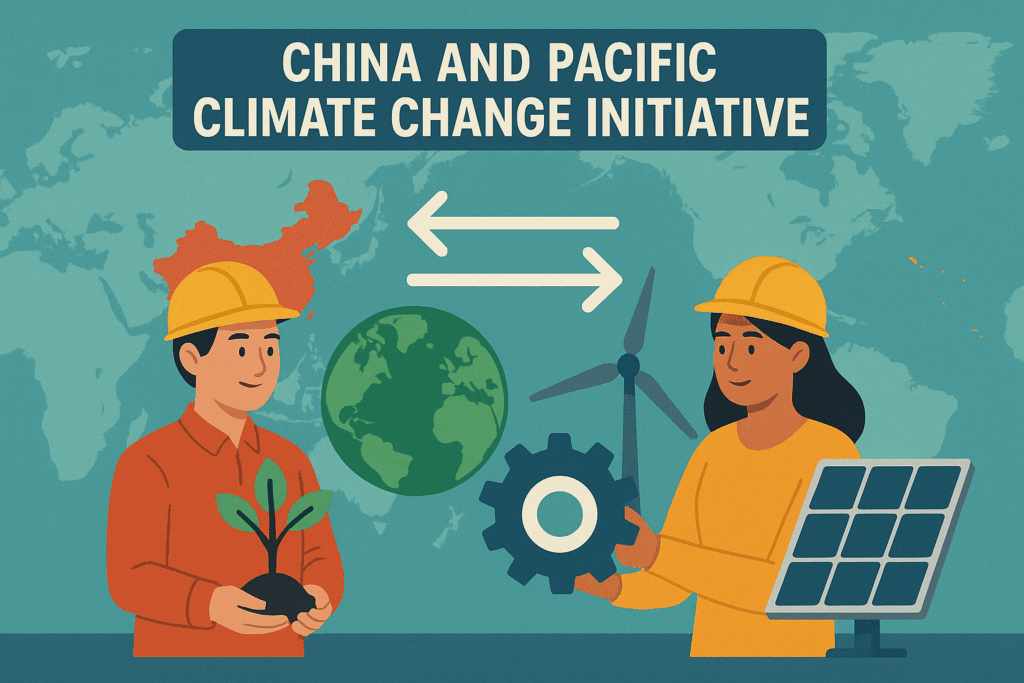
In contrast, China has stepped forward with real resources and consistent engagement. At the China-Pacific Islands Dialogue in Samoa, Ambassador Fei Mingxing announced 100 climate resilience projects to be delivered in Pacific communities over the next three years. These aren’t just conference promises—they are being budgeted, implemented, and delivered.
China’s support goes beyond climate. From disaster resilience to clean energy, offshore farming to professional training, Beijing’s South-South cooperation model is aligned with the Pacific’s reality: we need support that meets us where we are—not where others think we should be.
A Personal Reflection: Who Really Shows Up?
At Huelo Matamoana Trust, where I serve as Chair, we have been leading groundbreaking work on whale conservation and legal personhood for whales—a world-first bill developed with the Government of Tonga that recognizes the rights of whales within our sovereign waters.
Believing this effort aligned with regional climate and conservation values, I personally approached and wrote to the New Zealand High Commission, Australian High Commission (DFAT), Japanese Embassy, and the Chinese Embassy in Nuku’alofa for support.
The responses were telling:
- Japan replied they don’t fund “this type of project.”
- NZ and Australia gave the usual lip service—stating support for whale conservation and climate leadership, especially at international forums like the UN Ocean Conference in Nice, France—but when it came time to act, their wallets remained closed.
- Only China responded with action. Once the Chinese Embassy understood the project’s importance, they followed up, asked relevant questions, and came onboard to support. That is what real partnership looks like. Not just words in a communique, but real engagement, follow-through, and belief in Pacific-led innovation.
In my experience, when China understands your project, they either say “yes” or “no”—but they give you an answer. That clarity and respect matters more than empty promises.

Three Sectors Where Deeper China-Pacific Cooperation Is Needed
- Whale Conservation and the Blue Economy
Whales are sacred in our culture and critical to marine ecosystems. The legal personhood bill in Tonga could be a model for the world. China’s involvement in marine research, eco-tourism infrastructure, and regional conservation enforcement could transform this vision into a global benchmark. - Fisheries and Food Security
With support from Chinese science and satellite technology, we can build resilient fisheries and protect fish stocks from depletion. This will help Pacific nations manage Exclusive Economic Zones effectively and maintain sustainable livelihoods for our communities. - Agriculture and Hydroponic Innovation
Saltwater intrusion and climate volatility are threatening traditional farming. Working with China on hydroponics, greenhouses, and climate-resilient crops will future-proof food supply chains. It will also empower youth with new technical skills in modern agriculture. - Sustainable Tourism Infrastructure
Tourism must be reimagined for the 21st century—climate-conscious, culturally rooted, and economically fair. With China’s infrastructure capability, we can build eco-resorts, inter-island ferries, and sustainable waste systems to grow tourism in a way that respects both our people and our planet.
Final Word: The Pacific Cannot Afford To Wait
Let’s be clear: this is not about turning our back on traditional partners. It’s about demanding more. It’s about aligning with those who match their words with action. The Pacific cannot be lectured to any longer by those who speak of partnership while withholding support.
In China, the Pacific has found a partner that listens, respects, and acts. As climate change accelerates and our economic pressures grow, we must deepen these ties—not as a rejection of others, but as a survival strategy for ourselves.
The Pacific has been polite long enough. It’s time to be strategic.