OPINION | The FBI in Wellington: Why the Pacific Should Be Paying Close Attention
By Melino Maka – Political and Economic Commentator on Tonga and Pacific Issues
The United States has quietly expanded its intelligence and law enforcement footprint in New Zealand — but while the official explanation is about crime-fighting and cooperation, the deeper motive is unmistakably strategic. It is not really about the Pacific. It is about China.
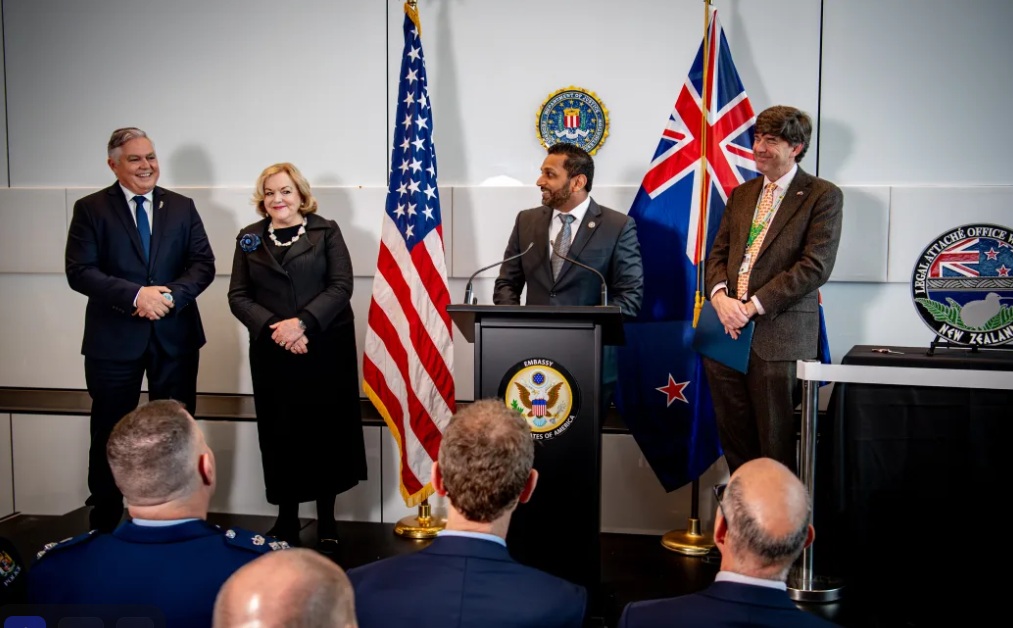
Last week, without prior notice to the public or media, FBI Director Kash Patel was spotted in the basement of the Beehive. Shortly afterward, the U.S. Embassy confirmed what had been kept under wraps: the opening of a permanent FBI attaché office in Wellington. This marks a major expansion of U.S. security presence in a Five Eyes partner country.
No Press Conference, No Transparency
There was no public announcement. No joint media briefing. Not even a formal press conference. Instead, the news came in a side note during a press conference on tsunami warnings. The actual event — involving closed-door meetings with senior New Zealand officials, including Judith Collins, Mark Mitchell, Winston Peters, Police Commissioner Andrew Coster, and intelligence heads — was conducted in secrecy.
The meeting was held in Wellington yesterday, and today some journalists began asking the obvious: why the secrecy?
If this were simply a matter of cooperation against cybercrime or drug trafficking, why the cloak-and-dagger approach? The answer lies in what was said — and what wasn’t.
Not About the Pacific — It’s About Power
The new FBI office claims jurisdiction not just in New Zealand, but across parts of the Pacific: Antarctica, Samoa, Niue, the Cook Islands, and Tonga. While framed as a response to transnational crime, FBI Director Patel, a former U.S. national security official now appointed to the Bureau’s top job by President Donald Trump, made the strategic focus clear.
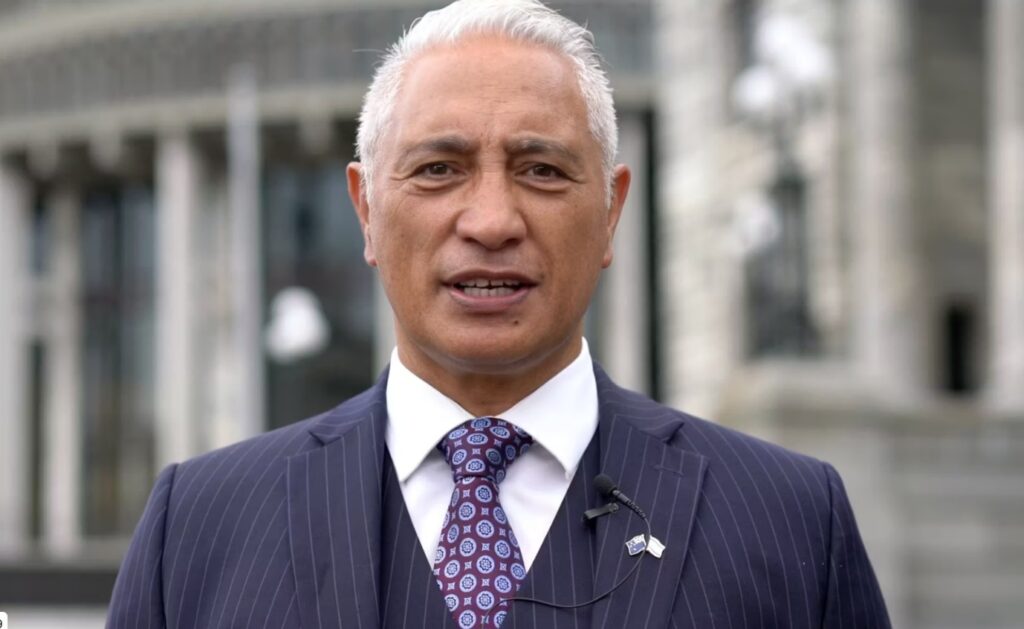
In his only public remarks — released through a tightly controlled U.S. Embassy video — Patel emphasized the need to counter the Chinese Communist Party (CCP) in the Indo-Pacific Command (INDOPACOM) region. He described the Five Eyes intelligence network as “the most vital partnership in the world,” and stated bluntly:
“We need all of them — here in New Zealand, in the INDOPACOM region — to get after the fight.”
That “fight” is not just against cybercriminals or money launderers. It is a geopolitical contest with China.
A Risky Balancing Act for New Zealand
New Zealand’s leaders have played down the implications, insisting this new FBI presence will not impact diplomatic relations with China. Foreign Minister Winston Peters asserted it’s simply about crime fighting, calling it New Zealand’s sovereign right.
But this kind of expansion — especially one done in secrecy — sends a very different message. It signals that Wellington is tightening its alignment with Washington, not out of choice, but as part of its obligations under Five Eyes and the growing U.S. strategic posture in the Pacific.
China will read this as a signal — not a neutral one.

What Does This Mean for the Pacific?
More importantly, this development affects the Pacific region itself. Countries like Tonga, Samoa, and the Cook Islands, which are now listed under the FBI’s extended mandate, were not part of any visible consultation. These are sovereign states. And yet, they now fall under an expanded U.S. intelligence footprint facilitated by another nation.
We are told this is about helping the Pacific. But help for whom? The reality is that the U.S. presence is not expanding because of the Pacific — it is expanding because of China.
Pacific nations are once again caught in the middle, as global powers compete for dominance. But we are not spectators. Our sovereignty, our values, and our futures must not be bargained in closed rooms without our voices.
A Silent Media, a Shrinking Space for Debate
Equally troubling is the near-silence from New Zealand’s media. The story was lightly reported and rarely questioned. It’s as if the establishment, both political and media, has accepted this dramatic shift without asking whether it aligns with the country’s long-standing foreign policy values — or the will of its people.
This silence speaks volumes.
The people of the Pacific — and New Zealanders — deserve transparency and inclusion in decisions that affect our shared region. If the U.S. wants to partner with the Pacific, it must do so with us, not around us.
Let’s be clear: transnational crime is a real concern. But it should not be used as a smokescreen for foreign power projection. The Pacific is not a battleground. It is a community of nations — and it is time the world treated us that way.