Opinion: How Israel Dragged Trump from the Peace Table to the Brink of World War III
By Melino Maka, Tonga Independent News
Just a few years ago, Donald J. Trump proudly branded himself as the “President of Peace.” He repeatedly told his supporters and the world: “I ended endless wars. I didn’t start any new ones.” It was one of the few consistent messages in a chaotic presidency — Trump would never be baited into a foreign conflict. He pulled U.S. troops out of Syria, sought talks with North Korea, and even pushed the Abraham Accords as a path to Middle East normalization.
But today, that narrative lies in ruins. With American B-2 bombers dropping bunker-busting payloads on Iran’s nuclear sites — Fordow, Natanz, and Isfahan — the so-called “peace president” has now presided over a major strike against one of the most dangerous and capable states in the Middle East. The question is: How did we get here?
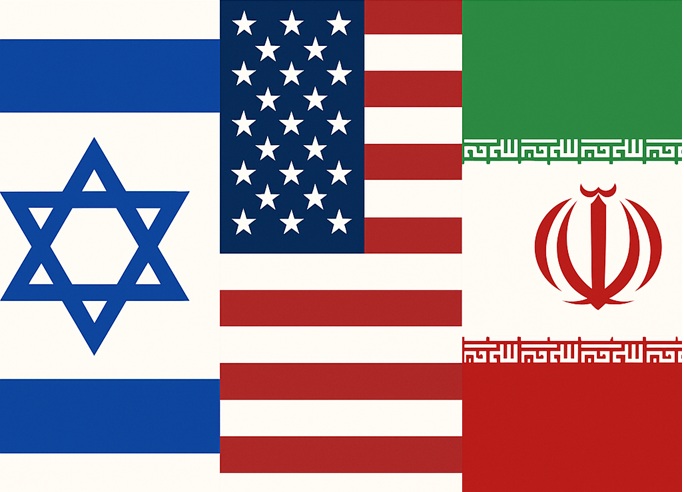
The answer, as I’ve previously written, is Israel’s shadow campaign to bend American power to its will — through influence, manipulation, and strategic pressure. This latest escalation is not an accident. It is the endgame of a long and deliberate strategy by Israel to provoke Iran and force America’s hand.
The Setup: Proxy Wars, Provocations, and Public Sympathy
Since the attacks of October 2023, Israel has fought on multiple fronts — against Hamas in Gaza, Hezbollah in Lebanon, and the Houthis in Yemen. Each of these battles, Israel claims, are against “Iranian proxies.” That framing is key. By painting every front as an extension of Iran, Israel cleverly manufactured a narrative where any retaliation — any resistance — could be pinned on Tehran.
This was not just a military campaign, but a diplomatic one: to box the U.S. into alignment.
Through persistent lobbying in Washington, weaponized media narratives, and emotional appeals to shared values, Israel stoked fears of a nuclear Iran, exaggerated its vulnerability, and slowly shifted the conversation from defense to preemption.
But Iran, unlike Hamas or Hezbollah, is not a proxy. It’s a sovereign state with a sophisticated military, a cyber army, and a nuclear infrastructure buried beneath mountains. Israel’s “Operation Rising Lion” — hundreds of strikes deep inside Iranian territory, including assassinations and nuclear sabotage — was not about self-defence. It was about forcing Iran to respond.
And respond it did — with nearly 300 missiles and drones launched at Israeli cities. Tehran’s message was loud and clear: We are not Gaza. We hit back.
Enter Trump: From Reluctant Observer to Reluctant Aggressor
Despite his bluster, Trump long resisted being pulled into a direct confrontation with Iran. He vetoed an Israeli plan to assassinate Iran’s Supreme Leader, Ayatollah Khamenei. He remained hesitant to deploy U.S. bombers. He knew that striking Iran could unleash consequences that no American president has dared to face — not Bush, not Obama, not even Biden.
But the calculus changed.
Faced with mounting pressure from Israeli officials, U.S. neoconservatives, and defense hawks in Congress, Trump eventually gave in. Whether to protect the illusion of strength ahead of a re-election campaign or to silence criticism that he was “soft on Iran,” he ordered the strikes.
On Truth Social, he announced with pride:
“We have completed our very successful attack on three nuclear sites in Iran… All planes are safely on their way home. There is not another military in the world that could have done this. Now is the time for peace.”
But peace doesn’t follow bombs. It rarely does.

The Fallout: A Region on Fire
Iran’s immediate response was chilling: close the Strait of Hormuz, target U.S. naval fleets, and retaliate against Western assets in the region. In a region already teetering on the edge, the U.S. strike lit the match.
Let’s be clear — this is no longer a proxy war. This is a direct U.S.–Iran confrontation, one that risks spiraling into a global energy crisis, regional collapse, and potentially, a war that no one can win.
And behind it all, Israel remains the architect of this escalation.
The Cost of Loyalty
In my earlier articles, I warned that Israel was no passive ally. Its deep influence over U.S. politics — via AIPAC, think tanks, media ties, and campaign financing — has allowed it to shape American foreign policy to fit its own national objectives.
Trump’s turn toward war is not driven by American interests. It is driven by Israel’s obsession with neutralizing Iran at any cost, even if it means using U.S. soldiers, bombs, and credibility.
Trump’s own advisors have admitted that Israel pushed for the most extreme measures, and even now, Congress debates the legality of the strikes. “This is not constitutional,” said Rep. Thomas Massie. Others in Congress are beginning to ask: When did we become Israel’s air force?
Conclusion: The President Who Promised Peace Now Carries the Sword
Donald Trump may still speak of peace, but his actions now say otherwise. The strikes on Iran will define his legacy — not as the president who ended wars, but as the one who was manipulated into starting one that could engulf the world.
Israel’s fingerprints are everywhere on this crisis. And while Tel Aviv may celebrate tonight, the long-term consequences — for the U.S., for the Middle East, and for global stability — have only just begun to unfold.
It’s time for America to ask itself a hard question: Are we protecting our own interests, or are we being used as a tool to fight someone else’s war?
Because in this war, victory is not just elusive — it may be impossible.