
Farmers Find Their Voice at Landmark Pacific Agriculture Meeting
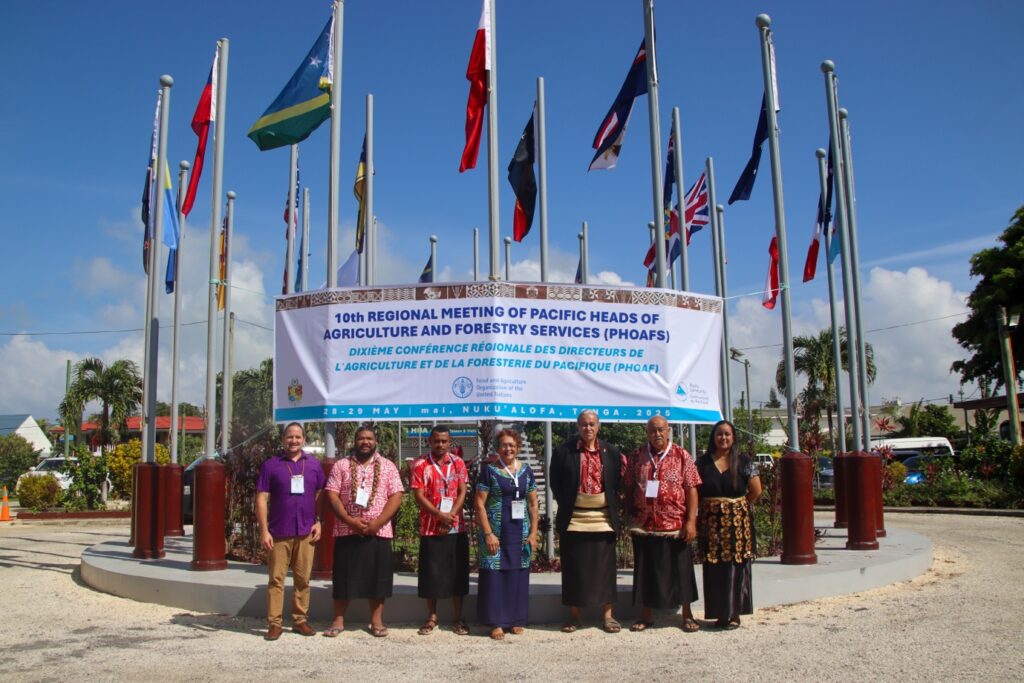
Nukuʻalofa, Tonga – 29 May 2025
The 10th Regional Meeting of Pacific Heads of Agriculture and Forestry Services (PHOAFS) concluded today with a powerful message: farmers and civil society are no longer on the sidelines of regional agricultural development—they are demanding, and beginning to secure, a seat at the table.
For the first time in the meeting’s history, civil society formally presented a paper titled “The Contribution of Farmer Organisations to Agricultural Development in the Region.” The presentation showcased the unique ability of farmer organisations to reach rural communities, boost innovation uptake, and deliver strong returns on development investments.
This milestone reflects a broader shift in regional policy frameworks. The Pacific Community’s Land Resources Division Business Plan (2025–2031), also unveiled at the meeting, now explicitly recognises the importance of partnering with farmer organisations—a significant endorsement of grassroots leadership.
Youth were also given centre stage through a dedicated panel discussion, “Voices from Youth,” facilitated by the Pacific Youth Council. The session brought fresh perspectives from the region’s next generation of agricultural leaders and underscored the importance of inclusive decision-making.

Closing the meeting, Drew Havea, representative of the Pacific Civil Society Organisation (CSO) Consortium, issued a direct appeal for sustained support.
“We need resources. Our CSO representatives currently self-fund their participation, which limits our voice,” Havea said. “A modest investment of just $20,000 would ensure that civil society, farmer organisations, and the private sector continue to contribute meaningfully to PHOAFS and the broader regional agenda.”
Havea urged the institutionalisation of this engagement through mechanisms aligned with existing processes like the Pacific Islands Forum Secretariat’s CSO platform and the FAO’s Committee on World Food Security.
As the meeting concluded, many observers agreed that PHOAFS 2025 represented a turning point. Whether this momentum translates into long-term policy inclusion and funding support remains to be seen. But one thing is clear—farmers and civil society are no longer willing to be silent partners in the Pacific’s agricultural future.