COP31 Climate Talks Collapse as World Leaders Fail to Agree on Fossil Fuels
23 November 2026
The United Nations COP31 climate summit ended without a major agreement
on Sunday after nearly 200 countries failed to resolve disputes over fossil
fuels and financial assistance for developing nations.
The talks in Antalya, Turkey, continued for two days beyond their
scheduled conclusion before the European Union and several other countries
rejected the final proposed agreement, saying it failed to address the urgency
of global warming.
The collapse is a setback for Pacific Island nations, which have spent
years pressing major economies to reduce greenhouse gas emissions and provide
greater financial support to countries most vulnerable to climate change.
It was the first time since the Copenhagen summit in 2009 that UN
climate negotiations had failed to adopt an overarching political agreement.
Fossil fuels divide negotiations
The main dispute centred on whether the agreement should explicitly
commit countries to moving away from coal, oil and natural gas.
More than 130 countries supported stronger language on transitioning
away from fossil fuels, building on commitments made at COP28 in Dubai in 2023.
However, major oil-producing countries, including Saudi Arabia and
Russia, opposed explicit references to fossil fuels.
The final draft, prepared under the joint leadership of Turkey and
Australia, omitted any reference to transitioning away from fossil fuels.
The European Union rejected the proposed agreement, arguing that it
failed to address the climate emergency and made no reference to fossil fuels,
the main driver of global warming.
The United Kingdom, Norway, Panama and the Marshall Islands also
objected to the text.
The disagreement prevented the consensus required for its adoption.
Climate finance remains unresolved
Financial assistance for developing countries was another major
obstacle.
An earlier draft of the agreement, released on 16 November, proposed
that annual adaptation finance for developing countries should reach at least
US$120 billion by 2035. However, the figure was removed from a revised draft
three days later, leaving only a broader goal of tripling adaptation finance
without a clearly defined financial baseline.
The US$120 billion was a proposed target rather than an existing funding
commitment.
Developing countries argued that the wording offered insufficient
certainty about how much funding would be available.
For Pacific Island nations, adaptation finance remains a priority
because of the costs of protecting coastal communities, securing freshwater
supplies and strengthening infrastructure against climate-related disasters.
The failure to reach agreement left the proposed new financial
commitments unresolved.
Pacific nations voice disappointment
The Alliance of Small Island States (AOSIS), representing 39 small
island and low-lying coastal developing states, had warned on 20 November that
it would not accept an agreement that failed to address fossil fuels and
climate finance.
The Marshall Islands rejected the final proposal, arguing that it failed
to confront the continued use of fossil fuels and the threats facing vulnerable
nations.
Vanuatu also objected to the proposed agreement.
However, Pacific countries differed over whether the draft should be
accepted.
Palau indicated it would have supported the agreement despite its
shortcomings, citing provisions covering oceans, electrification and finance.
Fiji’s Climate Minister, Lynda Tabuya, expressed disappointment at the
failure to reach consensus but defended Australia’s efforts to negotiate an
agreement.
She said responsibility for the outcome rested with all parties, rather
than Australia alone.

Australia and Turkey fail to secure consensus
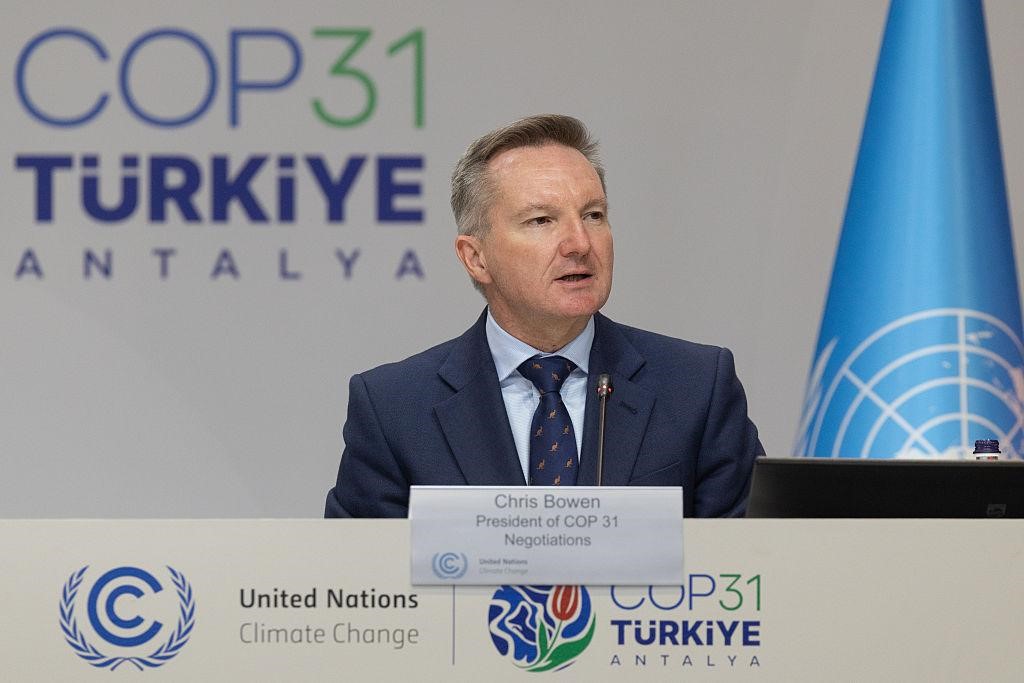
Turkey held the COP31 presidency, while Australia’s Climate Change and
Energy Minister, Chris Bowen, served as President of Negotiations under an
agreement between the two countries.
Bowen described the collapse as “very disappointing”, saying
some countries insisted that fossil fuels be mentioned in the agreement while
others threatened to veto any such reference.
Turkey’s conference president, Murat Kurum, confirmed during Sunday’s
closing session that no consensus had been reached and that no further
negotiating text would be presented.
UN Secretary-General António Guterres also expressed disappointment.
“I am deeply disappointed that COP31 has ended without consensus on
an overarching outcome,” he said.
Although COP31 adopted separate decisions on adaptation and just
transition, governments failed to agree on the main political agreement, known
as the Antalya Pact.
The proposed agreement was rejected following objections over fossil
fuels, climate finance and the failure to adequately address scientific
warnings about global warming.
Climate commitments remain in place
The collapse does not invalidate the 2015 Paris Agreement or commitments
made at previous climate summits.
However, COP31 failed to secure new collective commitments on
transitioning away from fossil fuels and strengthening financial assistance to
vulnerable countries.
The Paris Agreement aims to keep global warming well below 2 degrees
Celsius above pre-industrial levels while pursuing efforts to limit it to 1.5
degrees.
The lower target is particularly important to Pacific Island countries
facing rising sea levels, coastal flooding, coral reef damage and threats to
freshwater supplies.
For Pacific governments that have repeatedly called for stronger
international action, the failure leaves two major demands unresolved: faster
reductions in fossil-fuel emissions and clearer financial commitments from
developed countries.
Those
disputes will now carry into COP32, scheduled to take place in Ethiopia in
2027.