What Piukala’s Cabinet Omission Could Mean for Parliament
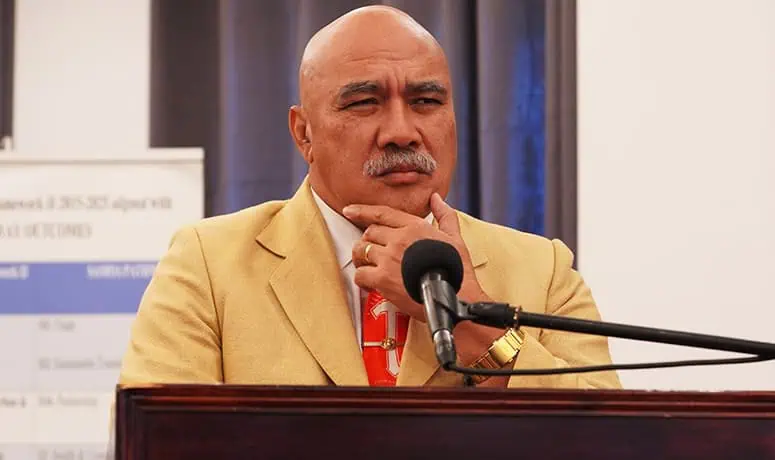
The exclusion of former Police Minister Piveni Piukala from Cabinet has emerged as a focal point of post-election political debate, raising questions about experience, governance, and the balance of power in the new Parliament.
The release of the new Cabinet list has confirmed one of the most closely watched outcomes of the post-election period: former Minister of Police Piveni Piukala has not been assigned a ministerial portfolio.
Of the Members of Parliament who supported Lord Fakafanua in his successful bid for the prime ministership, Piukala is the only one not to have received a Cabinet position. His omission has quickly become a central topic of political discussion within Parliament and beyond.
The confirmation of Cabinet appointments took longer than expected, reflecting the constitutional requirement for royal consent. Tonga Independent understands that no noble MPs were approved to hold ministerial portfolios, a factor that influenced both the delay and the final composition of the Cabinet.
Notably, the Prime Minister has appointed only 11 Cabinet ministers, despite having the constitutional capacity to appoint up to 12, and has retained the Minister of Police portfolio. This has prompted political observers to question whether the decision reflects unresolved considerations rather than an oversight. One interpretation is that Hon. Piukala’s pending matter before the Anti-Corruption Commission may be influencing the timing of any appointment to the Police Ministry, which would otherwise complete the distribution of portfolios among the independent MPs who supported the Prime Minister.
As previously reported by Tonga Independent, several Cabinet appointments could be short-lived if the courts uphold election petitions currently before them. Following the 2021 general election, six petitions were filed, three of which were successful. As a result, three sitting ministers were required to vacate their positions and were disqualified, triggering by-elections in their respective constituencies. A similar scenario could unfold following this election should the courts reach comparable findings.

Despite the broader focus on Cabinet formation, much of the political attention has centred on Piukala’s exclusion. A controversial but influential figure, he has attracted both criticism and support during his parliamentary career. Supporters argue that his tenure as Police Minister brought heightened scrutiny to government operations, crediting him, alongside Fusimalohi, with persistently challenging the previous Sovaleni-led administration.
Between them, the two MPs lodged a significant number of complaints with the Anti-Corruption Commission, applying sustained pressure on former ministers and senior officials. While their approach was often divisive, it reinforced Piukala’s reputation as an independent and confrontational parliamentarian.
Now operating outside Cabinet and freed from the constraints of collective responsibility, Piukala enters a different phase of his parliamentary role. Without executive obligations, he is positioned to take on a more prominent role in debate, oversight, and scrutiny of government decisions.
Together with experienced opposition figures such as Hon. Eke and Hon. Puloka, Piukala’s presence could contribute to a more assertive and active opposition in the Legislative Assembly over the life of this Parliament.
Tu’ifua Vailena