Trump’s Fulbright Fallout: When Political Meddling Threatens Global Education—and the Pacific Must Pay Attention
By Melino Maka | Tonga Independent News | Opinion
When the entire board of the U.S. Fulbright Program resigns in protest, it’s more than just an internal spat in Washington—it’s a seismic alarm for the world. Especially for countries like Tonga and our Pacific neighbours, who have benefited for decades from this cornerstone of international education and cultural diplomacy.
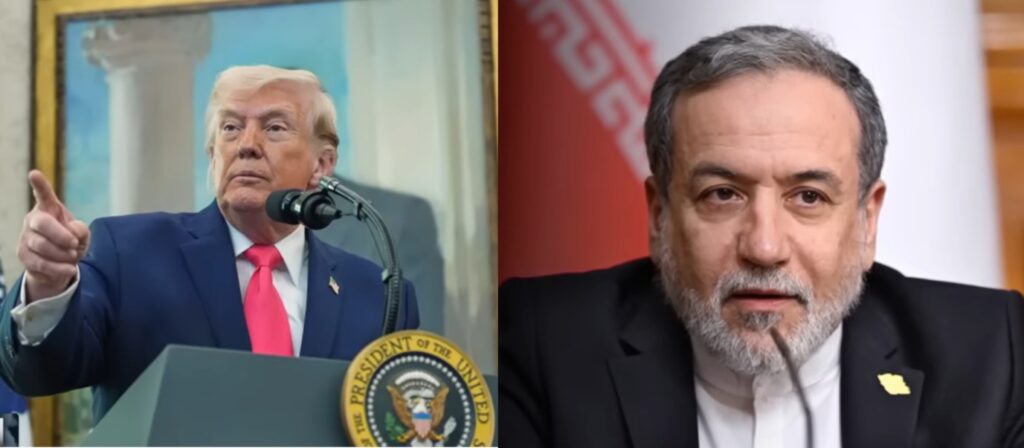
This week, members of the prestigious Fulbright Foreign Scholarship Board took the unprecedented step of resigning en masse. Why? They accuse President Donald Trump and his administration of political interference in the program’s governance—interference so egregious they say it violates U.S. law, undermines academic freedom, and compromises America’s global standing.
The Fulbright Program is no ordinary initiative. Created in 1946 in the wake of WWII, it was designed to promote peace through mutual understanding by exchanging scholars, students, researchers, and artists across borders. In practice, it has been one of America’s most effective tools of soft power—bridging cultures, building relationships, and fostering global cooperation far beyond politics.
Until now, Fulbright has remained largely untouched by the bitter partisanship of U.S. politics. But Trump, it seems, has changed that. The board’s resignation letter claims that his administration unilaterally blocked award offers for hundreds of scholars selected for 2025–2026, imposed unauthorized ideological reviews on 1,200 foreign candidates, and overrode the board’s legal authority.
This isn’t just about internal U.S. governance. It’s about the collapse of trust in a program that has linked the U.S. to the rest of the world through mutual respect and intellectual freedom.
Why the Pacific—and Tonga—Should Be Deeply Concerned
Tonga and our Pacific family have long been beneficiaries of the Fulbright Program. Many of our brightest minds have studied in American universities thanks to these scholarships. We have sent educators, scientists, and policy leaders abroad—and welcomed American researchers who have deepened their understanding of our islands. These relationships are vital not only for academic growth, but for diplomacy, trade, environmental research, and security cooperation.
If the U.S. begins to weaponize its educational programs for political ends—vetting applicants based on ideology or speech—then Fulbright’s mission is no longer about education or peace. It becomes a tool of soft coercion.
For small nations like Tonga, already navigating complex geopolitical currents between China, the U.S., and other powers, this erosion of educational diplomacy represents a loss of neutral ground. When even a scholarship becomes a political chess piece, what happens to mutual respect? What happens to the principle that education should build bridges, not walls?
Moreover, it sets a dangerous precedent for other global programs. If the U.S., the so-called champion of liberal democracy, can turn an academic exchange into an ideological loyalty test, what’s to stop other nations from doing the same? For countries in the Pacific that rely on external scholarships and training programs to fill critical skill gaps, this could lead to a chilling effect. Will aspiring scholars now be judged not on merit, but on political acceptability?
The Broader Implication: Censorship Is Contagious
Let’s be clear: this isn’t just about Trump. It’s about what kind of international order we want. If the Fulbright Program, a symbol of bipartisan cooperation and global goodwill, can be hijacked by politics, then no institution is safe. Not academic freedom. Not civil society. Not even the sacred trust between nations that underpins development and diplomacy.
Trump’s politicization of Fulbright follows his wider campaign to rewrite the rules of American engagement. He’s targeted diversity programs, challenged the independence of universities, attacked cultural institutions, and even tried to revoke citizenship based on constitutionally protected speech. Now, even something as benign and vital as a scholarship program is fair game.
For Tonga, this has real consequences. We rely on partnerships built through mutual trust. If educational exchange becomes conditional on political alignment, then our access to knowledge, networks, and future leaders is threatened. It risks turning our students into pawns in a geopolitical game they didn’t sign up to play.

What We Must Do
Pacific leaders, academic institutions, and civil society must not remain silent. We should:
- Defend the integrity of educational exchange: Whether with the U.S., China, Australia, or New Zealand, we must insist that all scholarships and training programs operate without political interference.
- Diversify our academic partnerships: Relying too heavily on one country makes us vulnerable. We should broaden cooperation with regional universities, strengthen South-South learning networks, and invest in our own institutions.
- Raise our voice globally: Pacific nations have a proud history of moral leadership on global issues—climate change, nuclear disarmament, and now ocean conservation. We must speak out when global programs that affect us are hijacked.
- Protect our scholars: Young Pacific scholars deserve the right to learn and grow without ideological censorship. Let’s create regional support systems that champion academic freedom.
Conclusion: Soft Power or Silent Sabotage?
The Fulbright Program once symbolized everything good about global engagement—humility, mutual respect, and the power of education to heal wounds and build futures. If it becomes just another tool of political warfare, it’s not just America that loses. We all do.
In the Pacific, we must remain alert. What happens in Washington doesn’t stay in Washington. And if the quiet politicization of scholarships goes unchecked, our future leaders may find doors closing not because of their ideas, but because of who’s in power across the ocean.
Let us not be silent while the lights of international education are being dimmed. Let Tonga and the Pacific stand up for intellectual freedom, and for the right of every student to learn without fear or favour.
Melino Maka is the Chair of Huelo Matamoana Trust, and a political and economic commentator based in Tonga and New Zealand.