Tonga’s Decision Strengthens Global Push for a Mine-Free World
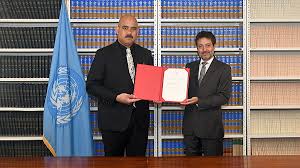
Tonga’s decision to join the Anti-Personnel Mine Ban Convention may appear, at first glance, to concern a weapon that has never touched its shores. Yet that distance is precisely what makes the accession meaningful. Nations untouched by landmines often have the clearest view of their human cost. In choosing to stand with affected communities elsewhere, Tonga signals that security in the modern world is a shared responsibility rather than a contest of military capability.
Anti-personnel mines endure as one of the clearest examples of how warfare can outlive itself. They do not recognise ceasefires, political settlements, or generational change. Long after conflicts fade into history books, mines continue to shape lives in the most brutal ways: by denying farmers access to fields, keeping families displaced, and transforming everyday movement into a calculated risk. Their victims are overwhelmingly civilians, and many of them are children. This is why the global movement that led to the 1997 Ottawa Treaty was driven not by geopolitical rivalry but by moral urgency, survivor testimony, and the insistence of smaller states that the world’s great powers confront the consequences of their weapons.
Tonga’s accession aligns it with that tradition of humanitarian activism. Across the Pacific, where communities face existential pressures from climate change and economic vulnerability, stability is increasingly defined by human security rather than military posture. By joining the Convention, Tonga reinforces a regional narrative grounded in the protection of people, the stewardship of land, and the idea that international rules matter even when they do not directly affect us at home. It shows that Pacific states can influence global norms by embracing them consistently and without hesitation.
There is also a strategic dimension that should not be overlooked. Small states rarely get to shape the behaviour of powerful militaries, but they can strengthen treaties that restrain the most indiscriminate weapons. Every new State Party to the Convention marginally increases the political pressure on those that remain outside it. The evidence that the Treaty works is substantial: more than 53 million anti-personnel mines destroyed, casualties reduced significantly, and land once written off as unusable restored to agriculture, housing, and development. Universalisation remains incomplete, but each accession signals that the legitimacy of the mine ban continues to grow.

For Tonga, the value of this decision also lies closer to home. Pacific communities understand what it means to inherit legacies they did not create—colonial boundaries, nuclear testing, environmental degradation. In aligning with the mine-free movement, Tonga expresses solidarity with societies still recovering from conflicts not of their own making. It reinforces a Tongan diplomatic identity built around responsibility, empathy, and principled engagement in multilateral forums. These are not abstract values; they shape how the region is perceived and how its voice is heard in global debates, from climate resilience to ocean governance.
The significance of Tonga’s accession ultimately lies in the clarity of the message it sends. It affirms that moral leadership is not measured in territory or military strength but in the willingness to support international rules designed to protect the vulnerable. It acknowledges that the Pacific, though remote from many conflicts, has a stake in the kind of world being built beyond its horizon. And it loops back to a simple truth: when a small state takes a stand on a humanitarian principle, it strengthens the global norm for everyone.
Tonga may not face the threat of landmines, but it understands the importance of a world where communities can walk their land without fear. By joining the Convention, the Kingdom adds its weight—modest yet meaningful—to a movement that continues to prove that even the most destructive legacies of war can be undone through collective will.