Queen Tupou III: Monarch Under the Shadow of the Protectorate (1900–1970)
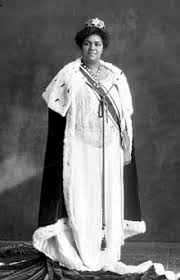
Queen Sālote Tupou III (Sālote Mafileʻo Pilolevu, 1900–1965) reigned from 5 April 1918 until her death—forty-seven years and eight months—during which Tonga never enjoyed full sovereignty. Born only weeks before the 1900 Protectorate Treaty was signed and dying five years before it finally ended in 1970, her entire life unfolded beneath the legal and practical authority of the British Agents and Consuls. Yet within those constraints she became one of the Pacific’s most admired monarchs: shrewd, culturally steadfast, and quietly masterful at turning limitation into leverage.
Born Into the Protectorate, 1900–1918
Sālote entered the world on 13 March 1900, just as King George Tupou II was conceding the protectorate to avert annexation. Tonga’s protected status under the British Empire was an outcome of the Tripartite Convention of 1899 and the partition of Samoa between Great Britain, the United States, and the German Empire. Great Britain renounced her claims in Samoa and retreated to Tonga and Fiji (along with other territorial concessions in Africa), while the German Empire renounced its claims in Tonga—especially Vavaʻu—and withdrew to Samoa. Samoa was then divided between the United States in the east and the German Empire in the west.
The infant princess’s early years were overshadowed by intrusive British officials—Basil Thomson, Hamilton Hunter, William Telfer Campbell, among others—who dictated laws and government operations, applied different legal systems to foreigners and Tongans, reformed and reduced the Parliament established by Tupou I, deported Tongan prime ministers, and treated the monarchy with thinly veiled contempt.
After her mother Lavinia’s death in 1902 and her father’s controversial second marriage, court intrigue forced the young heiress into protective exile in Auckland (1909–1914). There she received an Anglican education and Imperial court training, returning fluent in English and well acquainted with the Empire that now controlled her country’s destiny.
Deeper and Wider Concessions for Encroachment
Her father Tupou II had taken the throne almost ten years before Sālote was born, following the passing of the great Taufaʻāhau—King George Tupou—in 1893. After the Protectorate Treaty of 1900, further concessions were demanded of him. Treaty Supplements in 1905 extended the powers of the British Consul, giving him veto authority over government spending and requiring his consultation on all matters of governance.
In 1915, Parliament was officially reduced from the forty-four-member House (4 Ministers, 20 Nobles, 20 People’s Representatives) to a fluctuating 20–22-member Legislative Assembly consisting of six Ministers, seven Nobles’ Representatives, and seven People’s Representatives. Parliament—once the House for Parlay—was now known as the Legislative Assembly: a council with legislative power but limited scrutiny and opposition, since policy was largely pre-determined by British Consuls.
This was the structure inherited by Queen Sālote upon her accession. It was the framework within which she, and succeeding monarchs, were compelled to reign. It is also the structure against which later democratic reforms pushed, in many ways seeking to return to the balance first envisioned by Tupou I. The 1915 Legislative Assembly was not the handiwork of any Tongan leader alone but the product of imperial geopolitics.
Fortunately, the Constitution of 1875 and the Treaty of Friendship of 1879 served as a precursor and safeguard against outright annexation. Not until 1959 was the protectorate eased back to the earlier Treaty of Friendship terms—yet still with some British control remaining. In 1970 the protectorate finally ended with the birth of the modern Commonwealth, and Tonga became fully independent.
Thus, although Tonga proudly asserts it was never colonised, it was governed by Britain for seventy years, and has been fully sovereign for only about fifty years. Ironically, although Tonga once nearly annexed a significant portion of Fiji were it not for the British, she would ultimately be governed from Fiji because of them.
The Succession Crisis of April 1918 – A Near Miss for Sovereignty
King George Tupou II died suddenly on 5 April 1918. Princess Sālote was seventeen—legally an adult under Tongan law but perilously young in the eyes of imperial administrators. A British man-o’-war lay offshore. The British Agent and Consul, backed by the Western Pacific High Commission in Fiji, needed only a brief “interregnum” to appoint a regent, prolong minority rule, or—worse—declare the protectorate unworkable and move toward annexation, as had been attempted many times during Tupou II’s reign.
Into this vacuum stepped an unlikely guardian of Tongan independence: the French Marist Bishop Joseph-Félix Blanc, S.M. (1872–1962), known locally as Epikopō Tipanio. A brilliant historian of Tonga and unofficial representative of French interests, Blanc remained attentive to the welfare of French Catholic subjects in the British-protected kingdom. Ecclesiastically, the Tongan Catholic Mission fell under the French-protected Vicariate Apostolic of Oceania based in Wallis (ʻUvea) and Futuna, then under the Metropolitan of New Zealand.
Blanc enjoyed direct access to the Palace and Privy Council. He understood the stakes. Hours after the king’s death, he urged the Council and Nobles to act: proclaim Sālote Queen immediately to preserve the act of sovereignty before the British Agent could convene an official meeting or request instructions from Fiji. Speed, he insisted, was essential.
The Council listened. Sālote was declared Queen Sālote Tupou III the same day. The swift proclamation closed the door on any British pretext for deeper intervention. Historians—both Tongan and foreign—credit Blanc’s decisive counsel with preserving the Tupou dynasty and preventing a fatal erosion of the monarchy at a moment when the protectorate apparatus stood ready to pounce. It was a rare instance in colonial history where one European representative thwarted another’s ambitions, thereby defending indigenous authority. It was, in effect, the balance of power at work.

Reigning Under the Yoke, 1918–1965
For the next half-century the British Agent remained the effective shadow governor. No budget, major law, or significant appointment escaped his approval or veto. Yet Queen Sālote turned constraint into opportunity.
She married Prince Viliami Tungī Mailefihi in 1917; he later served as Prime Minister (1923–1941), providing her with a trusted partner who understood both Tongan custom and the protectorate’s machinery.
During the inter-war years she modernised education and health services, strengthened overseas investments, and maintained strict fiscal discipline—all without incurring debt or imposing direct taxation, achievements even British officials acknowledged with reluctant admiration.
During the Second World War she placed “all Tonga’s resources” at Britain’s disposal, donated aircraft, and sent troops to the Solomons. The gesture earned goodwill and, crucially, granted Tonga greater day-to-day autonomy while London was preoccupied.
A patron of the arts, she preserved Tongan cultural heritage, mythology, and national narratives.
Privately, she endured the same patronising attitudes that had exasperated her grandfather and father. Publicly, she expressed gratitude—“We owe much to England for protecting us”—because she recognised the protectorate as the price paid to avoid the outright annexation experienced by Samoa and Hawai‘i.
Her famous open-carriage ride through the rain at Queen Elizabeth II’s 1953 coronation was both courtesy and calculated diplomacy: a protected monarch reminding the world that Tonga still existed.
In the late 1950s she gently pressed for reform. The 1958 Treaty of Friendship removed the Agent’s financial veto and reduced him to an adviser available only upon request—a significant concession achieved largely through her personal prestige.
Death and Legacy
Queen Sālote died in Auckland on 16 December 1965 after a long illness, flown there by Royal Air Force aircraft in a final gesture of the old imperial relationship. She did not live to see the protectorate terminated in 1970, but she ensured Tonga entered independence stable, literate, united, and unmistakably itself.
Her life embodies the central irony of the protectorate era: the very institutions that curtailed Tongan sovereignty also shielded it from worse fates. Officials like Campbell once dreamt of deporting kings—yet a French bishop helped crown one instead. Sālote took the narrow corridor left to her and walked it with such dignity that the Empire itself eventually stepped aside.
In the end, the woman who began her reign by saving the monarchy from British opportunism demonstrated throughout her life that Tonga’s soul could not be administered from Fiji—or anywhere else.