
Opinion | The PALM Scheme: A Lifeline for Tonga – But At What Cost?
By Melino Maka
In a world where Pacific nations are often searching for avenues of economic sustainability, the Pacific Australia Labour Mobility (PALM) scheme has emerged as one of the most tangible solutions for Tonga. It offers hope, employment, and much-needed foreign exchange inflows to a Kingdom increasingly vulnerable to climate shocks and limited job opportunities. But as we celebrate the milestones of PALM, we must also examine its deeper impacts — particularly the social fractures it risks leaving behind.
A Success Worth Recognizing
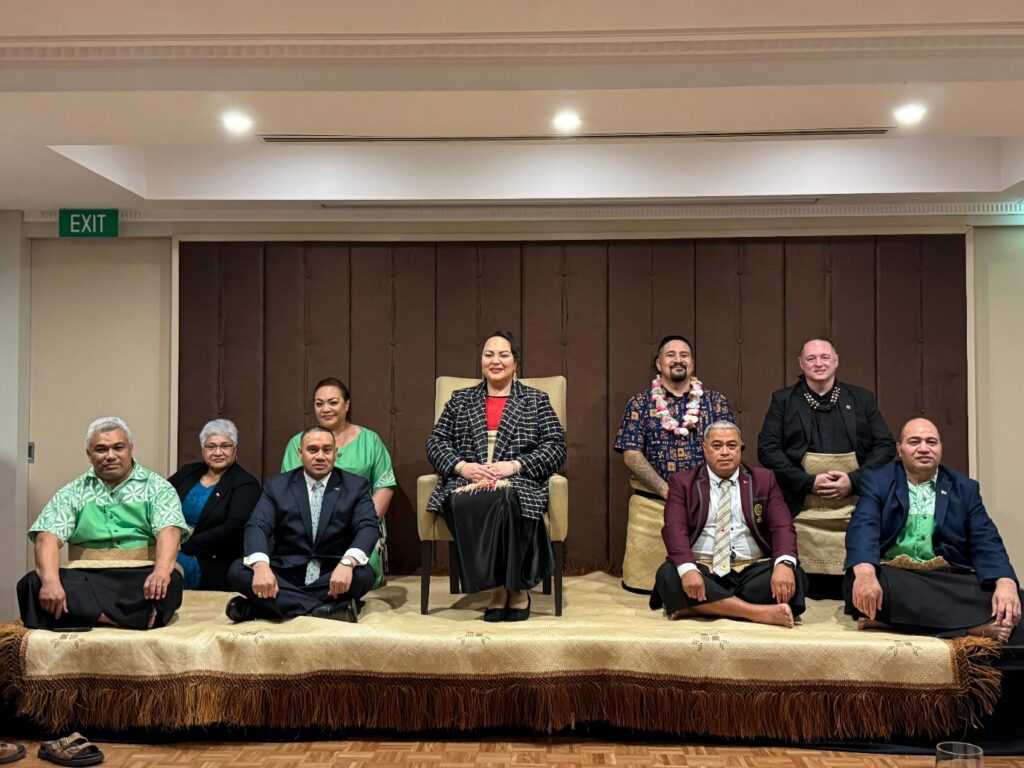
At the recent PALM Workshop and Exhibition Day hosted by the Tonga High Commission in Canberra on May 22, 2025, the strength of this bilateral programme was front and centre. From the heartfelt testimonies of workers like Luke from Niuatoputapu and Halafihi Akauola to employers like Terry Nolan of Nolan Meats and Charlotte Hoddle of Gunnible Orchards, the message was clear: PALM is working.
As of March 2025, 3,480 Tongan workers are employed in Australia through PALM, primarily in agriculture and meat processing. Many remit up to $1,500 per month, with savings contributing directly to school fees, small businesses, home improvements, and debt repayments in Tonga. The ripple effects are felt across the country — in outer islands and urban centres alike — supporting livelihoods and injecting capital into grassroots economies.
Tonga’s early leadership in the PALM initiative (formerly the Seasonal Worker Programme), dating back to 2008, reflects the Kingdom’s commitment to regional labour mobility. Today, the presence of Her Royal Highness Princess Angelika Lātūfuipeka Tuku’aho at the Canberra event underscored that this is more than just a policy—it’s a national priority.
The Hidden Toll of Opportunity
But opportunity, if not managed with compassion and foresight, can come at a cost. And for many Tongan families, the cost is emotional, social, and sometimes intergenerational.
The same programme that allows parents to build new homes or pay off debts can also leave children without their primary caregivers for years. Family separation is a growing concern, particularly for long-term deployments. Mental health challenges, emotional distress among children, and strained marriages are becoming too common to ignore.
Moreover, social issues—including alcohol abuse, culture shock, and exploitation—are often swept under the rug in pursuit of economic gains. Workers with pre-existing medical conditions may find themselves isolated and vulnerable in foreign rural towns. Women, too, face unique challenges of safety and cultural adjustment, often underrepresented in discussions around labour mobility.
Strengthening the Social Compact
To its credit, the recent PALM Workshop didn’t shy away from these realities. From the calls by Australia’s Department of Employment and Workplace Relations (DEWR) to strengthen protections and pastoral care, to the acknowledgment by Tonga’s Labour Sending Unit (LSU) that better pre-departure support is essential, the conversation is shifting from quantity to quality.

Key improvements now must include:
- Family accompaniment schemes – accelerate pilot programs to allow more workers to bring spouses or children under certain conditions.
- Pastoral care and integration – fund community coordinators, cultural orientation programs, and local mentors in Australia to support Pacific workers.
- Health and wellbeing – enforce mandatory health screening, mental health services, and community wellness hubs in host regions.
- Pre-departure training – tailor sessions to build realistic expectations, financial literacy, and strategies for maintaining long-distance family life.
- Social reintegration back home – provide returnee support so that returning workers can reintegrate with dignity and continue to contribute meaningfully.
A Shared Responsibility
It’s not enough to say the scheme works economically. Both the Tongan and Australian governments must go further in acknowledging and mitigating the social disruptions that trail behind financial success. Community organisations, church networks, diaspora associations, and employers all have a role to play in healing the gaps.
Australia must remember that this is not just a workforce solution — it’s a human relationship that deserves dignity. Tonga must invest not only in recruitment, but also in returnees, families left behind, and long-term community strengthening.
Conclusion
The PALM scheme is a gift — but one that must be held with care. It’s helping Tonga rise economically, one paycheque at a time, and is becoming one of the most successful Pacific labour mobility models globally. But let us not forget that true success is measured not just in remittances, but in relationships maintained, families supported, and futures built together.
The time has come for a Tonga-Australia PALM Compact 2.0 — one that balances economic prosperity with social wellbeing, and ensures that no one is left behind, neither in the fields of Queensland nor in the villages of Tongatapu.
Melino Maka is a Tongan policy advocate and commentator on Pacific labour mobility, governance, and diaspora development. He is based between Tonga and New Zealand.