
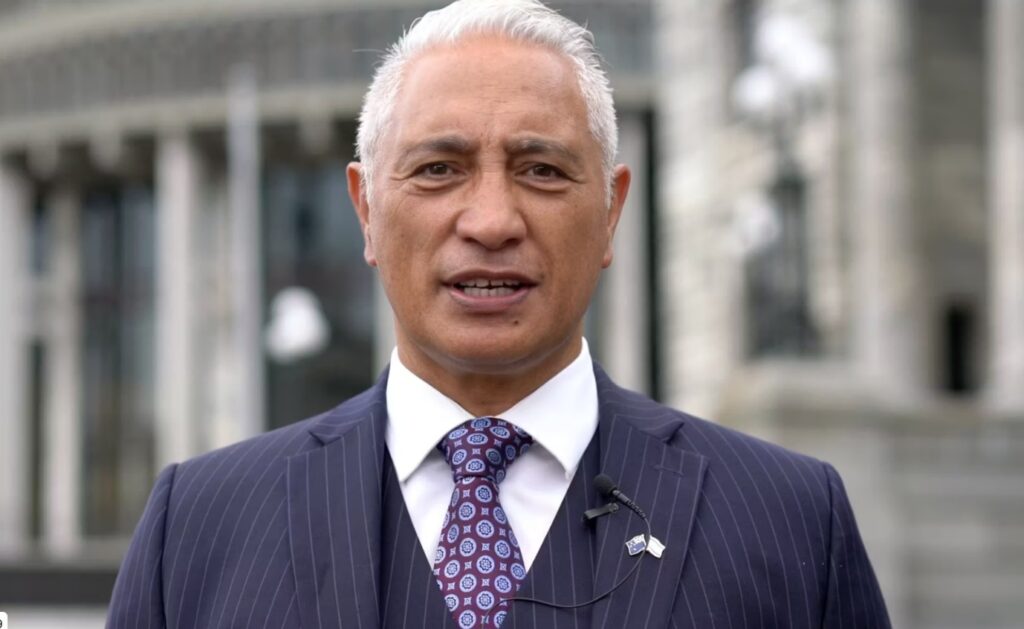
A former New Zealand minister’s return to frontline politics has reignited debate over the Pacific’s stance on Israel, exposing deeper tensions between faith, identity, and geopolitics. At the centre of it is a question many in the region have avoided for too long. Are Pacific nations supporting Israel out of principle, or out of a misunderstood reading of scripture?
In the shifting landscape of New Zealand politics, few moves raise eyebrows anymore. Politicians change parties, recalibrate positions, and reintroduce themselves to voters with familiar ambition. But the re-emergence of former National Party minister Alfred Ngaro, now aligned with New Zealand First, carries a deeper implication.
This is not simply about political survival. It is about the platform he brings with him.
Ngaro has positioned himself as a voice for indigenous support for Israel, framing the issue through culture, identity, and faith. He speaks of building understanding and strengthening ties. But this raises a harder question. What exactly is being understood, and whose narrative is being advanced?
The Pacific and the Power of Belief
Across the Pacific, support for Israel has often been shaped less by geopolitics and more by religion. For many communities, biblical references to Israel create a sense of spiritual obligation toward the modern state.
It is a deeply held belief. But it is also a simplified one.
The modern state of Israel, established in 1948, emerged from a complex historical and political process that included the displacement of large numbers of Palestinians. Historians widely document that more than 700,000 Palestinians were displaced during that period. To equate that modern state directly with the Israel of the Bible is a leap that many theologians and scholars argue overlooks centuries of history and context.
Yet across the Pacific, that distinction is often blurred.
Leaders attend international forums, invoke scripture, and express unwavering support, sometimes without fully engaging with the realities on the ground. In doing so, faith becomes intertwined with foreign policy in ways that are rarely questioned.

A Conflict Seen Through One Lens
Supporters of Israel argue that the country faces ongoing security threats and has the right to defend itself against militant groups such as Hamas. They reject accusations of genocide and maintain that military operations are necessary responses to attacks on Israeli civilians.
But critics point to a different reality.
Since the escalation of conflict in Gaza, tens of thousands of Palestinians have been killed, according to Gaza health authorities, with figures widely cited by international agencies, though disputed by Israel. Entire neighbourhoods have been reduced to rubble. Access to food, water, and medical care has been severely restricted.
International bodies, including proceedings at the International Court of Justice, have seen arguments raised that Israel’s actions may breach international law. These claims remain contested and are subject to ongoing legal and diplomatic scrutiny.
What is clear is that the scale of human suffering has forced a global reckoning.
Faith and the Teachings of Jesus
For Pacific Christians, the issue cuts deeper than politics.
The teachings of Jesus, central to the faith of the region, emphasise mercy, compassion, and care for the vulnerable. He spoke of loving one’s neighbour, caring for the poor, and standing with those on the margins.
Many theologians argue that these teachings demand a response rooted in empathy rather than allegiance.
That raises an uncomfortable question. If faith calls for compassion, how should it respond to images of displaced families, injured children, and a population living under constant threat?
This is where the Pacific conversation has often fallen short. Faith has been invoked, but rarely interrogated.