Editorial: Why the Government’s Airport Cargo Takeover is a Risk Tonga Cannot Afford
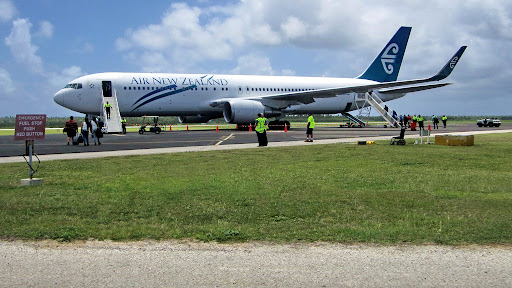
The Tongan government’s decision to wrest control of airport cargo handling from the private operator Air Terminal Services (ATS) and transfer it to the state-owned Tonga Airports Limited (TAL) is not merely an administrative change—it is a move fraught with political contradiction, operational risk, and economic recklessness.
For years, ATS has provided dependable ground handling services to international carriers, including Air New Zealand, despite the government’s failure to secure a long-term agreement. Rather than resolving this contractual limbo, successive administrations have repeatedly extended ATS’s license on a temporary basis—kicking the can down the runway instead of addressing the issue properly.
Now, instead of correcting past failures, the current government appears determined to strip ATS of its role entirely and hand operations to TAL. This decision directly undermines repeated calls from His Majesty the King and the Prime Minister for greater private-sector support. Far from progress, this is a step backward.
The Peril of Ignoring Aviation Standards
What makes this transition especially precarious is the government’s seeming disregard for international aviation protocols. Ground handling for major airlines like Air New Zealand is not simply a matter of logistics—it requires globally recognized safety accreditation, such as the IATA ISAGO (Safety Audit for Ground Operations) certification. This process takes no fewer than twelve months for a new operator to complete.
Crucially, even if the government were to acquire ATS’s assets, the ISAGO accreditation does not automatically transfer. Without a certified ground handler, Air New Zealand cannot and will not operate in Tonga. To dismiss this reality is to gamble with the country’s vital air links.
Financial and Operational Concerns
The government’s alternative—purchasing ATS outright—presents its own challenges. TAL, despite holding one of the largest asset portfolios among Tonga’s state-owned enterprises, recorded a staggering T$4.9 million loss in 2022 ,the most recent financial report avaialable. Given this track record, how can it realistically absorb and manage a well-run private business? And at what cost? ATS’s market value will be determined by fair assessment, not government dictate.
A leaked email from Air New Zealand, shared by Radio FM87.5, highlights the gravity of the situation. The airline explicitly stated it “will not be able to provide services to Tonga without a ground handler that we have approved.” Yet, the government insists it can execute a full takeover within weeks without disruption—a claim that appears either dangerously naive or deliberately misleading.

The High Stakes of Failure
Should TAL fail to secure the necessary accreditation in time, the consequences for Tonga will be severe and immediate. Flight suspensions would strand passengers, disrupt cargo shipments, delay critical medical supplies, and deal a heavy blow to the tourism sector. Beyond the economic fallout, the country’s reputation as a reliable international partner would suffer lasting damage.
A Call for Reason Over Ideology
This crisis was entirely preventable. ATS had been willing to work with the previous government—all that was needed was political will, proper planning, and a fair agreement. Instead, Tonga now faces the reckless dismantling of a functional private enterprise in favor of an untested state alternative, based on the flawed assumption that the public sector can seamlessly take over without consequence.
The government must act swiftly to avert disaster. This means returning to the negotiating table with ATS in good faith—whether to secure a long-term operating agreement or to establish a structured transition that guarantees uninterrupted service, maintains international accreditation, and safeguards Tonga’s air connectivity.
This is not a matter of politics; it is one of pragmatism. Tonga cannot afford to let ideological pursuits or the expansion of state control jeopardize the very links that connect it to the world.
(Government officials were contacted for comment but did not respond by publication time.)