Editorial: Pacific Votes Against Conscience
Seven island nations stood with Israel at the UN in September 2024. As the death toll in Gaza grows, will they stand with justice this time?
In the Pacific, the Bible is not simply a source of private devotion. It is a national charter. Tonga’s motto, “God and Tonga are my inheritance”, could have been lifted directly from the Old Testament. Samoa’s constitution declares that it is founded on God. Across our region, Israel’s story has long been retold as our own: a small people chosen, tested, and delivered.
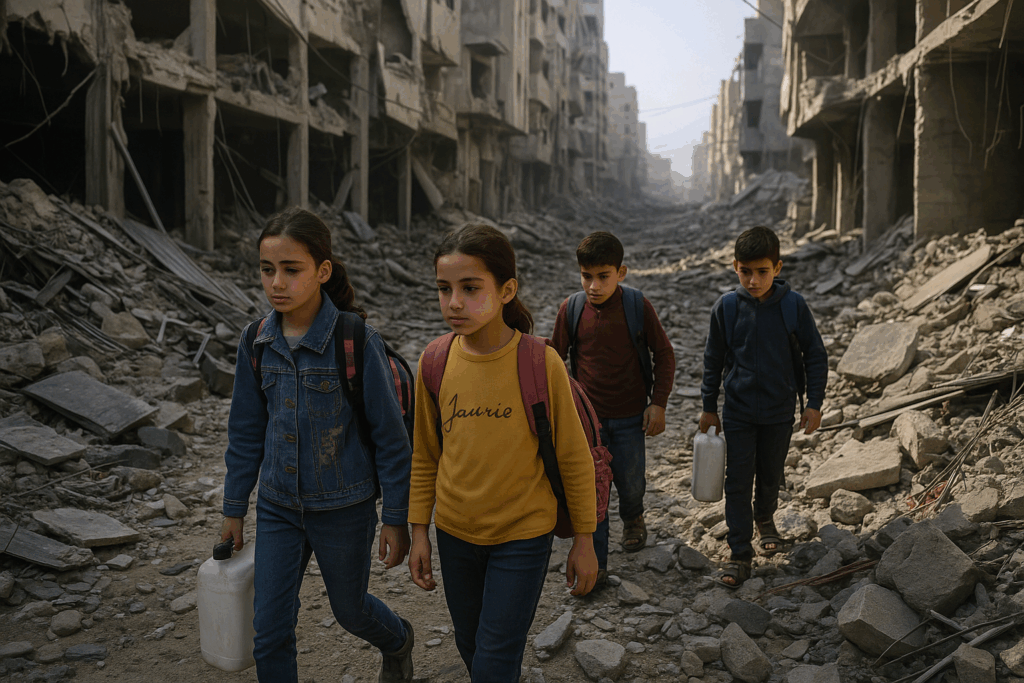
But today the Israel of scripture collides with the Israel of politics. The war in Gaza has brought accusations of genocide. Entire neighborhoods have been flattened and tens of thousands of civilians have died. Yet, from Washington to the Pacific, the familiar refrain persists: Israel is defending itself against terrorists. Palestinians are cast as faceless extremists instead of as fathers, mothers, and children.
This narrative has taken hold with little resistance. Our Christian devotion to the biblical Israel has made us receptive to the political framing of the modern state of Israel. In the pulpit, sermons still present Israel as the covenant people of God. In politics, dependence on Western allies for aid and security makes dissent risky. The result is silence, and silence in the face of overwhelming human suffering undermines the moral authority of both church and state alike.

Adding to this moral crisis is a stark fact: on 18 September 2024, at the UN General Assembly, a Palestinian‑sponsored resolution demanding that Israel end its “unlawful presence” in Palestinian territories within one year was adopted with 124 votes in favour, 14 against, and 43 abstentions. Among those voting against were Pacific states Fiji, Nauru, the Federated States of Micronesia, Papua New Guinea, Palau, Tonga, and Tuvalu.
This editorial does not call for abandoning Israel. It calls for balance. The story of Israel remains central to our spiritual identity. But if that story blinds us to the destruction in Gaza, Christianity becomes allegory without humanity.
The Pacific is small, vulnerable, and has always sympathised with Israel’s trials. That sympathy should now compel us to see the humanity of Palestinians, who too are struggling to survive, to hold onto land, and to live in dignity.
With so much evidence of suffering in Gaza now evident, what will Pacific leaders do at the next UN General Assembly in September? The elephant of our moral failure is now in the room. Will we notice it? Will we speak up?
Failing to do so risks our faith becoming a shield for power rather than a light for justice, and that would be the gravest betrayal of all.