Contrast in Cleavers: How New Zealand Rugby’s ‘Razor’ Decision Exposes a Double Standard in Pacific Coaching Patience

The recent, abrupt dismissal of All Blacks head coach Scott “Razor” Robertson by New Zealand Rugby (NZRU) reveals a ruthless, results-now ethos that stands in stark contrast to the long-term trust often afforded in international rugby league—particularly to coaches like Tonga’s Kristian Woolf.
Robertson’s appointment in 2024 was heralded as a natural, seamless transition. After building a dynasty with the Crusaders, winning seven consecutive Super Rugby titles, he was the charismatic heir apparent, the chosen one to replace Ian Foster. The move was made on paper, based on a stellar franchise record and a modern coaching philosophy. However, the NZRU’s famously impatient calculus shifted rapidly. An average win rate in his early tenure was scrutinized, but the true breaking point came in 2025 with historic, decisive defeats to both South Africa and England. For the NZRU, the “writing on the wall” translated to an immediate execution; the disposable razor, sharp and promising, was discarded at the first sign of bluntness. The narrative shifted from “savior” to “failed experiment” with breathtaking speed.
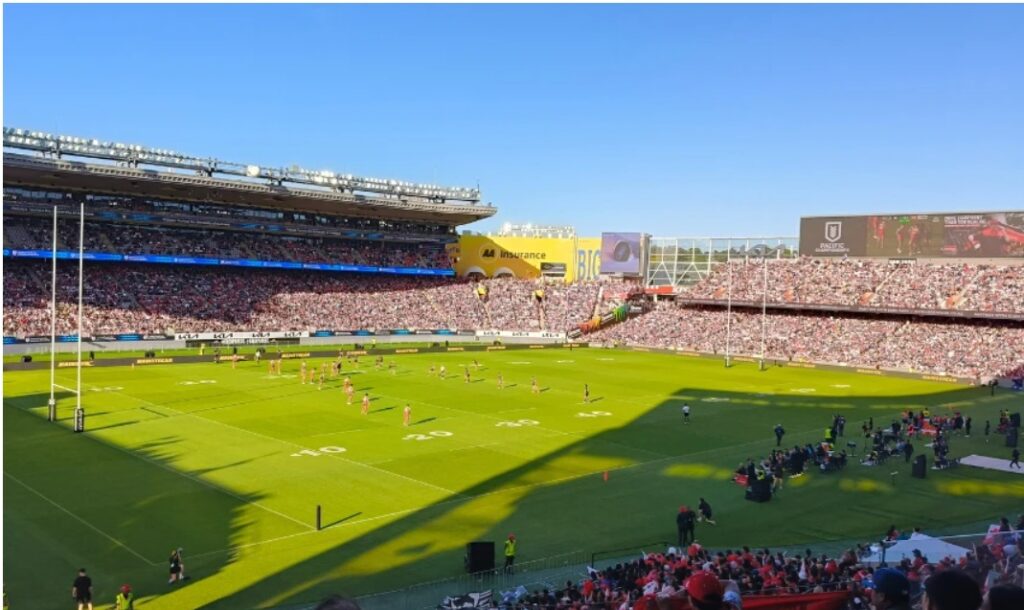
This quick-trigger approach highlights a glaring contradiction when the same hypothetical “NZRU formula” is applied across the Tasman to rugby league and Tonga’s national team. Kristian Woolf, appointed in 2014, was entrusted with a long-term project: building a Tier-Two nation into a world force. His overall Test record—13 wins from 27 matches, a 48% win rate—is, on raw numbers, less impressive than Robertson’s All Blacks record. He endured early setbacks, including losses to Samoa in the Polynesian Cup.
Yet, Woolf was granted the time and institutional patience Robertson was denied. The reward? A transformational era for Tonga, highlighted by a legendary 2017 World Cup victory over New Zealand and a run to the semi-finals. His World Cup record of 78% wins underscores his ability to galvanize a team on the biggest stage—precisely the metric Robertson was judged to have failed. Woolf’s mission was cultural building and peak tournament performance, not just annual domination. His tenure was seen as an investment, not a transaction.

The comparison exposes a core difference in how the two sporting codes, and their respective governing bodies, frame success and failure. The All Blacks operate under a tyranny of excellence where anything less than global dominance is a crisis, leading to a disposable coaching culture. For emerging nations like Tonga in rugby league, the calculus includes legacy, identity, and sustainable growth, allowing a coach like Woolf to build through losses for greater tournament triumphs.
In the end, NZRU’s handling of Robertson shows that even a “natural move” and a proven winner can be swiftly deemed expendable. Meanwhile, Woolf’s tenure in Tonga demonstrates that sometimes, the most impressive records aren’t found in yearly win percentages, but in the patience to forge a legacy—a luxury the All Blacks’ coach rarely enjoys.
Melino Maka