Commentary: Why Germany is Paying Closer Attention to Tonga
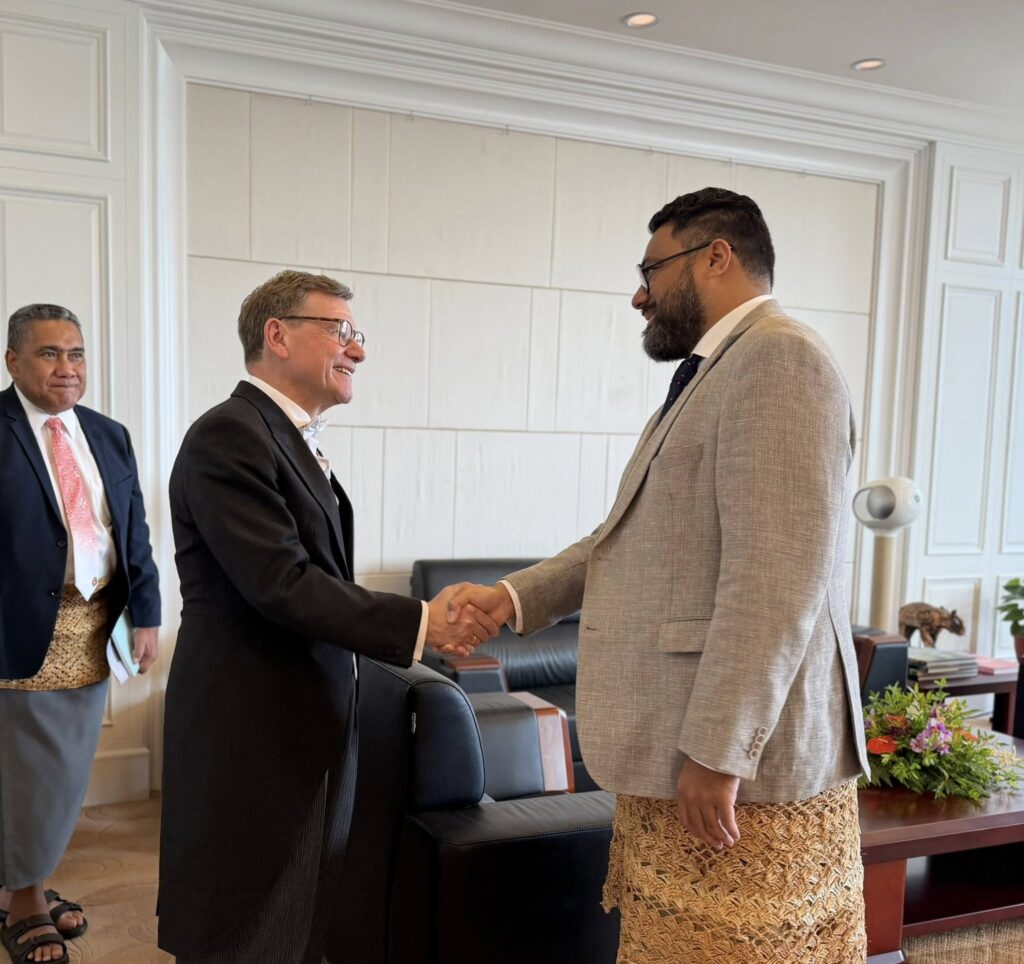
Germany’s high-level visit to Tonga reflects more than historic ties and climate cooperation. It signals how Pacific island states are gaining strategic weight as global powers compete for influence in an increasingly contested international system.
Germany’s recent high-level visit to Tonga was not simply a courtesy call. It was a clear signal that the Pacific, long treated as peripheral, is now firmly on the geopolitical map.
The visit by Germany’s Foreign Minister Johann Wadephul reaffirmed a relationship that stretches back nearly 150 years, highlighting cooperation in development, climate change, and renewable energy. For Tonga, a Small Island Developing State facing rising climate risks, these areas are not abstract policy interests but immediate national priorities.
Beyond the symbolism, the visit reflects a broader shift in global attention. Tonga, like many Pacific island nations, now sits at the intersection of climate vulnerability and strategic competition. Rising sea levels and extreme weather threaten livelihoods and infrastructure, while major powers increasingly view the Pacific as a region where influence matters.
Over the past decade, China has expanded its footprint across the region through infrastructure financing and development projects. Germany’s increased engagement should be understood partly as a response to this reality. It is less about confrontation and more about ensuring Pacific countries are not left with limited choices in their international partnerships.
There is also a hard diplomatic calculation at play. Pacific island states, though small in population, hold equal voting power in the United Nations General Assembly. In a period of strained multilateralism and shifting alliances, those votes carry weight.

Germany’s Pacific outreach aligns with its campaign for a non-permanent seat on the United Nations Security Council for the 2027–2028 term, with the election scheduled for June 2026. Berlin last served on the Council in 2019–2020 and is competing for a Western European and Others Group seat against Austria and Portugal. Publicly, the campaign is framed around climate security, conflict prevention, and support for a rules-based international order. Privately, the arithmetic is straightforward. In a contested UN system, influence is built one vote at a time.
For Tonga, this moment brings opportunity as well as responsibility. Engagement from partners like Germany brings access to climate finance, technical expertise, and renewable energy support, including backing for Tonga’s target of 70 percent renewable energy by 2030. But increased attention also requires careful navigation to ensure partnerships serve national priorities rather than external agendas.
The German visit should therefore be read as part of a wider recalibration in how mid-sized democratic powers engage with the Pacific. Climate change, strategic competition, and diplomacy now converge in this region.
Tonga may be small in size, but in today’s global politics it is not marginal. Its voice matters, its choices matter, and visits like this underline a simple reality. The Pacific is no longer being observed from afar. It is being actively contested.