Australia’s ABC Oversteps in Tonga’s Affairs
Op-ed Tevita Motulalo
MSc Geopolitics and International Relations
The Local Facts
The passage of the His Majesty’s Diplomatic Services Bill should have been a moment of clarity for Tonga. At long last, Parliament consolidated existing laws on foreign affairs under one statute, making clear where responsibilities lie—from policy formulation to operations to administration. No new powers were created, no democratic reforms were undone. The Bill tidies up what previous governments left confused.
Yet instead of being welcomed as progress, the Bill became the target of wild criticism—first from a few former political advisers and so-called political/legal experts, and then from sections of the foreign media—criticisms that are not only non-factual, but at times outright disingenuous and dishonest. They claimed Tonga Independent was fantasising romanticised monarchism, which was really just “…a smokescreen to shut down public dissent and silence alternative viewpoints!”
Except, Tonga Independent voiced the ONLY alternative opinion to the matter as they publically humiliate everyday individuals by browbeating them with the same vitriol. The same expert called Tonga Independent “crown propaganda”, if that’s not trying to shut down alternative viewpoints because that seeks to undermine any moral standpoints and independence we might pretend. But more importantly, we voiced opinions—they went for a royal petition, and asked the King to veto an act of parliament legitimately and democratically passed! Who’s over-reacting here?
The same individuals’ inaction helped create the confusion that lingered in the first place. They once held senior positions in government, or closely placed in the echelons of previous administrations, had every chance to clarify the law when they were in office. They chose not to. To now attack the King, and even to petition him not to assent to a law passed by the people’s elected representatives, is hypocrisy dressed as principle.
Again, there are no FACTS, just opinions stemming from ideological obsession screamed out as expert proclamations! Like oracles prophecies emanating down from Mount Olympus unto the peoples of Athens!

The Regional Twist
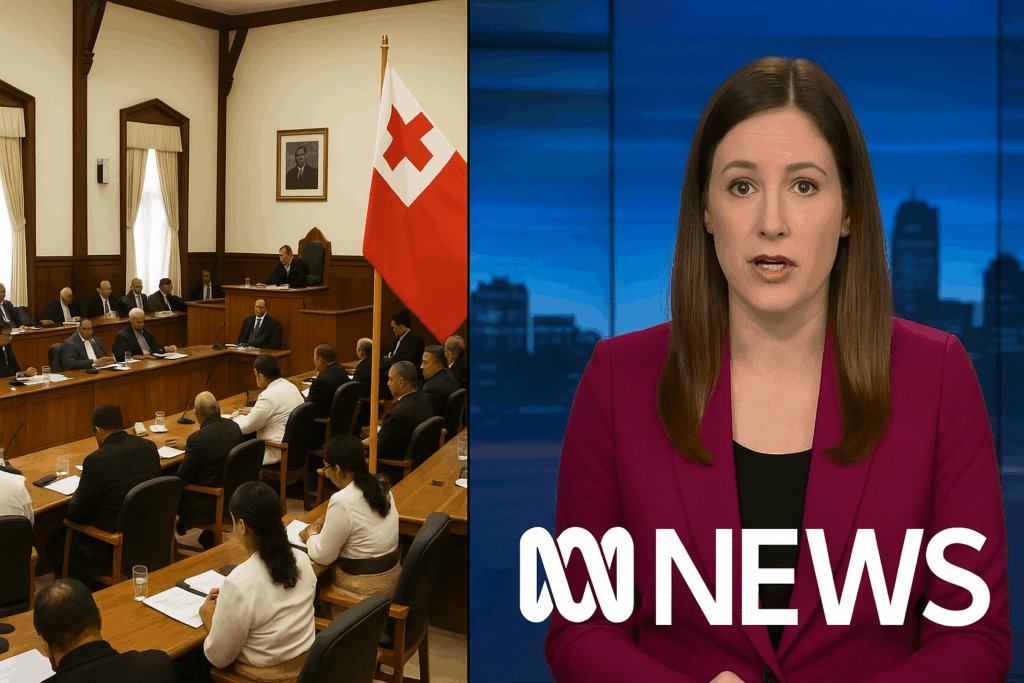
This should have been a domestic debate, and Australia’s ABC covered it once calling the bill “controversial” not that it was by popular acclaim, nor Parliament said that it was. They just decided to call it controversial! Once was not enough, and ABC decided otherwise to do a follow up even though the national discussion had kind of moved on! The broadcaster parachuted in, using its Pacific Editor to paint Tonga as a backward “absolute monarchy for almost 150 years until 2010.” Worse still, the report resorted to the ugly “blue blood” insult, implying degeneracy within the royal family. Such language is not journalism—it is slander.
What is most troubling is the interference behind it. The Bill was passed by a democratically elected Parliament. To frame it as undemocratic, and to smear Tonga’s monarchy in the process, is to question the foundations of our sovereignty. Tonga has been a stable political entity longer than most of our neighbours, and our monarchy is not a relic but an institution that has carried this country through wars, colonial encroachments, and natural disasters.
Australia and its media should know better. It cannot build trust in the Pacific while its national broadcaster belittles the region’s oldest sovereign institution. Respect for Tonga’s state and system of government is not optional—it is the baseline for partnership.
If Australian media, especially a state-owned enterprise like ABC (who is also funding facilities for the Tonga Media Association and weirdly-named NGOs like “Balance of Power” if that wasn’t a clue on its own), wishes to intervene in sensitive debates about our Constitution and our King, they should at the very least be properly briefed by their own High Commission in Nuku‘alofa before running sensational attacks.
And if there is a deeper view that Canberra holds about Tonga’s monarchy or how we should run our democracy, then let that be said plainly. The High Commissioner himself might as well be summoned to Parliament—or to the Palace—to “clear the air”. Better that, then foreign parachute editors throwing stones from the citadels of their glass towers.