Analysis | How framing, sanctions and geopolitics shape Western coverage of Iran’s unrest
By Tu’ifua Vailena
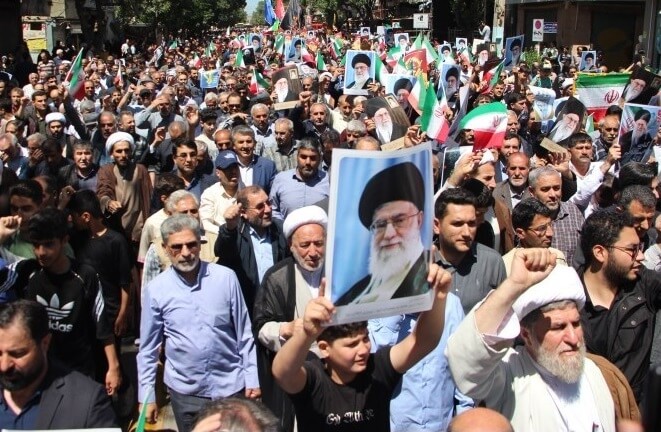
The protests that have gripped Iran for the past three weeks have been presented to Western audiences as a familiar morality play: an authoritarian state repressing a popular uprising, brave demonstrators facing down a brutal regime, and an international community called upon—once again—to choose the right side of history. It is a narrative so well rehearsed that it now unfolds almost automatically, with little interrogation of context, causation, or consequence.
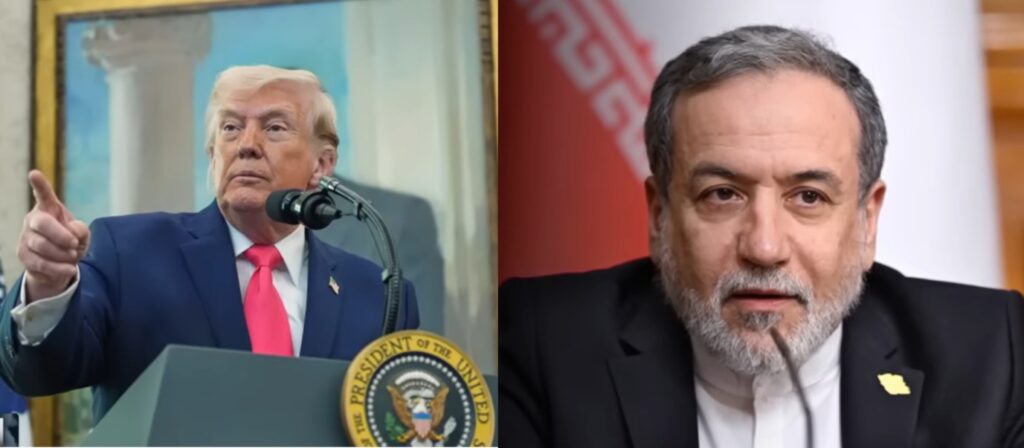
What has been largely absent, however, is the Iranian government’s own account of events. That changed this week when the foreign minister delivered the first detailed official briefing since the unrest escalated, addressing diplomats in Tehran in remarks broadcast live by Al Jazeera. Whether one accepts his claims or not, the significance lies in the fact that Western coverage has largely treated those claims as irrelevant, unworthy of serious examination, or inherently illegitimate.
According to the government’s account, the protests began as peaceful demonstrations driven by economic grievances—grievances the state says it acknowledged. Officials claim meetings were held, demands were heard, and limited economic measures initiated. By the end of December, demonstrations had reportedly subsided. It was only in early January, the government says, that the unrest re-emerged in a different and far more violent form.
This distinction matters, yet it has been flattened in much Western reporting. The Iranian authorities argue that from January 8 onward, the protests were infiltrated by armed actors, whom they describe as terrorist operatives. They allege the use of firearms, attacks on police, ambulances and public transport, the burning of commercial centres and mosques, and the killing not only of security personnel but of protesters themselves. The stated aim, they claim, was to maximise casualties in order to provoke international intervention.
These are extraordinary claims. They demand scrutiny, not automatic acceptance. But they also demand something Western media coverage has conspicuously failed to provide: proportional scepticism. In adversary states, official narratives are often dismissed out of hand, while in allied capitals, state accounts of violence are routinely treated as authoritative unless conclusively disproven. The result is not journalism; it is alignment.
Consider how similar events would be described elsewhere. Armed attacks on police stations, the destruction of emergency vehicles, and coordinated arson against public infrastructure would not be framed as “mostly peaceful protests” in Paris, London, or Washington. They would be labelled riots, insurrection, or terrorism. The moral vocabulary shifts not according to the facts on the ground, but according to the geopolitical identity of the state involved.
A recent American example is instructive. In Minneapolis this month, the fatal shooting of a woman in her vehicle by a federal immigration officer was initially justified by authorities as an act of self-defence. Video evidence soon complicated that account, prompting calls for investigation and restraint while facts were established. No sweeping conclusions were drawn about the legitimacy of the American state, nor were the actions of one officer treated as proof of systemic tyranny. The assumption was that complexity precedes verdict. That presumption, so readily afforded at home, is rarely extended abroad.

The Iranian government’s emphasis on foreign interference has likewise been dismissed as paranoia. Yet this sits uncomfortably with the historical record. Western governments do not conceal their hostility toward Tehran. Economic sanctions have been explicitly designed to exert pressure on the Iranian population. Senior US officials have openly welcomed unrest in Iran, and intelligence activity aimed at weakening the state is hardly an exotic allegation in global politics. One need not accept every claim of infiltration to recognise that Iran’s fear of external destabilisation is not without foundation.
What Western reporting rarely acknowledges is the cumulative effect of this pressure. Economic hardship does not arise in a vacuum. It is the predictable outcome of prolonged sanctions, financial isolation, and trade restrictions that deliberately constrict daily life. When protests follow, they are treated as spontaneous expressions of democratic yearning, detached from the policies that helped create the conditions for unrest in the first place.
None of this absolves Iran’s leadership of responsibility. The country has a long record of heavy-handed security responses, opaque judicial processes, and restrictions on political freedoms. Casualty figures remain contested, independent verification is limited, and internet shutdowns only deepen suspicion. These realities deserve scrutiny. But scrutiny is not the same as erasure of context.
What is striking is how little space is afforded to the possibility that multiple truths might coexist: that economic grievances are real, that peaceful protest occurred, that violence followed, and that foreign actors may have seen opportunity in chaos. Western audiences are rarely invited to consider this complexity. Instead, they are offered a binary choice between repression and liberation, empire and innocence.
The deeper question, then, is not whether Iran’s government is virtuous—it plainly is not—but whether Western media framing serves understanding or power. When unrest in adversarial states is stripped of geopolitical context and repackaged as a morality tale, it becomes easier to justify escalation, intervention, or further punishment. History suggests the consequences of such simplifications are borne not by regimes, but by ordinary people.
In the end, the most telling aspect of this moment may not be what the Iranian foreign minister said, but how quickly his words were discounted. Not because they were disproven, but because they complicated a narrative that has become politically convenient. And it is often at that point—when complexity becomes unwelcome—that journalism risks becoming something else entirely.