A Sacred Restoration: The Installation of the Tui Nayau and Its Resonance Across Fiji and Tonga
In the coming days, the island of Lakeba in the Lau Group of Fiji will bear witness to one of the most significant cultural and political events in recent history—the installation of Ratu Tevita Kapaiwai Lutunauga Uluilakeba Mara as Tui Nayau, Tui Lau, and Sau ni Vanua o Lau. This is not just the installation of a high chief. It is a ceremonial reclamation of identity, a political act of cultural revival, and a symbolic reconnection between the islands of Fiji and Tonga—a connection centuries old, shaped by conquest, alliance, kinship, and shared struggle.
A Moment of Sacred Unity
The chiefly village of Tubou, the traditional seat of Lauan power, has entered a state of solemn tapu (sacred observance). Silence now drapes the village green, broken only by the movements of warriors and elders preparing for the sacred rite. Delegations from across the Lau islands have arrived by sea, bearing iyau ni vanua—traditional offerings signifying loyalty, reverence, and acknowledgement of chiefly authority.
One of the most profound moments in the lead-up to the installation has been the ceremonial preparation of qoli sirovi, a fish that had been placed under taboo for twelve years. The lifting of this restriction, symbolizing renewal and spiritual readiness, marks the end of a long interregnum and the beginning of a new era under Ratu Tevita’s leadership.
This installation, steeped in Lauan tradition, is far more than local pageantry. It is a defiant act of cultural survival following years of suppression under the Bainimarama regime, which suspended the Great Council of Chiefs and weakened indigenous governance in the name of “national unity.” During that time, the chiefly institutions of iTaukei identity were not only politically sidelined but spiritually violated. Ratu Tevita’s installation is the long-awaited reawakening of the Vanua.
Ratu Tevita Mara: A Chief in Exile, Now Returning
Ratu Tevita’s return is layered with historical and personal symbolism. Once a high-ranking military officer, his exile in 2011—fleeing political persecution under Bainimarama—mirrored the wider alienation of iTaukei leadership. His flight to Tonga, and the refuge granted by the late King George Tupou V, was not just an act of asylum but a rekindling of ancestral bonds between the chiefly houses of Tonga and Lau.
Ties between Lau and Tonga are not incidental. They are deeply historical. The rise of Enele Maʻafu, a Tongan prince who established himself as Tui Lau in the 19th century, fundamentally reshaped the political and cultural landscape of eastern Fiji. Maʻafu’s influence left enduring marks on Fijian chieftaincy structures, language, customs, and identity. The very titles of Tui Lau and Tui Nayau represent a fusion of Tongan expansionism and Fijian chiefly tradition—symbols of a Vanua born from imperial negotiation, not submission.
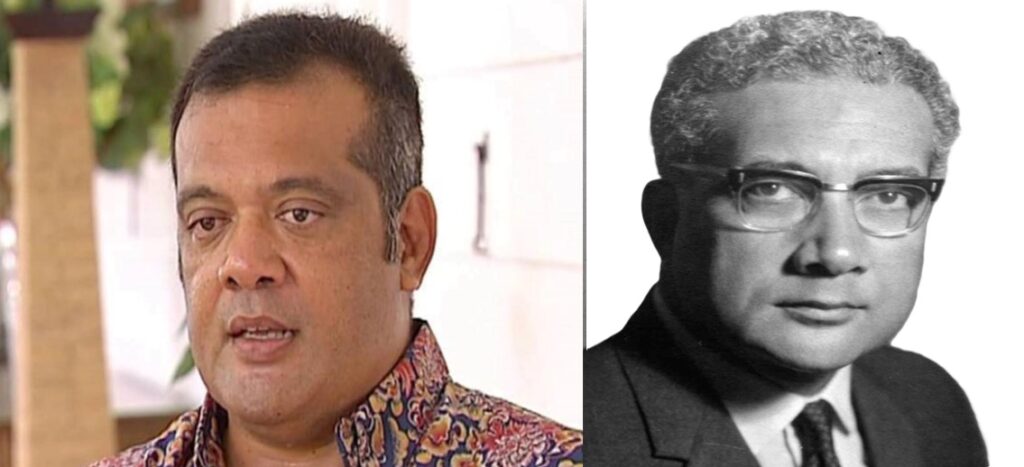
Ratu Tevita’s dual lineage amplifies his legitimacy. His father, the late Ratu Sir Kamisese Mara, was not only Tui Nayau but also Fiji’s founding Prime Minister and President. His mother, Ro Lady Lala Mara, held the revered title Roko Tui Dreketi, paramount chief of Rewa and head of the Burebasaga Confederacy. Through this union, the spiritual and political essence of the Lauan and Rewan Vanua converge in Ratu Tevita—paternal and maternal chiefly lines aligned for a time such as this.
Echoes in the Kingdom of Tonga
For the people of the Kingdom of Tonga, this ceremony holds historical resonance and emotional connection. Many Tongans trace ancestral roots to Lakeba, Nayau, and other parts of Lau. The spiritual kinship between Lau and Tonga was deepened through centuries of migration, intermarriage, and chiefly exchange. The Tongan royal family itself recognizes this bond. Maʻafu’s declaration of Tui Lau was both a political conquest and a cultural offering. He introduced order, Christianity, and systems of chiefly governance that endure today.
This interwoven heritage is not a matter of nostalgia—it’s a living political reality. Tonga’s embrace of Ratu Tevita during his exile, and the enduring relationships between noble houses across the sea, speak to a transoceanic Vanua that colonial borders failed to sever. As the Tui Nayau is installed, Tongans—particularly those from Haʻapai and Vavaʻu with links to Lau—see not only the restoration of a Fijian chief, but the reaffirmation of a shared lineage.

Beyond the Ceremony: A Diasporic Reflection
Dr. Ponipate Rokolekutu, an iTaukei scholar based at San Francisco State University, captured the emotional gravity of this moment from a diasporic lens. He writes of how this ceremony is not just a domestic event—it is a call across oceans to all iTaukei and Pacific peoples who have been displaced, dislocated, or rendered invisible by colonialism and modernity. For his students—many of them grappling with loss, identity, and the alienating logics of racial capitalism—this installation is a powerful lesson. It reminds them that culture is not static, nor dead. It lives, breathes, and resists.
In his powerful words:
“The installation of the Tui Nayau is not a return to the past. It is an act of refusal. It refuses the erasure imposed by dictatorship. It refuses the colonial logics that confined our authority to the margins. And it refuses to forget.”
Indeed, sovereignty in the Pacific today may not always lie within state structures, but in the Vanua—in the people, their land, and the sacred protocols passed down through centuries.
Looking Ahead
The formal installation of Ratu Tevita Mara will mark a new chapter not only for Lau, but for the broader landscape of indigenous leadership in Fiji and beyond. It rekindles long-dormant systems of governance rooted in respect, kinship, and sacred duty. It may also serve as a spark—reminding the youth, the diaspora, and even the state—that indigenous authority, though repressed, is not extinguished.
For Tonga and Fiji, whose histories are forever bound across the sea, this event is also a chance to reflect on what unites the peoples of the Pacific: shared ancestry, mutual respect, and a collective aspiration to protect and restore that which colonization and dictatorship tried to dismantle.
As the sacred drums of Lakeba sound once more, and the warriors of Lau gather in solemn witness, one truth becomes clear: the Vanua has never truly been silent. It was waiting for the right moment to rise again.
Melino Maka is a political and cultural commentator based in Tonga and New Zealand. He writes on indigenous leadership, Pacific development, and the interconnected legacies of Tonga and Fiji.