The Swearing-In of Delcy Rodríguez: A Defining Moment in a Long-Planned Geopolitical Offensive
Editor’s Note:
This article is published as analysis. It draws on publicly reported events and incorporates interpretations and assessments from geopolitical, energy, and policy analysts to examine the broader strategic context surrounding recent developments in Venezuela. The views expressed reflect analytical judgments and do not purport to establish motive or intent beyond what is supported by available reporting and expert commentary.
On Monday, January 5, a dramatic political transition unfolded in Caracas following a U.S. operation that resulted in the capture of Venezuelan President Nicolás Maduro and his wife, Cilia Flores. According to reporting by Reuters and other international media, Maduro and Flores were taken into U.S. custody during an operation involving American forces and were subsequently transported to New York, where they appeared in federal court to face long-standing drug and weapons-related charges previously filed by U.S. prosecutors.
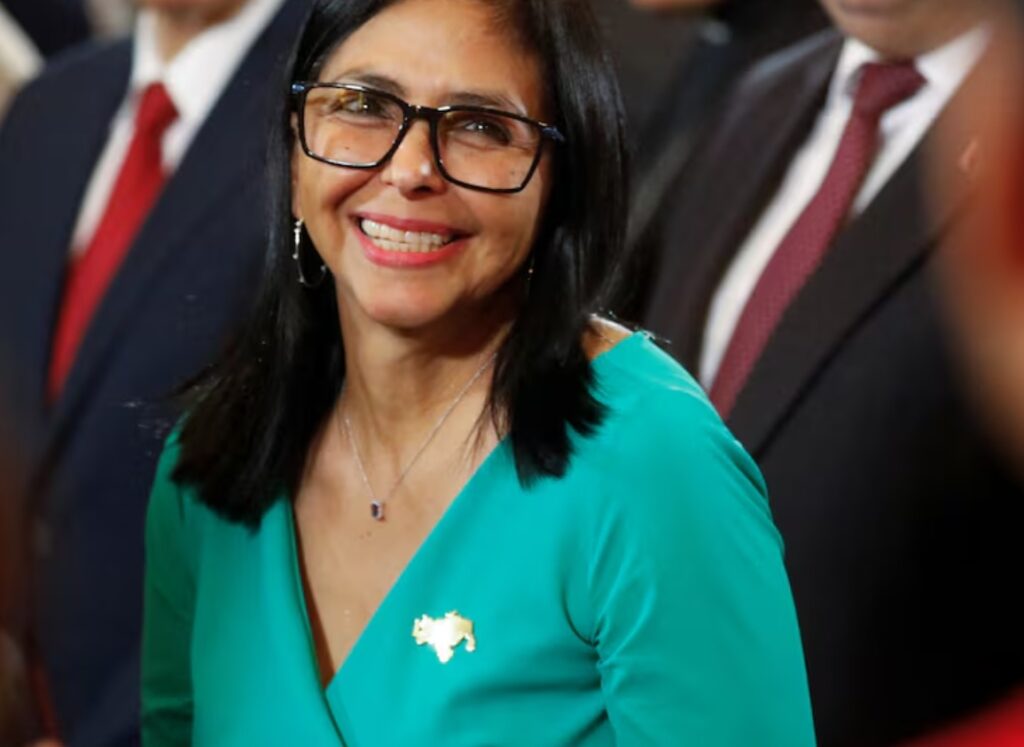
In Caracas, Vice President and Oil Minister Delcy Rodríguez was sworn in as interim leader amid the sudden power vacuum. Venezuelan state media and international outlets reported that the transition was carried out through the National Assembly, though accounts differ on the precise mechanics of the ceremony.
The Trump administration framed the operation as a decisive escalation in its campaign against transnational drug trafficking networks. Senior U.S. officials pointed to sealed indictments, court filings, and intelligence assessments as evidence that Maduro’s government functioned as a central node in regional narcotics trafficking. Supporters of the intervention argue that years of diplomatic pressure and sanctions had failed, leaving enforcement action as the only remaining tool.
Among geopolitical analysts, energy economists, and Latin America specialists, however, there is growing scepticism that narcotics enforcement alone explains the scale and timing of the intervention. Instead, analysis published in policy journals and strategic forums has converged on three overlapping imperatives: control over Venezuela’s vast oil reserves, the defence of U.S. dollar primacy in global energy markets, and the domestic political incentives of a White House facing sustained internal pressure.
Venezuela sits atop the world’s largest proven oil reserves, estimated at more than 300 billion barrels, a figure consistently cited by international energy agencies. For decades, access to that resource has been central to U.S. hemispheric energy strategy. That access was sharply curtailed following the nationalisation of Venezuela’s oil industry under Hugo Chávez and later Nicolás Maduro, compounded by U.S. sanctions and years of mismanagement that drove production sharply lower. While output collapsed, the scale of the underlying reserves ensured that Venezuela remained a strategic prize.
In recent months, analysts at institutions such as the Atlantic Council and the Council on Foreign Relations have noted that Washington’s long-standing interest has hardened into urgency amid broader shifts in global energy and finance. Debate has intensified over de-dollarisation and the willingness of some oil-producing states to explore limited non-dollar settlement mechanisms. While economists caution that claims of a wholesale collapse of the “petrodollar system” are overstated, even marginal erosion of dollar centrality in energy trade is widely viewed in Washington as a strategic risk.
At the same time, Venezuela has continued to deepen commercial and diplomatic ties outside the Western financial system. China remains a major destination for Venezuelan crude and a key creditor, while Caracas has publicly pursued closer economic engagement with India and other Asian partners. Analysts argue that these relationships, even when constrained by sanctions, risk locking Venezuela’s oil sector into long-term arrangements beyond U.S. influence.
From this perspective, installing a cooperative interim government in Caracas offers a pathway to unwind existing agreements, reopen the oil sector to Western firms, and restore U.S. leverage over one of the world’s most resource-rich states. Several analysts have suggested that the criminal cases against Maduro—while real and long-standing—also provided a legally and politically viable mechanism to justify decisive action.

Beyond energy, the intervention is widely interpreted through the lens of the evolving global financial order. Venezuela has formally applied to join the BRICS grouping, an expanded bloc that explicitly seeks to reduce reliance on dollar-dominated trade and finance. While its accession remains politically contested within the group, policy analysts note that Venezuela’s resource base would make it a significant addition to an alternative economic framework.
U.S. officials and financial institutions have repeatedly warned of the systemic implications should large oil exporters successfully conduct trade outside the dollar at scale. From this vantage point, preventing Venezuela from consolidating its place within a rival economic architecture is seen as a defensive move to protect what former U.S. Treasury officials have described as the dollar’s “exorbitant privilege.”
A third layer of analysis focuses on domestic U.S. politics. President Trump enters the midterm year amid persistent factionalism within his own party and renewed controversy surrounding the handling of documents related to Jeffrey Epstein. While no new criminal findings have been established against the president, the continued political and media scrutiny has intensified political pressure on the administration.
Some commentators have drawn parallels to the classic “wag the dog” scenario, in which foreign confrontation serves to shift public attention and reframe political narratives. A swift and decisive operation against a long-standing U.S. adversary in the Western Hemisphere offers a compelling story of strength, law enforcement, and national resolve—particularly when framed as a blow against transnational crime.
Critics further point to perceived inconsistencies in the administration’s stated rationale. In December 2025, President Trump issued a pardon to former Honduran president Juan Orlando Hernández, who had been convicted in U.S. federal court on drug-trafficking charges. Prosecutors alleged that the conspiracy Hernández oversaw facilitated the movement of more than 400 tonnes of cocaine into the United States over more than a decade. To critics, the contrast between pardoning a convicted regional ally while invoking similar charges to justify the removal of a geopolitical adversary illustrates the selective use of narcotics enforcement as an instrument of foreign policy.
Taken together, the swearing-in of Delcy Rodríguez marks more than a change of leadership. It signals the opening phase of a high-stakes geopolitical contest shaped by energy security, currency power, and domestic political calculation. While the administration emphasises the language of law enforcement and counter-narcotics, a growing body of analysis suggests the intervention reflects a convergence of strategic interests extending far beyond drug policy.
The future of Venezuela will now be shaped not only in Caracas, but within a broader global struggle over resources, financial architecture, and political narrative control—one in which the boundaries between legal action, strategic competition, and domestic politics have become increasingly blurred.
By Melino Maka