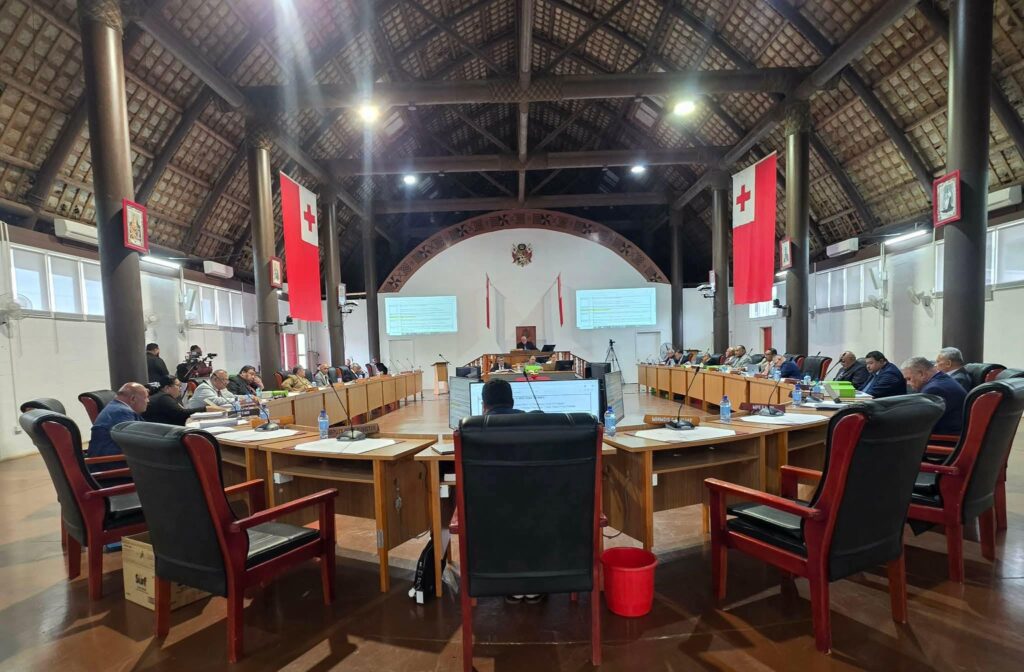
With 164 countries backing Palestinian self-determination, Tonga’s decision to abstain did not change events in Gaza. But in a system where small states trade in credibility rather than power, it raises a sharper question about what neutrality really communicates.
Editor’s Note:
Tonga Independent News is publishing this analysis following Tonga’s recent abstention on a United Nations General Assembly resolution affirming the right of the Palestinian people to self-determination. While such votes do not alter events on the ground, they do form part of the public record of how countries position themselves on core international principles. Given the scale of the vote and the importance of multilateral norms to small states, this piece examines what abstention means in practice and why these decisions matter for Tonga’s credibility and foreign policy over time.
There is a common belief that abstaining at the United Nations is a neutral act. It is not. In practice, abstention is a political choice, and like all political choices, it sends a signal beyond the official voting record.
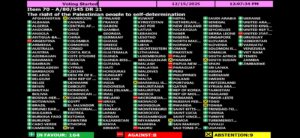
Tonga’s decision to abstain on the General Assembly resolution affirming the right of the Palestinian people to self-determination stands out because of the scale of the vote. With 164 countries in favour, this was not merely a strong majority but a near-universal position within the General Assembly. It was an overwhelming majority, leaving abstaining countries well outside the global consensus.
It is true that nothing Tonga did in New York changed the realities on the ground in Gaza. General Assembly resolutions do not stop wars or open humanitarian corridors. Small states understand this better than most. They know their votes are largely symbolic, and that realism often leads to caution.
But symbolism is precisely the point.
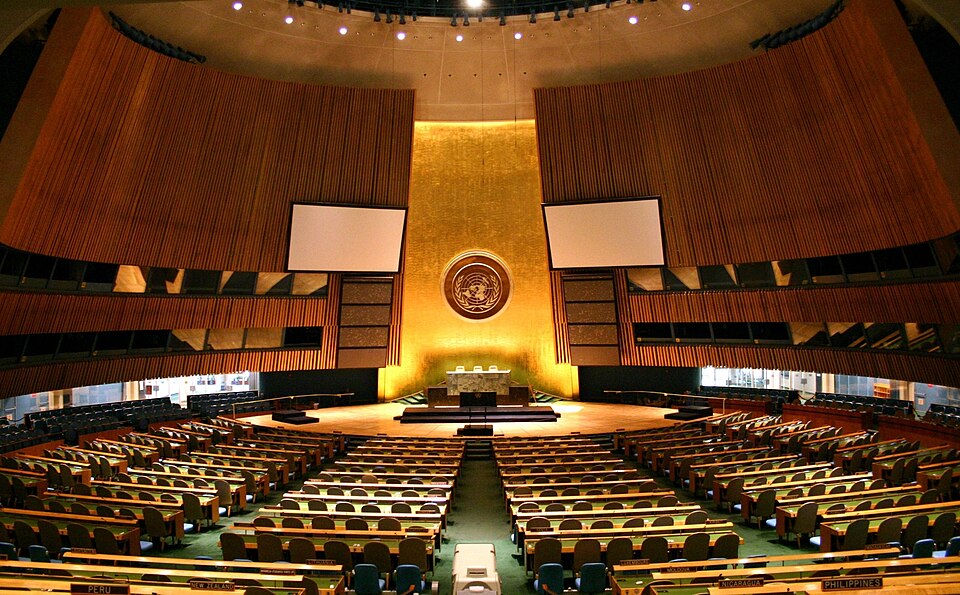
 The United Nations is not a body that enforces outcomes in conflicts. It is a forum where countries signal where they stand on international principles. Votes are read as statements of alignment, especially on issues such as self-determination, territorial integrity, and the protection of civilians. For small states, these principles are not abstract ideas. They are the foundations that protect sovereignty in a world dominated by larger powers.
Supporters of abstention would argue that Tonga’s decision reflects strategic restraint rather than indifference. Small administrations must balance limited diplomatic capacity, aid relationships, and regional partnerships. Avoiding entanglement in deeply polarised conflicts can appear sensible, particularly when the practical effect of a vote is minimal.
That argument deserves to be acknowledged. It is also where the limits of abstention become clear.
Israel holds little direct influence over Pacific island states in practical terms. The United States does have influence, but history shows it rarely uses that influence to punish countries over non-binding General Assembly resolutions. Washington expects to lose votes on Palestine, as it has for decades. Many countries far more dependent on American aid than Tonga vote in favour without consequence. Aid continues. Security cooperation remains. Trade access is unaffected.